
Home / All / Industrial Machinery Gear Solutions / Custom Machined Gears for Outdoor Power Equipment
Custom Machined Gears for Outdoor Power Equipment
Custom Machined Gears for Outdoor Power Equipment
Project Overview
This case came from a European company in the power equipment industry. The customer needed several different parts for outdoor equipment, including custom gears and other machined components.
For this project, the main challenge was not just one difficult part. The real challenge was the mix of parts, processes, surface treatment requirements, and project status control. Some parts required gear hobbing or gear shaping. Other parts needed general machining processes such as turning, milling, drilling, or tapping.
Because the parts would be used in outdoor equipment, corrosion resistance was also important. The customer required all parts to be electroplated and meet ISO 19598:2016 Fe/Zn12/Cn/T2 requirements. ISO 19598:2016 covers electroplated zinc and zinc-alloy coatings on iron or steel with supplementary Cr(VI)-free treatment, mainly for corrosion protection.
What Did PairGears Provide?
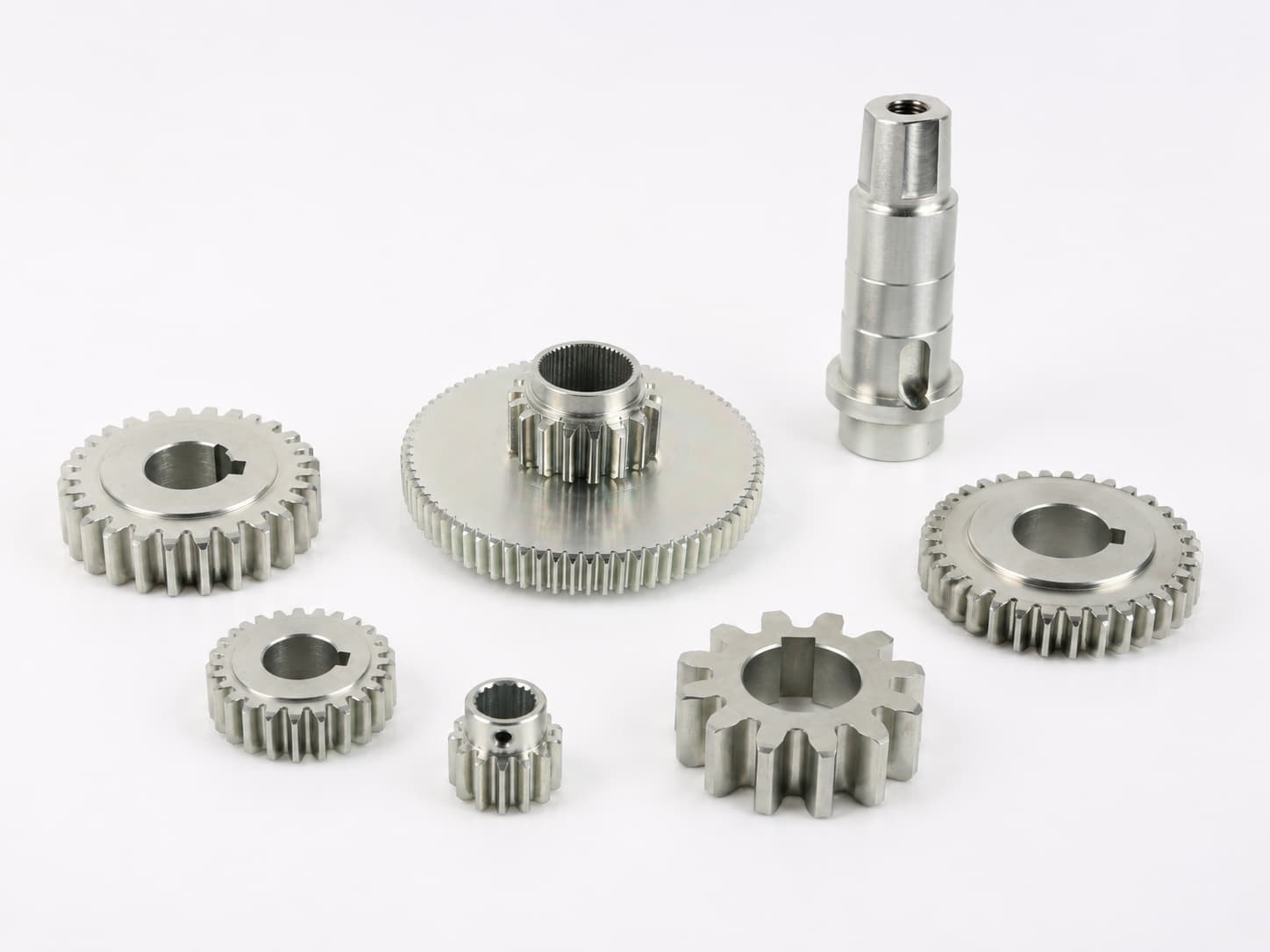
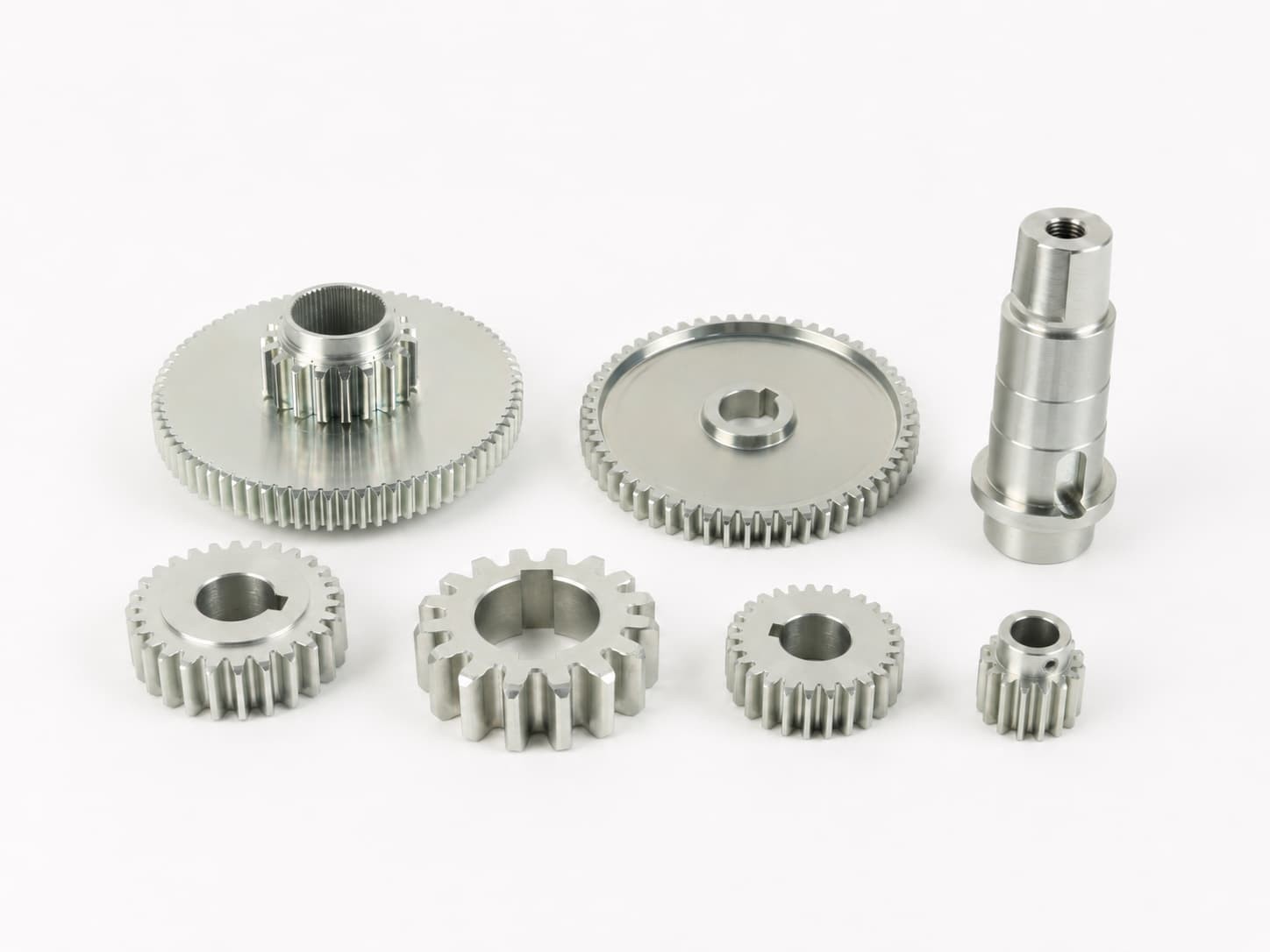
PairGears supported this project as a custom gear supplier and machining coordination partner. We reviewed the drawings, quoted each part clearly, arranged sample production, coordinated gear machining and other machining processes, managed surface treatment requirements, followed sample status, and supported batch production after customer approval.
This project shows how a precision gear manufacturer can also help buyers handle mixed machining projects instead of only supplying single gear parts.
Customer Requirements
The customer sent drawings and technical requirements for multiple parts. These parts were not all the same type, so they could not be managed with one simple production route.
The project included:
→ Custom gears
→ Other machined metal parts
→ Parts requiring gear hobbing
→ Parts requiring gear shaping
→ Parts requiring turning, milling, drilling, or other machining
→ Electroplated parts for outdoor use
→ Surface treatment according to ISO 19598:2016 Fe/Zn12/Cn/T2
→ Sample confirmation before batch production
For outdoor power equipment, surface treatment is not only about appearance. If the coating is not suitable, parts may face rust, surface damage, or assembly problems during storage, transport, or long-term use.
Why This Project Needed More Than a Gear Supplier
Some projects are simple. A buyer sends one gear drawing, the supplier quotes one part, and production starts after confirmation.
This project was different.
The customer needed many different items at the same time. Some were gears, while others were general machined parts. If the customer had managed each part with a different supplier, the project would have created more communication work, more quality risks, and more schedule pressure.
The customer needed one team to help sort out:
• Which parts required gear cutting
• Which parts required normal machining
• Which items needed tooling cost
• Which parts had entered sample production
• Which parts were ready for batch order
• Which parts required electroplating
• How each item should be inspected before shipment
This is where PairGears provided value. The project was managed as a complete machining package, not as a loose list of separate parts.
Process Used for This Project
The project followed a clear drawing-based workflow:
Customer Sends Drawings and Requirements → PairGears Reviews and Quotes → Price Confirmation → Order Placement → Sample Production → Customer Sample Inspection → Batch Production → Final Inspection → Shipment
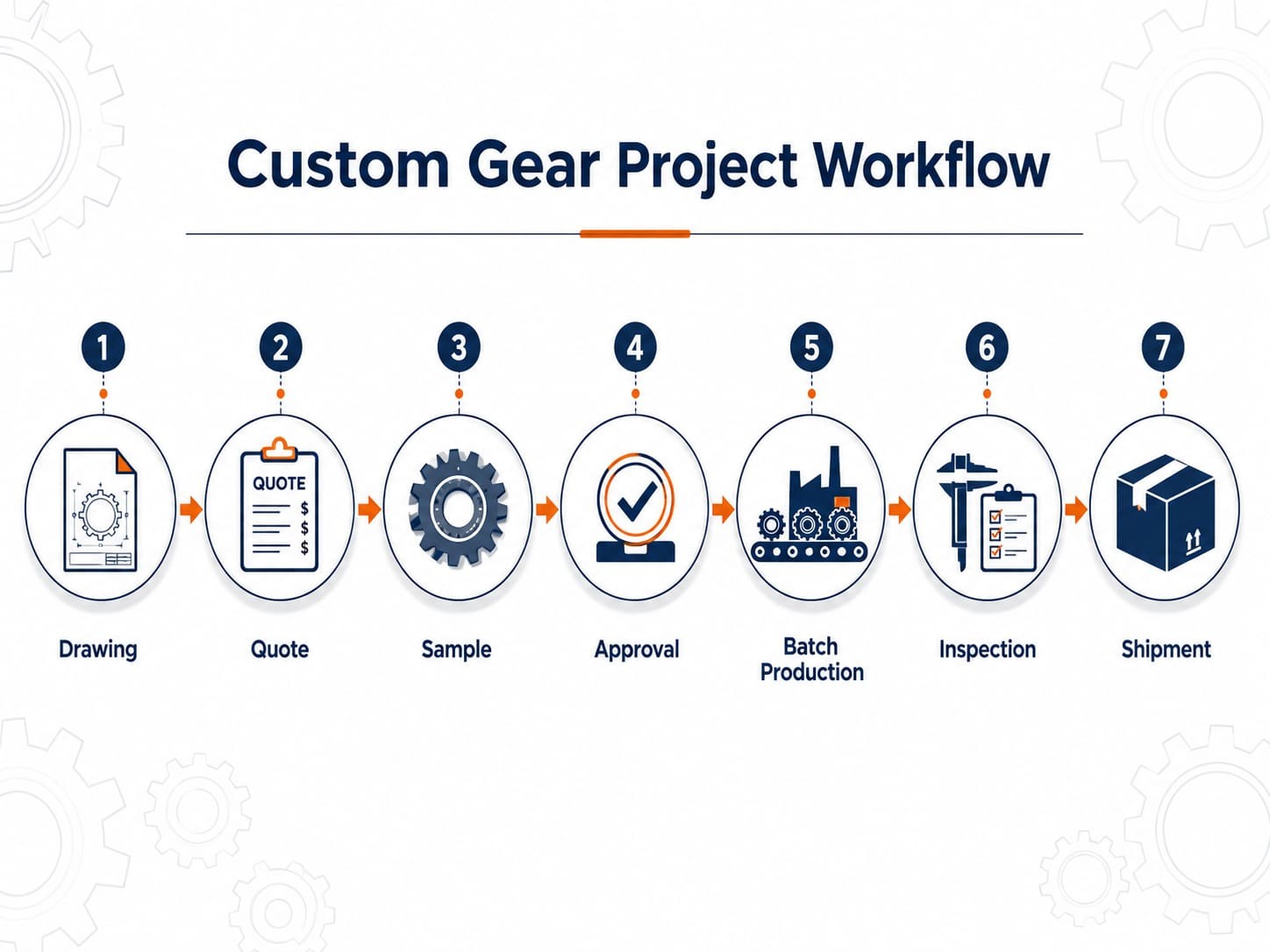
Each step had a clear purpose.
During the drawing review stage, we checked the part type, machining route, possible tooling needs, surface treatment requirements, and batch quantity. This step helped reduce misunderstanding before pricing.
During the quotation stage, we listed the parts clearly instead of giving only one total price. The quotation sheet helped the customer see the status of each item, including quantity, unit price, tooling cost, tooling status, and sample status.
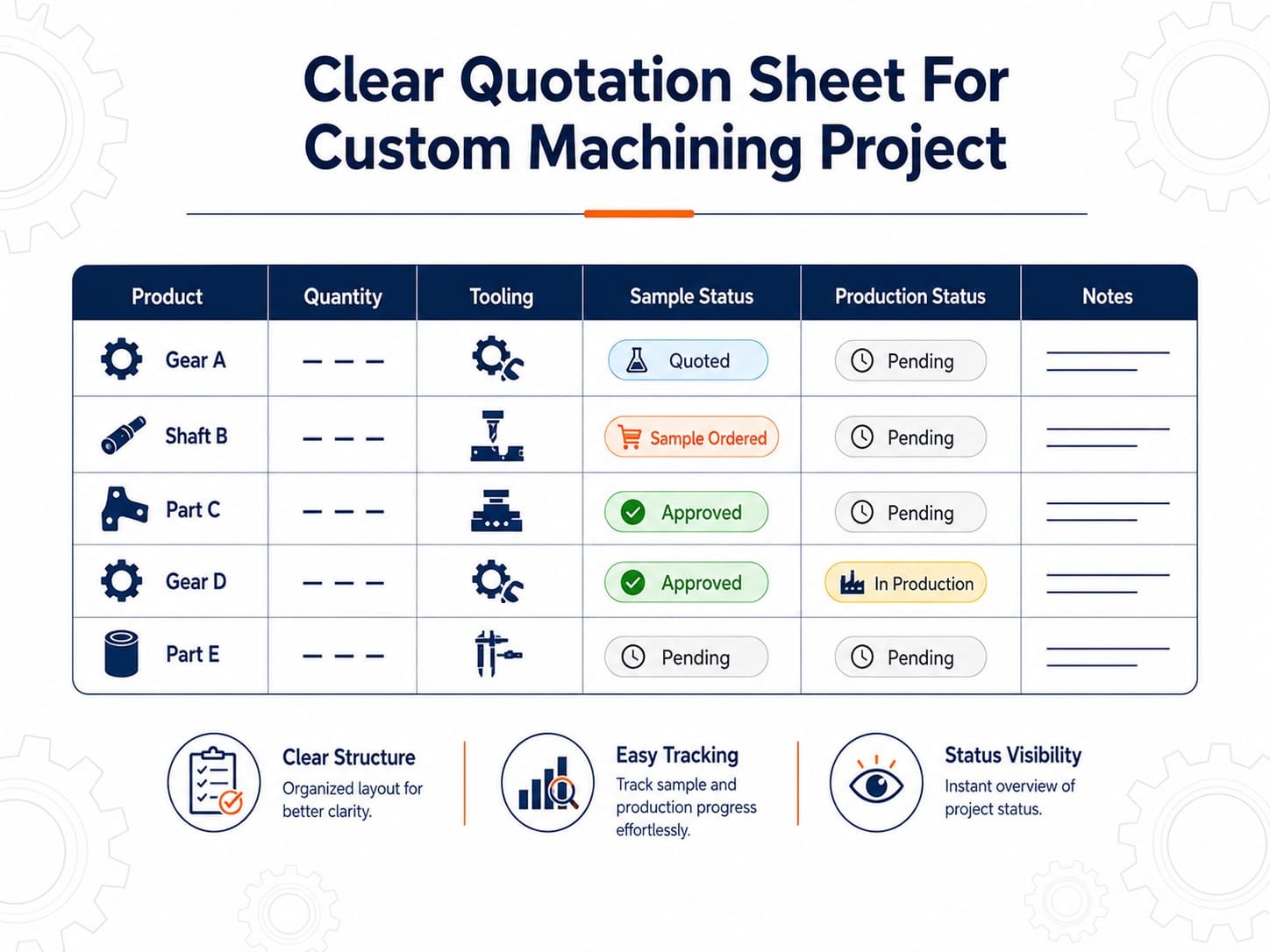
During the sample stage, the customer could check the real parts before batch production. This was important because the project involved multiple item types and a specific surface treatment requirement.
After sample approval, the project moved to batch production, inspection, and shipment.
Clear Quotation Made the Project Easier to Control
The gear parts in this project required more than one gear manufacturing process.
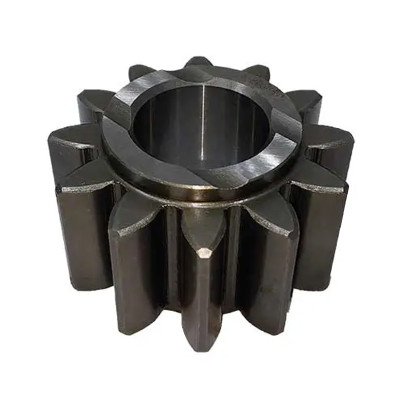
Some gears were suitable for gear hobbing. Gear hobbing is commonly used for many external gears because it is efficient and suitable for repeated production. PairGears also has related gear manufacturing content explaining hobbing, shaping, and grinding as different gear process options.
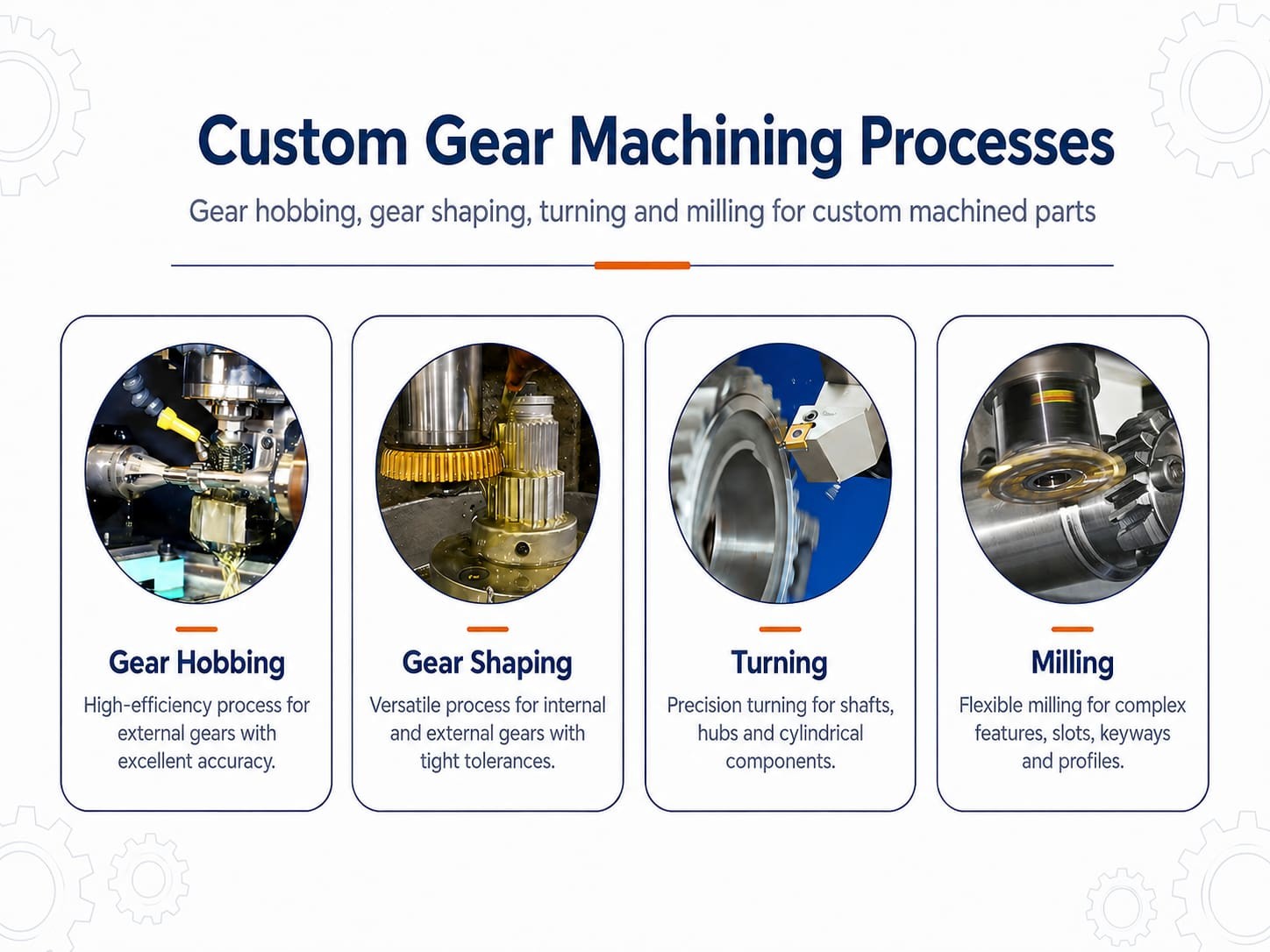
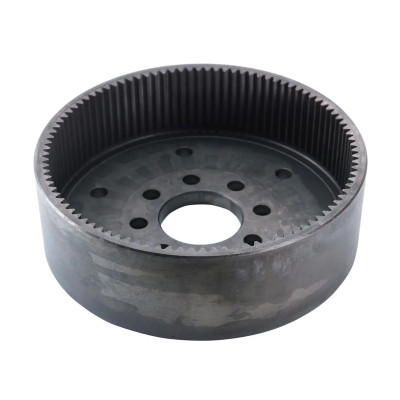
Some parts needed gear shaping. Gear shaping is often useful when part geometry, internal teeth, shoulders, or limited cutting space make hobbing less suitable.
Choosing the right process matters because it affects:
• Tooling cost
• Production time
• Tooth form quality
• Machining access
• Part consistency
• Batch production stability
Instead of forcing all parts into one process, PairGears reviewed each drawing and selected a suitable route based on part structure and production needs.
Supporting Other Machined Parts
This project also included non-gear machined parts. These parts required processes such as turning, milling, drilling, tapping, or other machining work.
This was important because many overseas buyers do not want to manage several small suppliers for one mechanical assembly project. They prefer one responsible contact who can understand the whole package and keep the project moving.
For the customer, this helped reduce:
• Supplier management work
• Process communication errors
• Different quality standards between suppliers
• Unclear production status
• Separate shipping arrangements
This is the practical value of one-stop machining support.
Why Surface Treatment Was Important
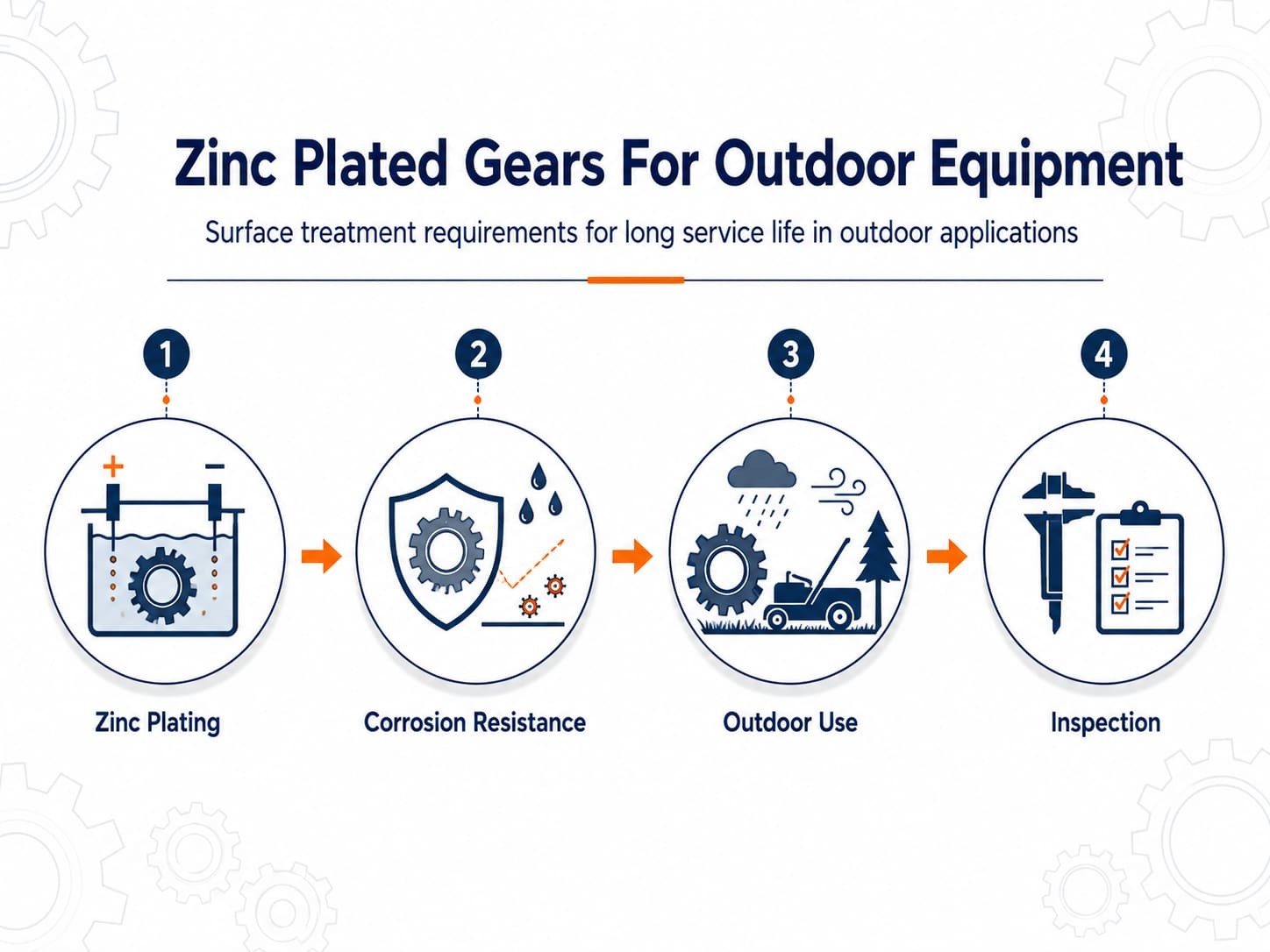
All parts in this project had to be electroplated. The customer also required ISO 19598:2016 Fe/Zn12/Cn/T2.
For outdoor equipment, corrosion risk needs to be considered from the beginning. Moisture, temperature changes, rain, dust, and long service life can all affect metal parts.
In this project, surface treatment was reviewed before production instead of being treated as a final optional step. This helped the team consider coating requirements, appearance, part protection, and possible effects on dimensions.
Electroplating, blackening, and oxidation are all common surface treatment methods for metal parts, but they are not the same. Each method has different effects on corrosion resistance, appearance, and application suitability.
For this project, the customer had already specified the coating standard. PairGears followed the customer’s requirement and kept the electroplating requirement as part of the production and inspection plan.
Sample Confirmation Before Batch Production
Sample production was a key step.
Because this project included several part types, sample approval helped confirm not only the machining result, but also the full project route. The customer could check the real parts, surface finish, basic dimensions, and assembly-related details before moving into batch production.
This step reduced the risk of batch rework.
For buyers, sample confirmation is especially useful when:
• The project includes several custom parts
• The parts need surface treatment
• The parts will be used outdoors
• The order involves tooling cost
• The buyer needs internal engineering approval
• The product will later move into repeated batch orders
After the customer confirmed the samples, PairGears moved the approved items into batch production.
Inspection and Shipment
Before shipment, PairGears checked the finished parts according to the drawings and project requirements.
For gear parts, inspection focused on basic dimensions, tooth machining condition, bore size, thickness, and visible surface quality.
For other machined parts, inspection focused on dimensions related to assembly, such as holes, steps, threads, end faces, and mounting areas.
Because the parts were electroplated, the final check also included surface appearance and packaging protection. For export orders, packaging is part of quality control. Parts must be protected from impact, scratches, and moisture during transportation.
What Buyers Can Learn From This Case
This case shows that custom machined gears are often part of a larger mechanical project. A buyer may start by looking for a gear supplier, but the real need may include gears, shafts, brackets, sleeves, pins, or other machined parts.
Before sending an RFQ, buyers should prepare:
• 2D or 3D drawings
• Material requirements
• Surface treatment standard
• Annual demand
• Batch quantity
• Sample requirements
• Application environment
• Inspection requirements
• Packaging requirements
For outdoor equipment, the surface treatment standard should be confirmed at the RFQ stage. Adding coating requirements after machining may cause cost changes, schedule delays, or rework.
A clear RFQ helps the supplier give a clear quotation. It also helps both sides avoid repeated communication later.
Why Choose PairGears for Custom Machining Projects
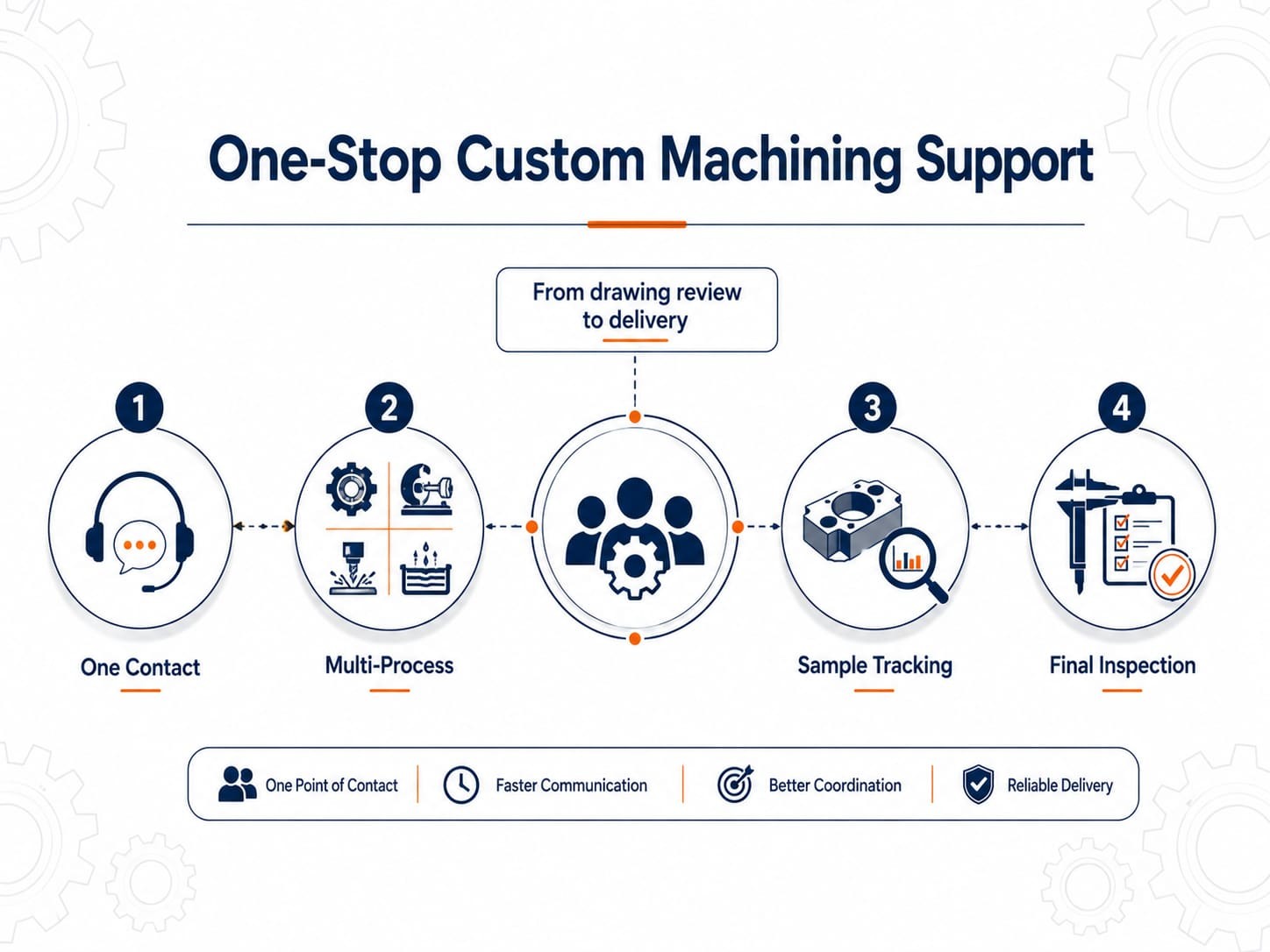
PairGears is not only a precision gear manufacturer. We also support custom gear and machining projects based on drawings, samples, OEM numbers, dimensions, and application requirements. PairGears presents itself as a custom gear supplier for overseas buyers and provides custom precision gear solutions for different machinery fields.
For projects that include both gears and other machined parts, PairGears can help review drawings, split the process route, prepare clear quotations, manage sample status, coordinate machining resources, arrange surface treatment, inspect finished parts, and support shipment.
This is useful for overseas buyers who want fewer suppliers, clearer project status, and more stable communication.
FAQ
What information should buyers send for a custom machining quote?
Buyers should send drawings, material requirements, surface treatment standards, quantity, application environment, and inspection requirements. If drawings are not available, samples or photos can help with the first review.
Can PairGears support both gears and other machined parts?
Yes. PairGears focuses on custom gears and gear-related parts, but we can also help coordinate other machined parts when they belong to the same project package.
Why was electroplating required for this project?
The parts were used in outdoor power equipment, so corrosion resistance was important. The customer required electroplating according to ISO 19598:2016 Fe/Zn12/Cn/T2.
Why is sample approval important before batch production?
Sample approval helps confirm machining quality, surface treatment, dimensions, and assembly-related details before large quantities are produced. It reduces batch production risk.
Is gear hobbing always better than gear shaping?
No. Gear hobbing and gear shaping serve different part structures. Hobbing is often efficient for many external gears, while shaping may be more suitable for internal teeth or parts with limited cutting space.
Conclusion
This European power equipment project was not a simple gear order. It was a mixed custom machining project with multiple part types, different gear processes, other machined parts, electroplating requirements, sample approval, and batch production.
PairGears helped the customer manage the project with a clear quotation, suitable process planning, sample tracking, surface treatment coordination, final inspection, and shipment support.
If your project includes custom machined gears, gear shafts, or other machined metal parts for outdoor equipment, you can send your drawings, samples, surface treatment requirements, and estimated quantity to PairGears for review. Our team can help check the process route and prepare a clear quotation for your project. Contact us today!
Are you looking for a reliable precision gear manufacturer?
We can quickly provide customers with market analysis, technical support and customized services.Join Our Distributors
Are you looking for a partnership with huge market potential and generous profit margins? As our distributor, you will receive comprehensive market support, high-quality product resources, and professional business training. Contact us now to learn more about becoming our distributor and start your journey to success!
- *Name
- Phone
- *Title
- *Content