Cold Extrusion vs Hot Forging for Gear Blanks
Introduction
When customers compare blank routes for gears, they usually do not ask about process names first. They ask practical questions: Which route gives better consistency? Which one reduces machining stock? Which one is more suitable for large-volume production? Is the tooling investment worth it? What is the realistic MOQ?
At PairGears, we support gear and gear blank programs for Agricultural Machinery, Heavy-Duty Trucks, Construction Equipment, and EV drivetrains. From a factory point of view, cold extrusion and hot forging are not two labels for the same job. They are two routes under one decision logic, and the right choice depends on annual demand, shape difficulty, blank consistency target, and how much post-machining the project can accept.
What's difference between cold extrusion and hot forging?
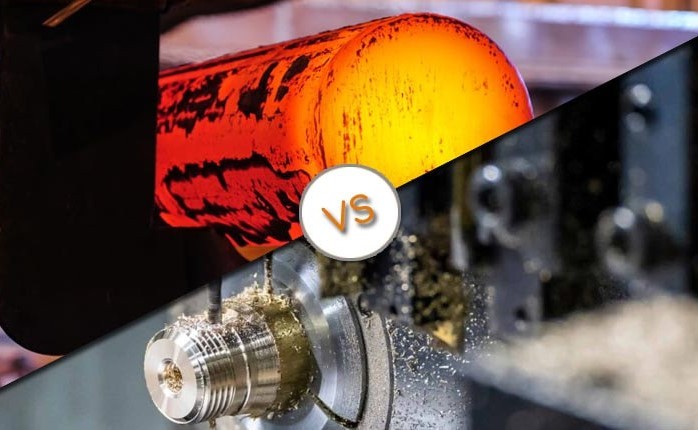
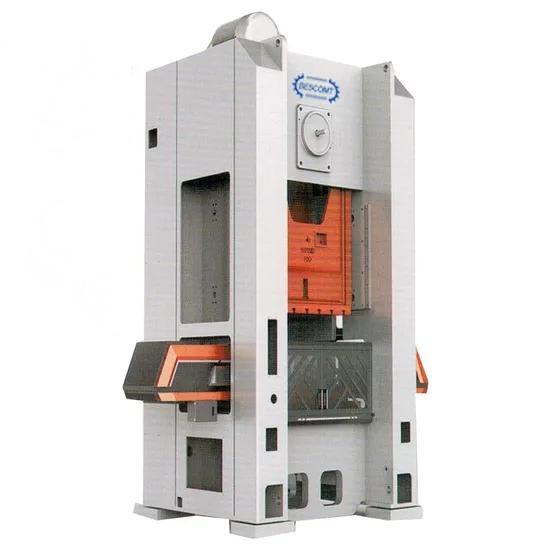
Cold extrusion usually starts with the billet or slug at room temperature or near room temperature and is classified as a below-recrystallization forming process, while hot forging forms the blank at higher temperature so the material flows more easily.
Why this choice matters in real projects
The temperature definition matters because it changes how the material behaves during forming. In cold extrusion, the billet starts near room temperature, but it can heat up during deformation as mechanical work turns into heat. Even so, the process is still classified as cold working because it remains below the recrystallization temperature, not because the part stays at room temperature through the entire stroke.
Hot forging works differently. The material is formed above the recrystallization temperature, which reduces flow stress and allows larger deformation more easily. For that reason, hot forging is often a more practical choice for harder-to-form blanks or early-stage projects where forming feasibility and tolerance control matter more than achieving the cleanest near-net blank at the first step.
From a sourcing perspective, the key question is not which process sounds better, but which one fits the project. Cold extrusion is often better for stronger blank consistency, lower machining stock, cleaner surfaces, and stable high-volume output. Hot forging is often more practical for harder-to-form parts, larger material flow, or programs that do not yet justify a tooling-sensitive route. The comparison should look at total project cost, not just blank price.
How the two routes compare in practice
The table below does not present "good versus bad" It shows two process routes with different economic and manufacturing logic.
| Comparison item | Cold extrusion | Hot forging |
| Forming temperature | Billet usually enters at room temperature or near room temperature; process category is below recrystallization temperature, with deformation heating during forming | Material is formed above recrystallization temperature |
| Dimensional consistency | Usually stronger in suitable materials and stable tooling conditions | Usually weaker than cold extrusion; machining allowance is often larger |
Surface condition | Usually cleaner, with less oxide-related surface scale | Oxide scale and rougher as-forged surfaces are more common |
Production rhythm | Strong fit for stable, large-volume output once the process is tuned | Material deforms more easily, but the full line also includes heating, holding, transfer, and descaling control |
Tooling sensitivity | Higher die accuracy, stronger load sensitivity, and more demanding die design | Tooling also matters, but the route is more tolerant of large deformation |
Material utilization | Usually stronger in near-net blank planning | Can also be efficient, but machining stock is often larger |
| MOQ logic | PairGears currently recommends about 10,000 pcs for cold extrusion projects | Usually more flexible; must still be reviewed by geometry, tooling, and annual demand |
Best-fit programs | Standardized, high-volume, consistency-driven, cost-dilution projects | Lower-volume, harder-to-form, or development-stage blank programs |
Where this decision matters most
●Agricultural Machinery
Programs often care about cost balance, stable repeat batches, and a blank route that supports long-term replacement and volume supply.
●Heavy-Duty Trucks
Projects often need stronger consistency and better control of downstream machining and heat-treatment variation across repeat orders.
●Construction Equipment
Harder-to-form blanks and demanding duty cycles may push the program toward a route that is more tolerant in material flow and shape realization.
●EV Drivetrains
Compact parts and repeatable large-volume manufacturing often make blank consistency and process stability more important early in route selection.
What engineers and buyers should actually check
| Check item | What to verify | Why it matters |
| Blank geometry difficulty | How much section change and material flow the blank needs | Shows whether cold forming is realistic or whether hot forging is the safer route |
Temperature logic | Whether the route is below or above recrystallization temperature | Prevents loose wording and sets the correct process expectation |
Dimensional target | Required as-formed consistency before machining | Strongly affects route choice and downstream stock planning |
| Surface requirement | How much the project values a cleaner as-formed surface | Affects machining, handling, and secondary finishing logic |
| Machining allowance strategy | How much stock the later process can accept | Larger allowances reduce some of the economic benefit of a precise blank route |
Tooling cost sensitivity | Whether the program can absorb higher front-end die investment | Critical for cold extrusion economics |
Annual demand and MOQ | Stable repeat volume or development-stage uncertainty | Determines whether tooling can be diluted properly |
Material flow and formability | Steel grade and forming behavior | Important for feasibility, die life, and route stability |
Output and consistency target | Need for large-batch repeatability | Usually favors a stable high-volume route |
A common RFQ mistake is to compare only blank piece price. That is incomplete. The route should be judged by total project logic: blank quality, post-machining effort, die amortization, line stability, energy input, and whether the demand volume is strong enough to support the chosen route.
What the right blank route improves
| Benefit | If the route is matched correctly | Practical result |
| Better total cost control | The blank route fits the real volume and process chain | Less hidden waste in tooling or machining |
More stable blank quality | The route matches geometry and material flow needs | Lower downstream variation |
Better machining efficiency | Blank allowance is controlled more practically | Less unnecessary cutting and correction |
| Better project timing | The route fits the stage of the program | Easier transition from trial to repeat orders |
| Better sourcing logic | MOQ and tooling assumptions are realistic | Fewer later conflicts on cost and lead time |
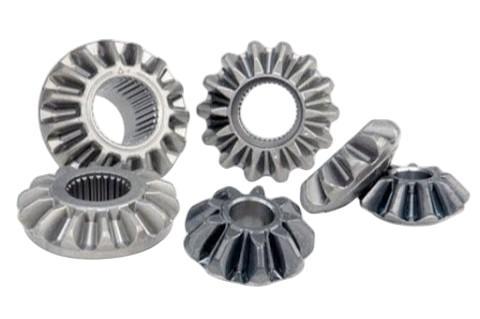
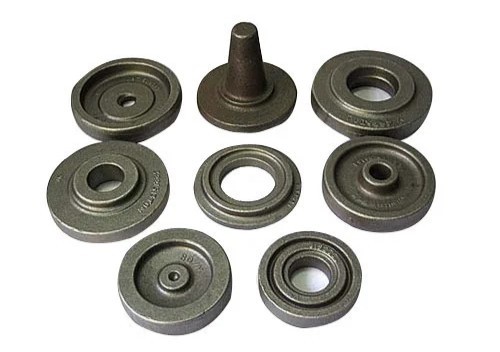
Cold extrusion often becomes attractive when the project has enough demand to absorb the die investment and then benefit from stronger blank consistency and lower material waste. Hot forging often remains attractive when the geometry is more difficult or the commercial risk of a tooling-heavy cold route is still too high at the current stage.
Practical supplier review points
● Start with annual demand and program stage. If the program is already stable, long-term, and high-volume, cold extrusion should be evaluated early. If the project is still in development or volume is uncertain, hot forging may be the more practical entry route.
● Ask about the full cost chain, not just blank price. Review tooling, trial cost, machining allowance, material utilization, and repeat-cycle stability together.
● Confirm whether the part is truly suitable for cold forming. Some blank shapes look attractive on paper for cold extrusion but become difficult because of deformation load, die complexity, or geometry limits.
● Review die sensitivity and process stability. For cold extrusion in particular, die design, lubrication, and forming load control are not secondary issues; they are core project risks.
● Keep MOQ discussions realistic. For PairGears, cold extrusion projects are currently more practical when MOQ is around 10,000 pieces or above. Hot forging projects should still be assessed case by case based on geometry, tooling, and annual demand.
Why Choose Us
● Practical route selection for Agricultural Machinery, Heavy-Duty Trucks, Construction Equipment, and EV drivetrains
● Balanced review of blank consistency, tooling cost, and downstream machining logic
● Project-stage judgment: whether the program is ready for a cold-extrusion volume model or should start from a more tolerant hot-forging route
● Review of material, blank geometry, and annual demand before recommending the process path
● Process advice that aims for manufacturable, repeatable, and commercially realistic blank production
FAQ
Q1: Is Cold Extrusion Always A Room-Temperature Process?
A: The billet usually starts at room temperature or near room temperature, but the workpiece can heat up significantly during deformation. It is still classified as cold working because the forming condition is below recrystallization temperature.
Q2: Is Cold Extrusion Always Better Than Hot Forging For Gear Blanks?
A: No. Cold extrusion usually offers better consistency and surface condition, but it is not always the most practical route for difficult shapes or lower-volume programs.
Q3: Why Is Cold Extrusion More Sensitive To Project Volume?
A: Because the front-end die investment and process development are usually more sensitive, so the project needs enough volume to dilute that cost.
Q4: Does Hot Forging Always Mean Poor Blank Quality?
A: No. Hot forging can still produce very usable gear blanks, especially when the project values formability and route tolerance more than minimum machining allowance.
Q5: What Should I Send In An RFQ For Blank-Route Evaluation?
A: Share the drawing, steel grade, annual demand, target cost, and how much post-machining allowance the project can accept.
Conclusion
Cold extrusion and hot forging are different blank routes for different project needs. Cold extrusion is often better for Higher precision standards, Smoother surface, higher material use, and stable large-volume output. Hot forging is often more practical for harder-to-form blanks, development-stage projects, or programs that cannot yet support a tooling-sensitive cold route.
If you already have drawings, material grade, annual demand, and a target cost in mind, you are welcome to Contact us. PairGears can review your project and help determine whether cold extrusion or hot forging is the more practical starting point for your gear blank route.