Driving Gear vs Driven Gear vs Idler Gear
Introduction
In gear transmission systems, driving gear, driven gear, and idler gear are often mistaken for different gear types. They are not gear types by tooth form or structure. They simply describe the job each gear does in the transmission path.
At PairGears, we produce custom precision gears and gear sets for agricultural machinery, heavy-duty trucks, construction equipment, and EV drivetrains. In actual projects, understanding these roles helps buyers and engineers check gear ratio, rotation direction, center distance, layout, wear points, and inspection needs more accurately.
What Are Driving, Driven, and Idler Gears?
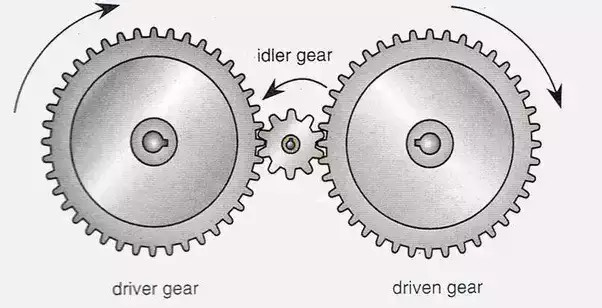
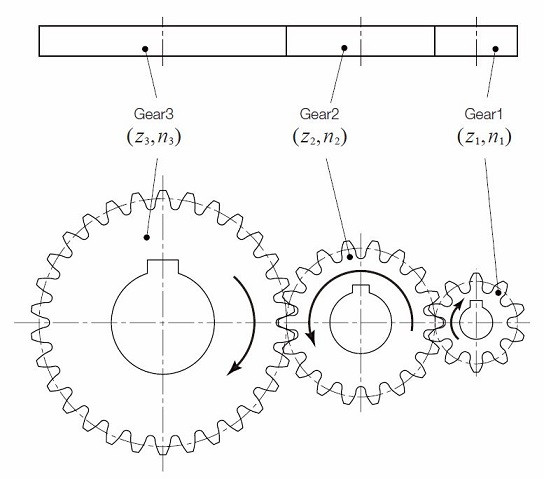
A driving gear is the gear that receives power from the input source and drives the next gear in the train. It may be connected to a motor, engine, hydraulic motor, or another transmission stage.
A driven gear is the gear that receives power from the driving gear or from another intermediate gear. It usually delivers motion and torque to the output shaft, load, or next mechanism.
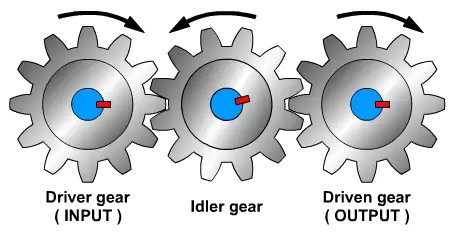
An idler gear is a gear placed between the driving gear and the driven gear. It acts as an intermediate gear. In most simple gear trains, it changes rotation direction or helps bridge distance between shafts, but it does not change the final gear ratio between the driving and driven gears.
In simple terms:
● The driving gear inputs power.
● The driven gear receives and outputs power.
● The idler gear transfers motion between them and helps adjust direction or layout.
Why These Gear Roles Matter in Real Projects
The first question is: are these all just gears?
Yes. They are all gears.
The next question is: why should we separate them?
Because each gear has a different job. The driving gear is at the input, the driven gear is at the output, and the idler gear sits between them to change direction or support layout. If these roles are not defined clearly, engineers may misread rotation direction, transmission path, or wear points.
For example, in a reverse gear mechanism, the idler gear is not added mainly to change the ratio. It is added to reverse the output direction. In a conveyor or gearbox layout, an idler gear may be used because the input and output shafts are too far apart for direct meshing.
From a factory perspective, an idler gear is never “just an extra gear.” It adds another mesh, another shaft, another bearing position, and another inspection point. That means it can solve a layout problem, but it also adds design and maintenance considerations.
Key Differences Between the Three Roles
Item | Driving Gear | Driven Gear | Idler Gear |
Main role | Receives input power and drives the next gear | Receives power and delivers output | Transfers motion between gears |
Typical position | Input side | Output side | Between driving and driven gears |
| Directly connected to power source | Often yes | Usually no | Usually no |
Directly connected to final load | Not always | Often yes | Usually no |
| Effect on final ratio | Yes | Yes | Usually no in a simple gear train |
| Effect on rotation direction | Starts the direction chain | Shows final output direction | Often used to change final rotation direction |
| Main design focus | Input torque, shaft connection, tooth strength | Output torque, contact stability, service life | Shaft support, added mesh loss, layout control |
These roles are functional. The same physical gear may become a driving gear in one system and a driven gear in another, depending on where power enters and exits.
Does an Idler Gear Change Gear Ratio?
In a simple gear train, an idler gear usually does not change the final ratio between the driving gear and the driven gear.
For example:
● Driving gear tooth count = Z₁
● Idler gear tooth count = Zi
● Driven gear tooth count = Z₂
The staged calculation can be written as:
i = (Zi / Z₁) × (Z₂ / Zi)
The idler tooth count cancels out, leaving:
i = Z₂ / Z₁
This means the final ratio is still determined by the driving gear and driven gear tooth counts.
Where These Roles Matter Most
● Agricultural Machinery
Gear systems often work under variable loads, dirt, and shock. Driving, driven, and idler gear roles must be clear to avoid early wear and incorrect replacement.
● Heavy-Duty Trucks
Transmission systems may use idler gears in reverse or auxiliary mechanisms. Correct role definition helps confirm rotation direction, material route, and load path.
● Construction Equipment
Harsh duty and repeated start-stop operation make idler support, mesh stability, and maintenance access important.
● EV Drivetrains
Compact layouts and noise requirements make every added mesh more sensitive. An idler gear can help packaging, but it must be justified against added complexity.
The same gear role may have different risk points in different industries. That is why the application should always guide the design.
Benefits and Limits of Using an Idler Gear
| Aspect | Benefit | Limitation |
| Rotation direction | Can reverse or restore final output direction | Must be checked carefully in the full gear path |
| Layout flexibility | Helps connect shafts that cannot mesh directly | Requires additional space |
Center distance | Bridges a larger gap between input and output gears | Adds another shaft and support point |
Design cost | May avoid redesigning the driving or driven gear | Still adds one part and one mesh |
| Maintenance | Can solve a functional layout problem | Adds another wear point and inspection item |
An idler gear is useful when it solves a real layout or direction problem. It should not be added without a clear reason, because every added gear creates another source of friction, noise, tolerance stack-up, and wear.
Common Types of Idler Gears
| Idler type | Structure | Main advantage | Typical use |
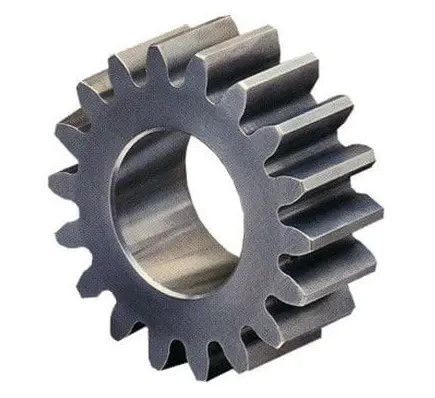
| Spur idler gear | Straight teeth parallel to the axis | Simple, economical, easy to manufacture | General parallel-shaft gear trains, conveyors, reverse gear mechanisms |
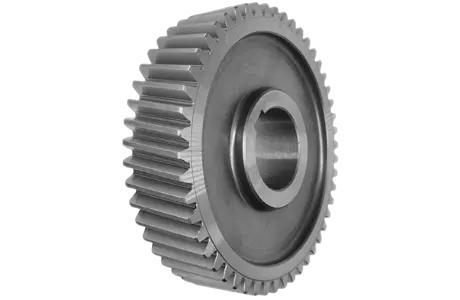
| Helical idler gear | Teeth cut at a helix angle | Smoother operation and lower noise | More stable parallel-shaft transmission systems |
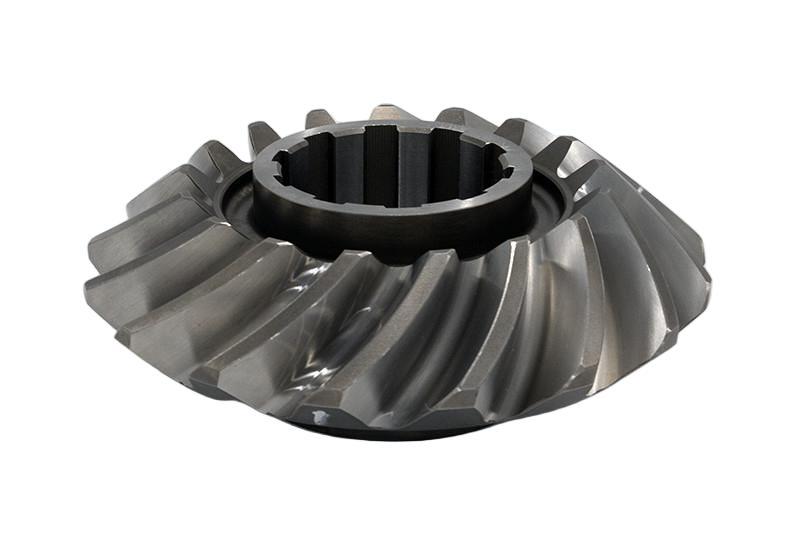
| Bevel idler gear | Teeth on a conical surface | Helps transmit motion across angled shafts | special layout mechanisms |
The idler type should match the shaft arrangement, load, speed, noise target, cost, and available installation space. It should not be selected only because "an intermediate gear is needed."
Practical Review Points When Sourcing These Gears
● Identify each role clearly.
State which gear is the driving gear, which is the driven gear, and whether any idler gears are used.
● Confirm the rotation direction.
Idler gears can change final output direction, so the required rotation direction should be shown or described clearly.
● Check whether the idler affects layout or support.
The idler needs its own shaft, bearing support, and mounting position.
● Review ratio calculation correctly.
In a simple gear train, the idler usually does not change the final ratio. Compound gear trains must be calculated separately.
● Ask whether the gears should be supplied as a set.
If backlash, contact, noise, or assembly consistency matters, paired supply and inspection may be more practical.
Why Choose Us
At PairGears, we do not review driving gears, driven gears, and idler gears as isolated parts. We look at the full transmission path.
●Application-fit review for Agricultural Machinery, Heavy-Duty Trucks, Construction Equipment, and EV drivetrains
●Correct ratio and rotation direction review
●Whether the idler gear is necessary for the layout
●Center distance and shaft arrangement checks
●Material and heat-treatment planning based on load path
●Set-based inspection when meshing behavior matters
For many projects, the key question is not only whether each gear can be manufactured. It is whether the gear train works correctly as a complete system.
FAQ
Q1: Is An Idler Gear A Separate Type Of Gear?
No. An idler gear is named by its role in the gear train, not by tooth form or structure.
Q2: Does An Idler Gear Change The Gear Ratio?
In a simple gear train, it usually does not. The final ratio is normally determined by the driving and driven gears.
Q3: What Is The Main Purpose Of An Idler Gear?
It is mainly used to change final rotation direction or bridge distance between gears.
Q4: Can Too Many Idler Gears Create Problems?
Yes. More idler gears mean more meshes, bearings, support points, losses, noise sources, and maintenance points.
Q5: Are Driving And Driven Gear Roles Always Fixed?
No. They are relative terms. The role depends on where power enters and where output is taken.
Conclusion
Driving gears, driven gears, and idler gears are not three separate gear families. They are three functional roles in a gear transmission system. The driving gear inputs power, the driven gear receives and delivers output, and the idler gear helps transfer motion, control direction, or improve layout.
If you are developing a gear train or need to confirm the relationship between driving, driven, and idler gears, you are welcome to Contact Us with your drawings, tooth counts, module or DP, center distance, rotation direction, and operating conditions so we can help review the gear layout, manufacturing route, and inspection focus.