Gear Grinding for Precision Gears and When to Use It
1. Introduction
When a project calls for precision gears, grinding is often the step that makes the difference between a part that "measures fine" and a part that assembles smoothly and performs consistently. Grinding is not only about making a surface look better—it is a controlled finishing process used to achieve tight tooth geometry, stable contact behavior, and predictable batch results.
At PairGears, we manufacture custom precision gears and gear sets for Agricultural Machinery, Heavy-Duty Trucks, Construction Equipment, and EV drivetrains. This guide explains what gear grinding is, which grinding methods are commonly used, when grinding is worth the cost, and what to verify when selecting a grinding supplier for repeat production.
2. What is gear grinding?
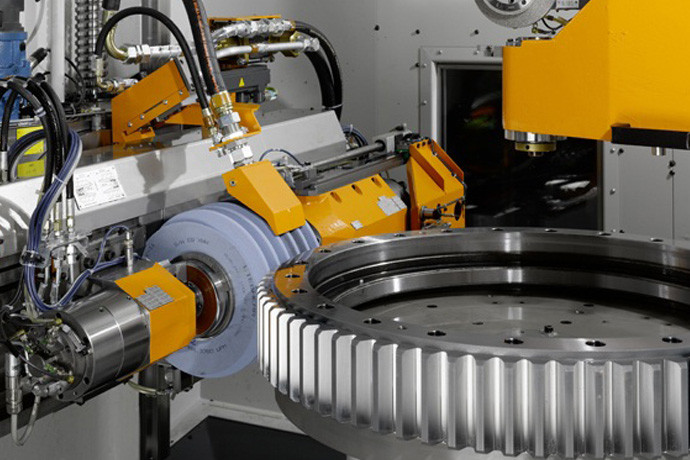
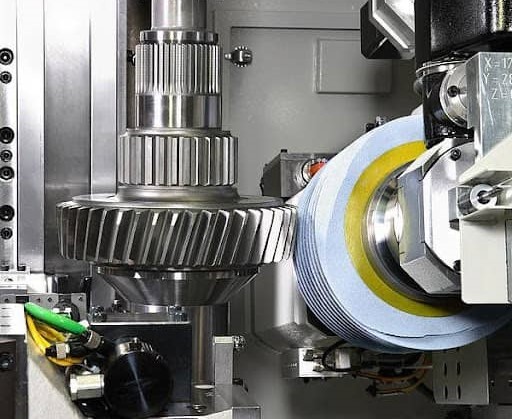
Gear grinding is a finishing process that uses an abrasive grinding wheel to generate or refine gear tooth geometry and surface quality to meet high accuracy and consistency requirements.
3. Why gear grinding matters for precision gears
Grinding becomes the go-to step when cutting alone can't reliably hit the required geometry and surface targets. After heat treatment, gears often distort—datums shift and tooth geometry drifts—so grinding restores reference surfaces and tooth accuracy to keep the mesh behavior on target.
In practice, many programs use a focused chain: cut efficiently, heat-treat for the needed case/core properties, then grind only the features that drive functional results. This approach is often more economical than "tightening everything" upstream because it concentrates effort on the surfaces that define assembly alignment and meshing.
The main risk is discovering datum, stock, or distortion issues too late—at that point a gear can become scrap. So involve a grinding-capable supplier early to align the route (cut → heat treat → hard finishing) to duty and tolerances. As a rule, if your limiting factor is tooth geometry, surface finish, or repeatability, grinding usually pays back; if cost dominates and tolerances are generous, a cut-only route can work—provided runout and datums still meet assembly needs.
4. Common types of gear grinding
| Type of gear grinding | How it works | Best fit | Key watch-outs |
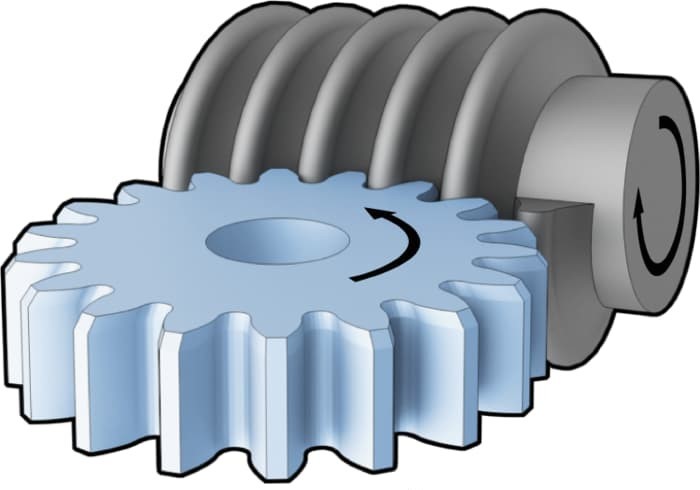
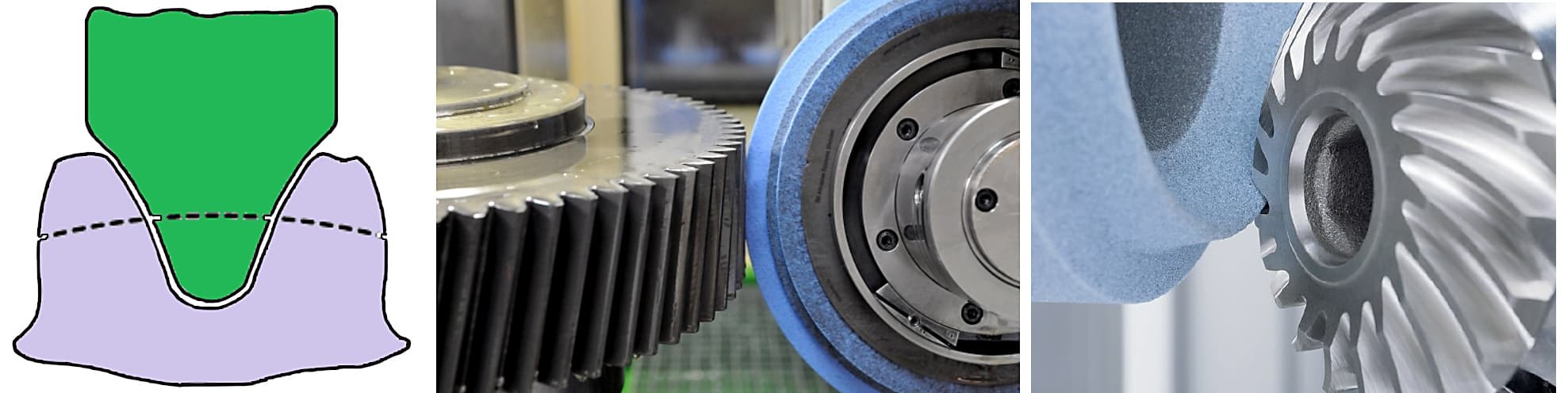
Generating (worm) grinding | A worm-shaped wheel generates the involute as the gear rolls | External gears needing high accuracy and stable lead/profile | Machine setup, dressing, and thermal control drive repeatability |
| Form / profile grinding | A formed wheel grinds the tooth space to the target profile | Small batches, special profiles, prototypes, or repairs | Wheel form accuracy and dressing discipline matter |
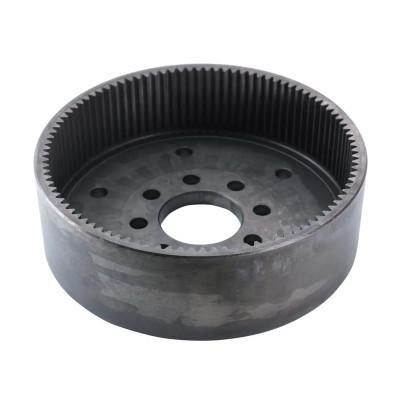
| Internal gear grinding | Grinding of internal teeth using specialized tools and kinematics | Internal gears where cutting accuracy is limited or distortion is significant | Tool access and metrology can be more complex |
| Gear-shaft spline / flank grinding | Grinding of splines or critical fits on gear shafts as part of the drive set | Assemblies where the gear and shaft interface drives performance | Datum control between teeth and mounting surfaces is critical |
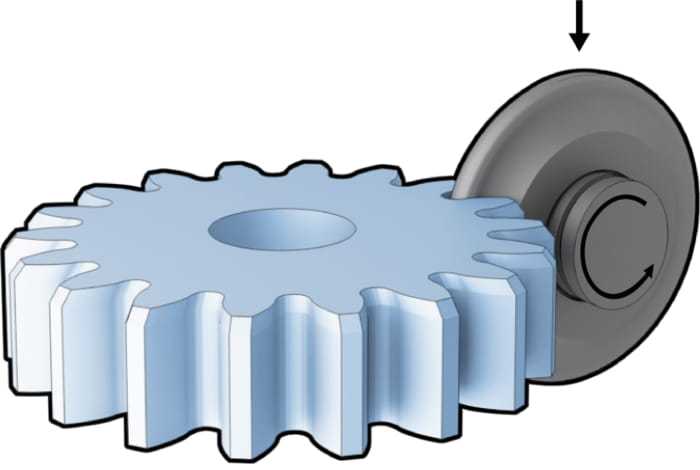
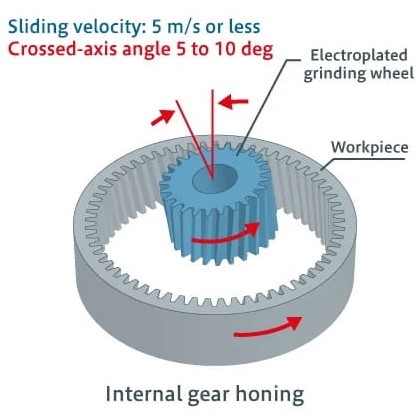
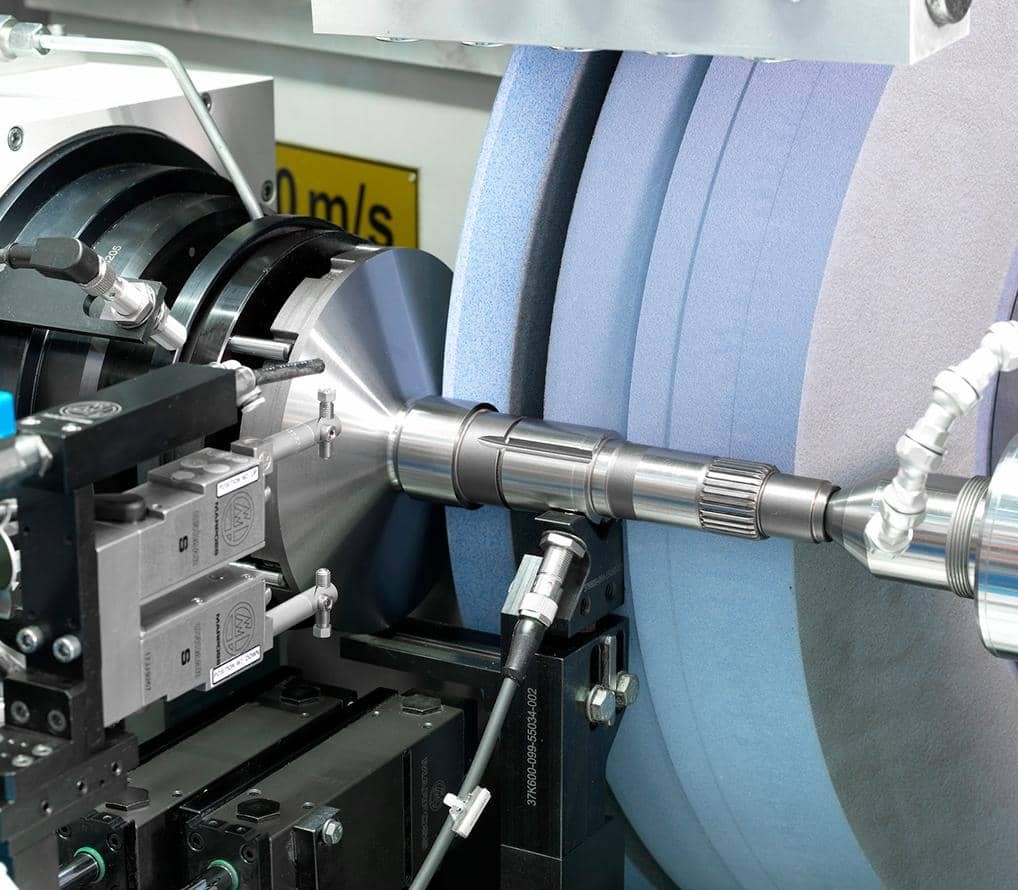
Selection note:
the "best" grinding method is the one that meets your tolerance target with repeatable risk control. Generating grinding is common for precision external gears in volume programs. Form grinding can be a practical fit for special profiles or prototypes. Internal gear grinding is more specialized and should be matched to your inspection capability. For gear-shaft assemblies, ensure teeth, fits, and mounting faces are controlled to the same datum plan.
5. Where gear grinding is used
5.1 Agricultural Machinery
Long duty cycles and mixed loads; grinding helps stabilize tooth geometry, limit scatter in backlash feel, and support repeatable gear set assembly.
5.2 Heavy-Duty Trucks
High torque and long-life targets; hard finishing supports repeatable contact behavior and stable assembly in transmission stages and differentials, especially after heat treatment.
5.3 Construction Equipment
Shock loads and harsh environments; grinding can control geometry after heat treatment so load is shared as intended rather than concentrating at an edge.
5.4 EV Drivetrains
Higher speed and compact packaging; grinding supports tight geometry and smoother operation when tolerance windows are narrow and batch repeatability matters.
6. Key items to verify in a grinding route
| Feature / check item | What to confirm | Why it matters |
Grinding method fit | Generating vs form vs internal grinding aligned to gear type and volume | Prevents over-spec or under-spec routes |
Datum strategy | Which faces/bores are the references before and after heat treat | Controls runout, alignment, and assembly stability |
Stock allowance plan | Sufficient grind stock after heat treat without forcing heavy removal | Reduces burn risk and improves consistency |
Wheel selection & dressing | Wheel grade, dressing frequency, and dressing repeatability | Directly impacts profile/lead and surface quality |
| Thermal and burn control | Coolant delivery, temperature control, burn detection if required | Avoids temper damage and early surface failure |
| Geometry verification | Profile/lead, pitch variation, runout to datums (as specified) | Confirms the gear will mesh and assemble repeatably |
| Surface quality target | Surface finish requirement and how it is measured | Supports stable lubrication film and reduces wear risk |
Traceability and change control | Lot control, tool life management, revision control for repeat orders | Protects batch-to-batch consistency |
7. Benefits of gear grinding in production
| Benefit | What improves | Result in production |
Higher tooth accuracy | Profile/lead and pitch stability | Better meshing consistency and fewer assembly surprises |
| Better surface quality | Controlled finishing and lower roughness | Reduced wear risk and more stable long-run behavior |
| Controlled post-heat geometry | Restored datums and corrected distortion | Lower scrap and rework at final stages |
Repeatable batch output | Process discipline and inspection alignment | Less unit-to-unit scatter across repeat orders |
| Clearer supplier accountability | Measurable checks tied to risk points | Faster troubleshooting when issues occur |
From a cost perspective, grinding is often justified by yield and stability: fewer late-stage rejects, fewer assembly adjustments, and less variation between units. For programs where downtime or rework is expensive, the total cost can be lower even if the piece price is higher.
8. Supplier selection tips
● Start with the tolerance target and duty cycle: ask the supplier to propose a route (cut → heat treat → grind) that controls your dominant risk point.
● Ask what datums are used for grinding and how runout to those datums is controlled; this is often more important than a single hardness number.
● Verify inspection capability: profile/lead measurement approach, runout measurement to mounting surfaces, and how results are reported when required.
● Check burn and thermal control: coolant strategy, dressing plan, and how the supplier avoids temper damage during hard finishing.
● Confirm repeatability systems: tool life management, lot traceability, and change control so repeat orders match the first approved sample.
9. Why Choose PairGears
● Four-sector application focus: Agricultural Machinery, Heavy-Duty Trucks, Construction Equipment, and EV drivetrains, with different duty-cycle priorities.
● System-minded planning: we align gear geometry, shafts, datums, and finishing choices to support repeatable assembly.
● Manufacturing route clarity: we help define practical grind allowances, datum flow, and inspection checks before sampling.
● Quality evidence on request: project-focused inspection data (as specified) to support approval and repeat orders.
● Prototype-to-batch support: a workable path from first articles to stable production output.
10. FAQ
Q1: What Is Gear Grinding Used For?
Gear grinding is used to achieve high tooth geometry accuracy and surface quality, especially after heat treatment or when tight tolerances are required. It is often the final step that stabilizes how the gear meshes and assembles.
Q2: When Is Grinding Necessary Versus Cutting Only?
Grinding is most useful when tooth profile/lead, surface finish, or post-heat distortion control is the limiting factor. For generous tolerances, cutting may be enough if the supplier can still control datums and runout for your assembly.
Q3: Can Grinding Fix Heat-Treatment Distortion Completely?
Grinding can correct many geometric deviations, but it depends on the distortion level and available stock allowance. The best results come from planning distortion control early, then grinding the features that control functional behavior.
Q4: What Information Should I Provide For A Grinding RFQ?
Share drawings (or an OEM reference), material and heat-treat intent, accuracy target, expected volume, and which datums matter for assembly (bore/face/shaft fits). If you have a dominant failure mode, include it.
Q5: What Should Be Checked When Accepting Ground Gears?
Confirm the agreed geometry checks (profile/lead, runout to datums, and any surface requirement) and verify that results are consistent across samples or lots. For paired sets, confirm both parts follow the same datum and inspection plan.
11. Conclusion
Gear grinding is often the final step that turns a good gear into a repeatable, high-precision component. The right grinding method, datum strategy, and verification plan help control the risks that show up late—distortion, geometry drift, and assembly variation.
If you are evaluating a precision gear program for Agricultural Machinery, Heavy-Duty Trucks, Construction Equipment, or EV drivetrains, Contact us with your drawing, sample, or OEM reference. We can review the practical route and inspection plan so your gears assemble smoothly and perform consistently across batches.