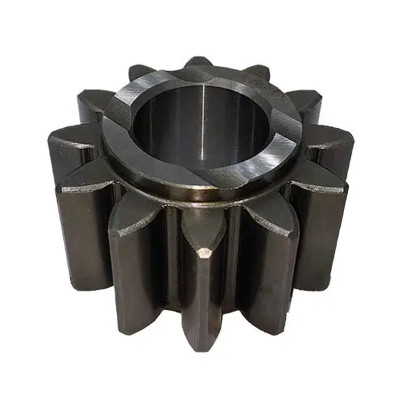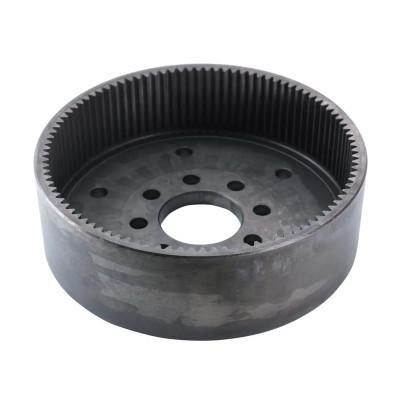
Helical Gear Drive Basics and Selection Guide
1. Introduction
Helical gear drives are a common choice when you need reliable power transfer on parallel shafts with smooth engagement and strong load capacity. They appear across industrial machinery and mobile equipment where duty cycles are long, loads can be high, and packaging is limited.
At PairGears, we manufacture custom precision gears and gear sets for Agricultural Machinery, Heavy-Duty Trucks, Construction Equipment, and EV drivetrains. This guide explains what a helical gear drive is, how it works, the main drive types, and the practical checks that help you select a solution that assembles smoothly and performs consistently across batches.
2. What is a helical gear drive
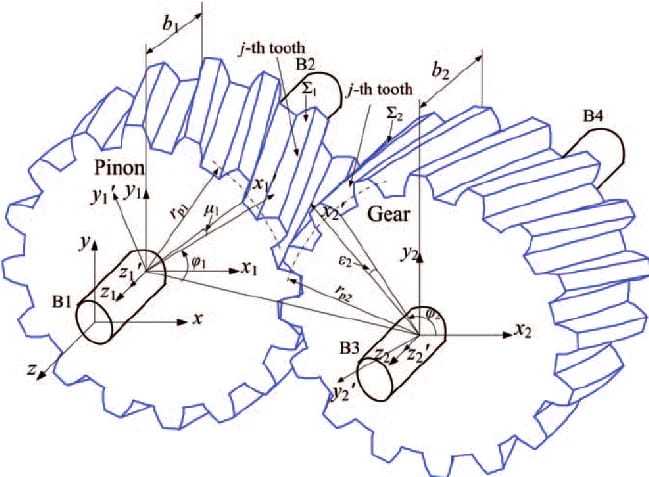
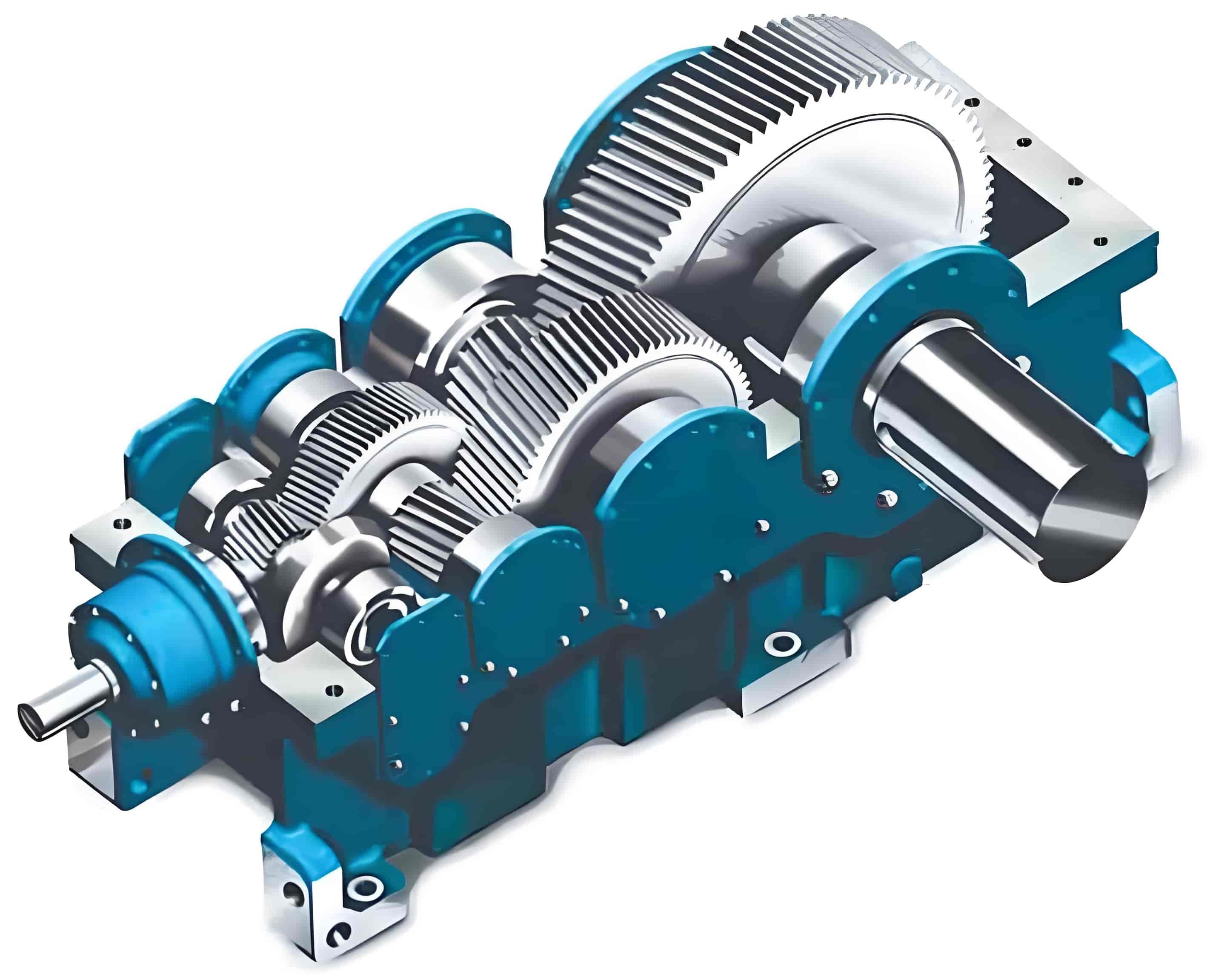
A helical gear drive is a drive system built from one or more meshing pairs of helical gears, together with gear shafts and supporting components, to transmit torque between parallel shafts.
3. Why engineers choose helical gear drives
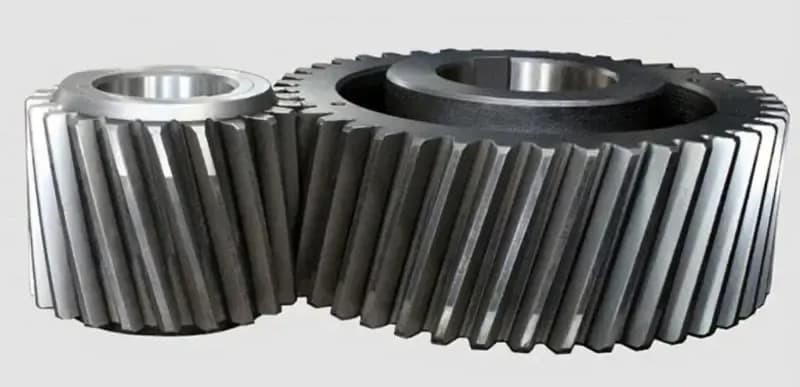
Helical gears engage progressively along the tooth line. Compared with spur gears, this reduces mesh impact and helps keep power transfer smooth in continuous-duty and higher-speed stages. Because multiple teeth often share load, helical stages also tolerate small speed fluctuations better.
However, the helix angle creates axial thrust. The same tangential force that carries torque produces an axial component, so the design must include thrust-capable bearings, correct preload, and a stiff housing. If not, misalignment can show up quickly as heat, wear, and unit-to-unit scatter.
Therefore, selection works best as a system decision: align gear geometry, shafts, bearings, lubrication, and assembly datums to keep meshing stable across the real load spectrum. Also, helical sliding is higher than spur, so define oil type, delivery method, temperature window, and contamination control early—otherwise teams often "fix" symptoms by tightening tolerances or raising hardness without addressing the root cause.
4. Common types of helical gear drives
| Type | Structure | Typical strengths | Typical applications | Notes |
Fixed-axis single-stage | One helical pair, shafts fixed | Simple, efficient, service-friendly | General reducers, conveyors, pumps, fans | Good for fixed ratio, moderate ratios per stage |
| Fixed-axis multi-stage | Two or more helical pairs | Wider ratio range, packaging flexibility | Industrial reducers, mobile drivetrains | Manage tolerance stack-up and bearing load growth |
| Planetary helical gear drive | Sun/planet/ring with helical teeth | Compact, high torque density | EV reducers, robot joints, compact drives | Requires carrier stiffness and consistent planet load sharing |
| Double helical (herringbone) concept | Opposite-hand helices on one gear | Axial thrust largely cancels; very smooth | Heavy industrial drives, marine, large blowers | Complexity and part size often decide feasibility |
Note: A transmission that uses only one helical gear meshing with a bevel gear or worm set is usually treated as a mixed gear train, not a "helical gear drive" as defined here.
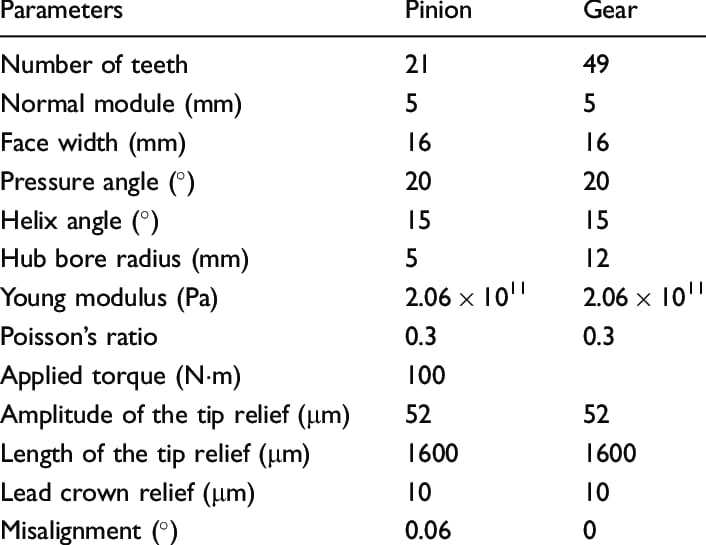
Practical parameter set for a helical gear pair:
● Helix angle and opposite hand (to ensure correct meshing)
● Normal module and pressure angle (must match between the mating gears)
● Center distance and target backlash (define assembly window)
● Face width and contact ratio (confirm load-sharing margin)
● Thrust-bearing plan and housing stiffness assumptions (to hold alignment)
● Lubrication method and temperature window (to protect the oil film)
5. Where helical gear drives are used
5.1 Agricultural Machinery
Long duty cycles with varying loads; designs often prioritize durability, contamination tolerance, and stable assembly. Helical stages are common where smooth torque transfer helps reduce performance scatter over time.
5.2 Heavy-Duty Trucks
High torque density and long-life targets; stability across batches matters for repeat service performance. Thrust control (bearings and housing stiffness) is critical in high-load helical stages.
5.3 Construction Equipment
Shock loads, frequent start/stop, harsh environments; gear drives must tolerate load spikes and thermal changes. Robust lubrication strategy and datum control help keep mesh stable after assembly.
5.4 EV Drivetrains
Higher speed operation and compact packaging; planetary helical drives are common for torque density. Efficiency and repeatability depend on tight control of gear geometry, runout, and bearing preloads.
6. Key design and verification items
Key item | What to confirm | Why it matters |
| Parameter match | normal module, pressure angle, helix angle, opposite hand | prevents mismatch and abnormal contact |
Axial thrust plan | thrust-capable bearings, preload, housing stiffness | keeps alignment stable under load |
Center distance & backlash | target values and control method | supports repeatable assembly feel |
Tooth geometry control | profile/lead and needed corrections | reduces edge loading and scatter |
| Datums & runout | bearing seats + gear mounting runout | improves unit-to-unit consistency |
| Lubrication assumptions | oil type/viscosity/temperature window | protects film stability and wear |
| Heat treatment (if required) | surface/core balance for duty | avoids wear vs shock trade-off failures |
Verification plan | what will be measured (as specified) | ensures repeat orders stay consistent |
Depending on duty cycle, additional checks may include filtration/contamination control and traceability requirements.
7. Benefits in production and operation
| Benefit | What you get | Practical impact |
Smooth engagement | Progressive tooth contact | Better stability at higher speeds |
High load capacity | Multi-tooth load sharing | Strong performance in continuous duty |
Durable performance | Lower mesh impact | Longer life when alignment and lubrication are controlled |
| Accurate ratio | Involute-based geometry | Predictable speed/torque behavior |
| Compact staging options | Fixed-axis or planetary layouts | Flexible packaging for multi-stage ratios |
| Repeatable builds | Controlled datums and verification | Less rework and fewer one-off assemblies |
In practice, these benefits are realized only when thrust support and datum control are treated as part of the design. For repeat orders, the goal is not only smooth running on one sample, but stable assembly and consistent contact behavior across batches.
8. Supplier selection tips
● Confirm parameter matching discipline: helix angle/hand, normal module, and pressure angle must be verified as a set. Ask how the supplier prevents looks-similar-but-wont-mesh mistakes.
● Ask how axial thrust is handled in the system: the supplier should discuss thrust implications and bearing interfaces, not only tooth cutting.
● Evaluate repeatability evidence: request how runout and key datums are controlled and what inspection data can be provided when required for your program.
● Check lubrication assumptions early: clarify lubricant type and operating temperature so surface finish and processing align with real duty.
● Prefer DFM clarity: a reliable supplier flags risk points (thrust, alignment, tolerance stack-up) before sampling, with clear assumptions and measurable checks.
If you need a simple request list for quoting, send the supplier: gear type (fixed-axis or planetary), ratio targets, speed/torque range, duty cycle notes (steady vs. shock), required standards (module/pressure angle/helix angle), and any assembly constraints (center distance, bearing layout, lubrication method).
9. Why Choose PairGears
PairGears supports custom helical gear drives and gear sets with a practical, build-ready approach:
Four-sector application experience:
Agriculture, heavy trucks, construction, and EV drivetrains with different duty-cycle priorities.
System-minded review:
we consider gears, shafts, bearings, and assembly datums together to improve repeatability.
Manufacturing route planning:
we focus on a workable path from prototype to repeat production, with attention to interfaces and consistency.
Quality mindset:
we emphasize the checks that drive stable assembly—geometry, runout, and fit control when specified.
Clear communication:
we help confirm the required parameter set to reduce mismatch risk early.
FAQ
Q1: What is the key feature of a helical gear drive?
The tooth trace is helical, enabling progressive engagement and smooth transmission, but it also generates axial thrust that must be supported.
Q2: Are helical gear drives only for parallel shafts?
In common industrial usage, helical gear drive usually refers to helical pairs on parallel shafts. Crossed-shaft cases require different geometry assumptions and are often treated as a separate category.
Q3: What must match for two helical gears to mesh correctly?
At minimum: normal module, pressure angle, helix angle, and opposite helix hand for the mating pair. For repeat production, also confirm center distance/backlash targets and datum control.
Q4: What are the main limitations?
Compared with spur gears, helical drives require more attention to thrust bearings, housing stiffness, and lubrication. Those system elements often decide long-term stability more than the tooth form alone.
Q5: How can I improve performance in a helical gear drive?
Focus on parameter matching, thrust support design, machining accuracy, proper lubrication, controlled assembly datums, and maintenance practices that keep contamination and misalignment under control.
11. Conclusion
Helical gear drives are a strong choice for smooth, high-load power transfer on parallel shafts—especially when the system needs stable performance over long duty cycles. The key trade-off is axial thrust, which must be managed through bearing support, housing stiffness, and a lubrication plan that matches the real operating conditions.
If you have a drawing, sample, or OEM reference, Contact us and share your speed/torque range, duty cycle notes, and any parameter requirements (module/pressure angle/helix angle), and we can help confirm a practical route for gears that assemble smoothly and perform consistently across batches.
Authoritative References
● ISO 6336 (gear tooth bending & contact strength) – ISO overview
● AGMA standards catalog (gear rating & inspection references)
● Klüber Lubrication – Gear lubrication fundamentals
● NASA – Gear research overview (high-level technical background)