What Are Cylindrical Gears and How to Choose Them
Introduction
Cylindrical gears are one of the most common gear families used in machinery. They are found in gearboxes, reducers, drive systems, and motion-control assemblies where power needs to move in a practical and reliable way. In simple terms, these gears use cylindrical pitch surfaces, and the most familiar examples are spur gears and helical gears. Internal gears also belong to this family, and rack-and-pinion systems are closely related in practical gear classification.
At PairGears, we manufacture custom precision gears and gear sets for Agricultural Machinery, Heavy Trucks, Construction Equipment, and EV drivetrains. In real projects, choosing cylindrical gears is not only about picking a tooth form. It is about shaft layout, ratio, load, speed, noise, space, manufacturability, and inspection. This guide explains the main cylindrical gear types and how to choose them in a more practical way.
What are cylindrical gears?
Cylindrical gears are gears with cylindrical pitch surfaces, commonly used in parallel-shaft drives and related motion systems.
Why cylindrical gears matter in real applications
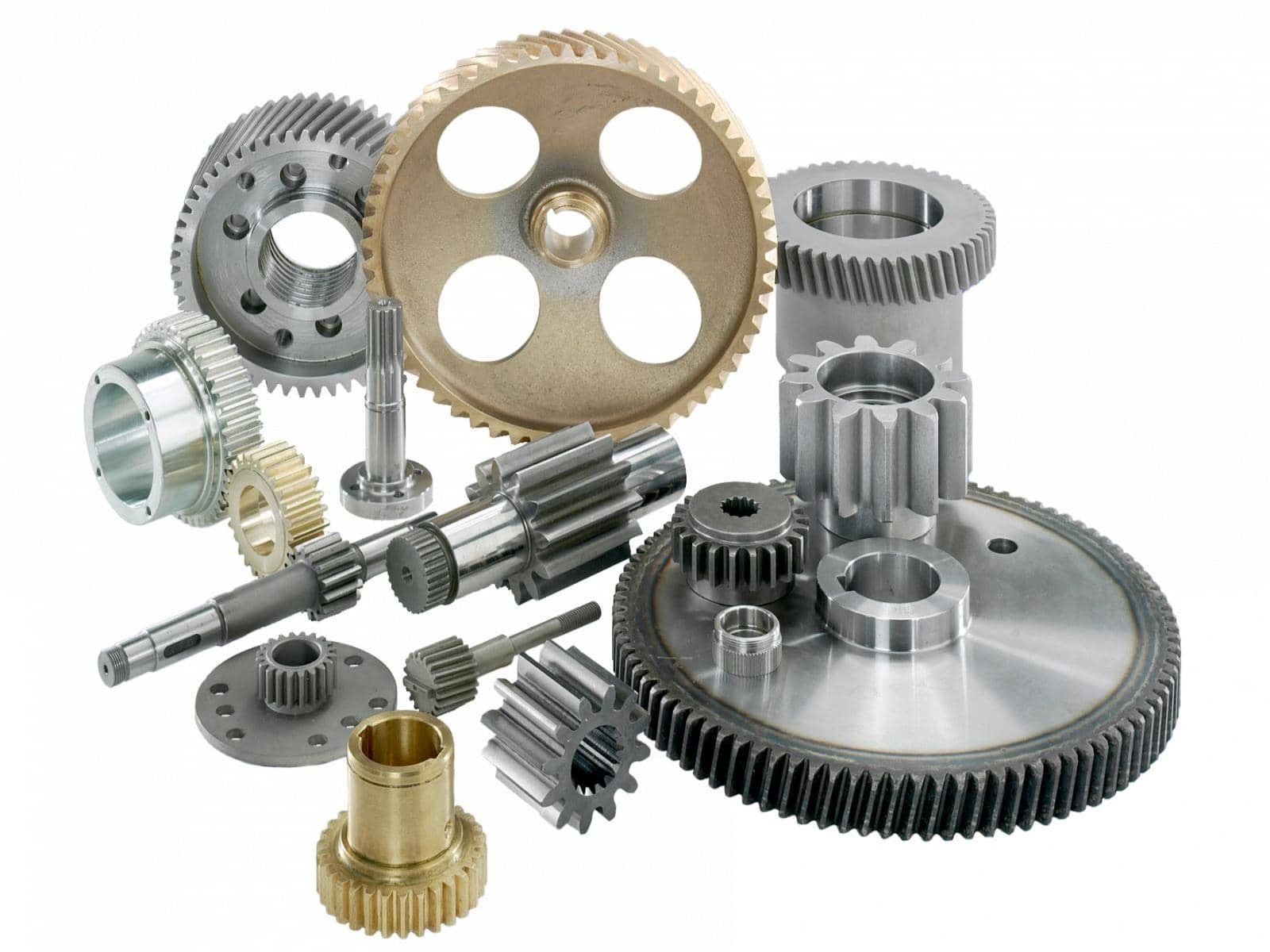
Cylindrical gears matter because they cover some of the most useful gear layouts in mechanical transmission. Spur gears are often used when the goal is simple, direct power transfer. Helical gears are also cylindrical gears, but they use angled teeth and usually run more smoothly. Internal gears help create compact gear arrangements. Rack-and-pinion systems turn rotary motion into straight-line movement. These are all part of the same family, but they do not solve the same problem.
A common mistake is to treat cylindrical gears as if they all behave the same way. They do not. A spur gear may be easy to understand and easy to quote, but a helical gear may be the better choice when smoother engagement matters. An internal gear may help when space is tight, but it brings different meshing limits and inspection needs. A rack may look simple, but alignment and straightness become very important.
Another reason this topic matters is replacement work. Buyers often receive an old gear and try to match it by size alone. That is risky. A gear that "looks close" may still be the wrong type, wrong hand, or wrong mating form. In many projects, that is where delays begin.
The main cylindrical gear types used in practice
| Type | Main layout | Main strength | Main watch-out |
| Parallel shafts | Simple, practical, widely used | More impact and noise at higher speed | |
| Helical gear | Parallel shafts | Smoother running, often better load sharing | Axial thrust and hand direction matter |
Parallel shafts | Smooth transmission with thrust cancellation | More complex manufacturing | |
| Internal gear | Gear meshes inside a ring | Compact arrangement | Interference and assembly checks matter |
Rotary to linear motion | Direct motion conversion | Straightness and mounting alignment matter |
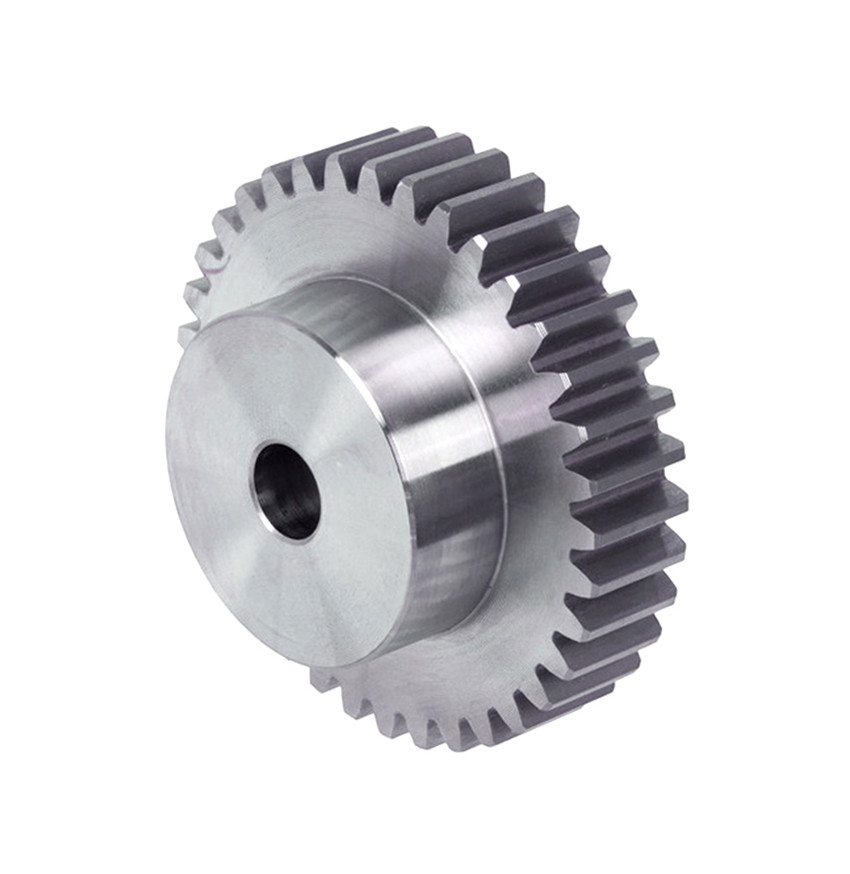
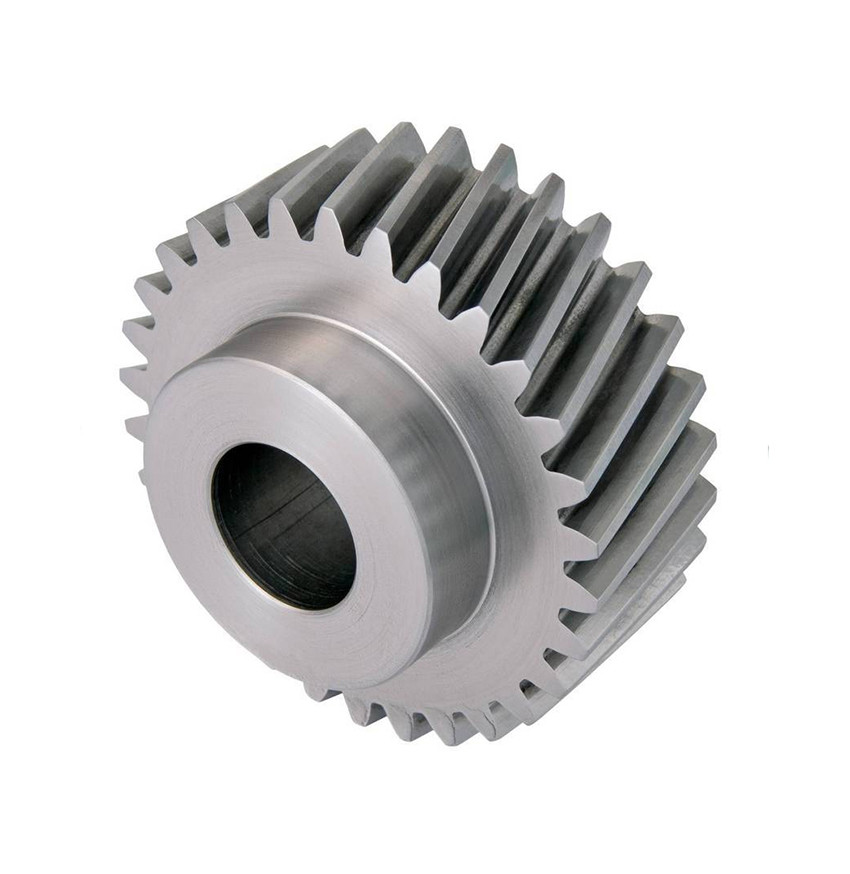
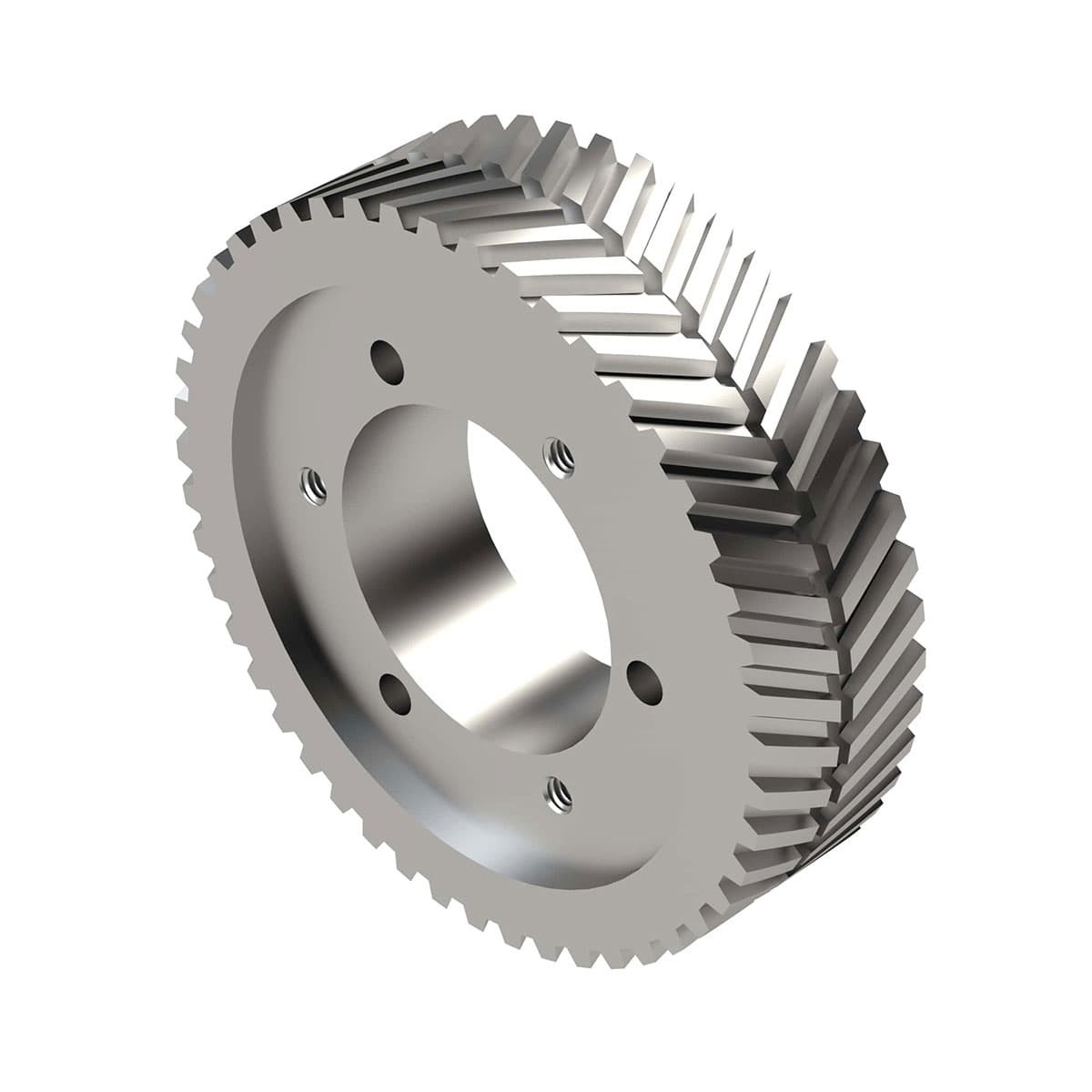
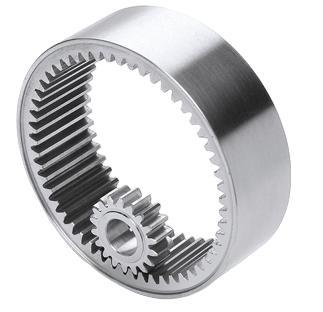
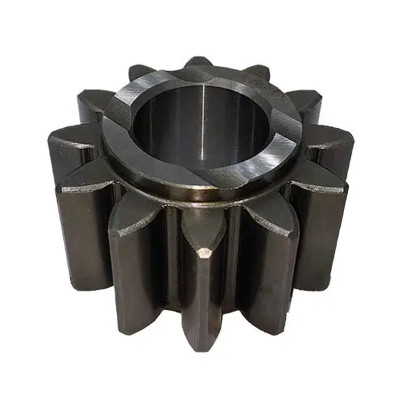
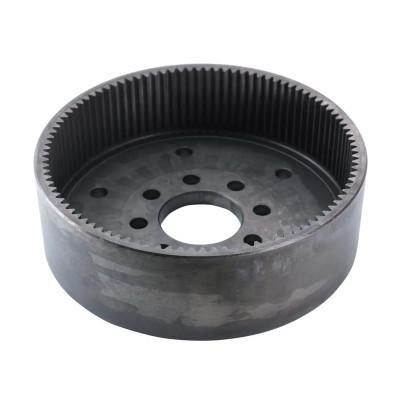
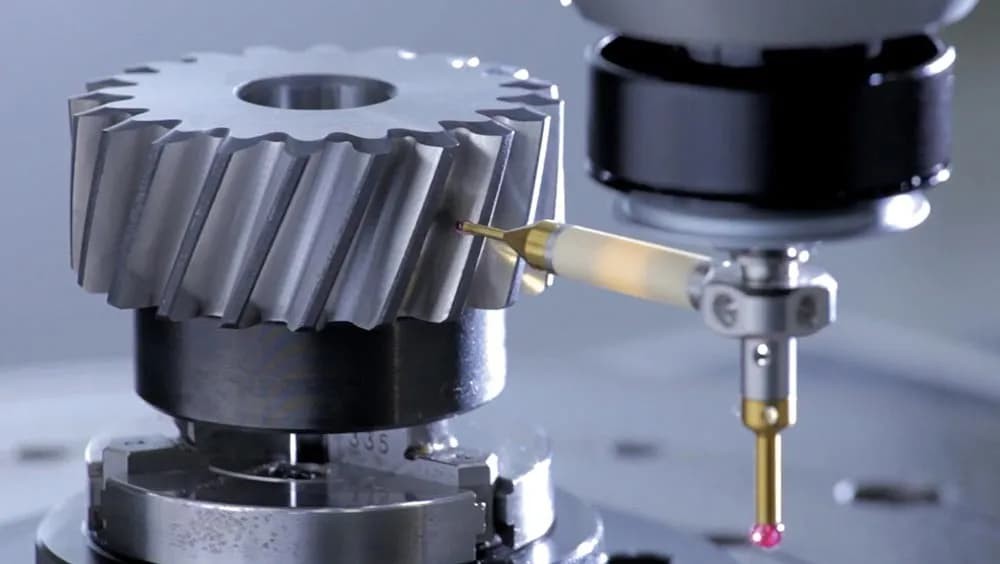
Spur gears have straight teeth and are mainly used on parallel shafts. Helical gears use angled teeth, so they usually run more smoothly and quietly, but they also create axial thrust. Double helical gears use opposite helix directions to reduce that thrust. Internal gears have teeth inside a ring and are common in compact systems such as planetary drives. Rack-and-pinion systems convert rotary motion into linear motion and are also part of the cylindrical gear family.
Where cylindrical gears are commonly used
●Agricultural Machinery
Cylindrical gears are used in gearbox stages, feeder drives, and transmission systems where durability and easy replacement matter.
●Heavy Trucks
Spur, helical, and internal gear forms are used in transmission-related systems where torque capacity and stable fit are important.
●Construction Equipment
Cylindrical gears appear in reducers, travel systems, and power-transfer assemblies where shock load and contamination must be considered.
●EV Drivetrains
Compact cylindrical gears, especially helical and internal types, are used in reduction systems where noise, accuracy, and packaging all matter.
These four sectors do not use the same gear layout in the same way. But in all of them, the gear type has to match the real job. A gear that is easy to make is not always the right one to use.
What engineers and buyers should check first
| Check item | What to confirm | Why it matters |
| Shaft layout | Parallel shafts, internal mesh, or rotary-to-linear motion | Helps narrow the gear family fast |
| Ratio target | Required speed change or torque increase | Filters out unsuitable tooth-count options |
| Tooth form | Spur, helical, internal, rack, or double helical | Changes noise, thrust, and space needs |
Hand and mating direction | Especially for helical gears | Wrong hand means wrong meshing |
Space and housing limits | Diameter, face width, center distance, ring space | Prevents design ideas that do not fit assembly |
Load and duty cycle | Continuous load, shock load, start-stop frequency | Helps balance strength and smoothness |
Inspection plan | Pitch, profile, runout, backlash, fit | Supports repeatable production |
Replacement logic | Single part or matched set | Important for service and spare-part work |
Practical factory note
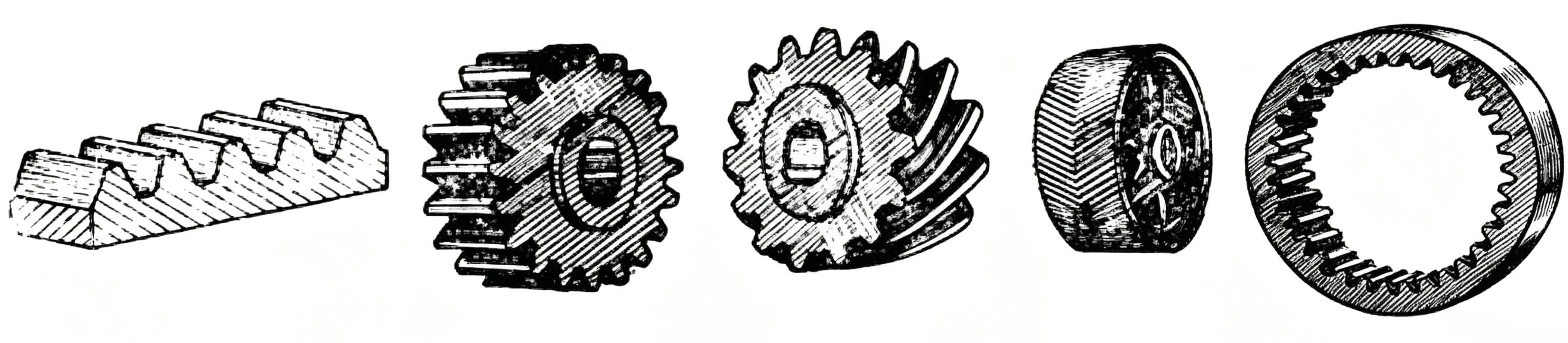
A better first question is not "Which gear is best?" but "What kind of motion does the system need?" Parallel shafts may call for spur gears in simpler drives or helical gears for smoother, faster running. Internal gears fit compact internal meshing, while linear output usually points to rack and pinion. The final choice also has to be practical to make, inspect, and assemble, because a gear that looks ideal on paper may still be the wrong option in production.
What the right cylindrical gear choice improves
| Benefit | What improves | Practical result |
| Better fit to the layout | Gear type matches the motion path | Easier assembly and less redesign |
| Better running behavior | Load, speed, and engagement style are matched | Lower risk of noise and early wear |
| Better sourcing clarity | Buyers know the correct gear family | Faster RFQ and fewer misunderstandings |
Better inspection logic | Functional checks are defined early | More reliable samples and repeat orders |
Better lifecycle value | Design, manufacturing, and replacement fit together | Lower total project risk |
The main value of choosing the right cylindrical gear is not only in performance. It is also in avoiding trouble later. A wrong early choice often shows up as noise, fit issues, replacement confusion, or unstable batch quality. A right early choice makes the whole project easier.
Practical review points when choosing cylindrical gears
● Start with the motion path.
Confirm whether the system needs parallel-shaft transfer, compact internal meshing, or rotary-to-linear motion.
● Check the mating logic, not just one part.
Helical gears need the correct hand pairing. Internal gears need the correct mating spur assumptions. Rack systems need pitch and alignment to match.
● Match the gear type to the duty cycle.
A simple spur gear may be enough for one project. Another may need the smoother engagement of helical gears or the compact arrangement of an internal gear set.
● Review inspection and manufacturing together.
Do not choose a gear type only because it works in theory. Choose one that the supplier can make repeatedly and inspect with the right checks.
● Use early clarification to reduce RFQ risk.
If the supplier cannot clearly explain the difference between spur, helical, internal, and rack-based systems, later communication usually gets harder.
Why Choose PairGears
At PairGears, we do not treat cylindrical gears as one generic product category. We first look at the real transmission job: shaft layout, ratio target, load, speed, packaging, and replacement logic.
We focus on:
●practical gear-family selection for Agricultural Machinery, Heavy Truck, Construction Equipment, and EV drivetrains
●custom precision gears and gear sets, including spur, helical, internal
●manufacturable solutions that connect design intent with inspection and repeat production
●drawing review that looks at the working pair, not only one part number
●project communication that turns gear terminology into practical sourcing decisions
FAQ
Q1: Are spur gears and helical gears both cylindrical gears?
Yes. Both are cylindrical gears because they use cylindrical pitch surfaces.
Q2: What is the simplest cylindrical gear type to start with?
In many applications, spur gears are the simplest starting point because their geometry and ratio logic are more direct.
Q3: Why do helical gears need extra attention?
Because parallel-shaft helical pairs must be opposite hand, and the tooth form also creates axial thrust.
Q4: What is special about internal gears?
Their teeth are inside a ring, they usually mesh with external spur gears, and the two gears rotate in the same direction.
Q5: Is rack and pinion part of the cylindrical gear family?
Yes. In practical gear classification, racks are included with this family for motion-conversion use.
Conclusion
Cylindrical gears are not one single gear type. They are a practical family that includes spur gears, helical gears, internal gears, and rack-and-pinion systems. The right choice depends on shaft layout, ratio, load, speed, space, and how the parts will be made and checked.
If you are reviewing a new design, replacing an existing gear set, or comparing spur, helical, internal, or rack-based options, you are welcome to Contact Us with your drawings, samples, OEM references, and operating conditions so PairGears can help align the gear type with a practical manufacturing and inspection plan.