What Is Spur Gear Pitch and How to Measure It
1. Introduction
In spur gear projects, many problems do not start when a gear fails. They start earlier, when a key parameter is misunderstood. Teams may ask whether the drawing refers to circular pitch, base pitch, or diametral pitch. A spare part may look close in size, yet still fail to mesh correctly because the pitch system is wrong.
At PairGears, we manufacture custom precision gears and gear sets for Agricultural Machinery, Heavy Truck, Construction Equipment, and EV drivetrain. In real factory work, spur gear pitch is not only a calculation term. It directly affects tooth size, meshing compatibility, load behavior, noise, manufacturability, and replacement accuracy. This guide explains what spur gear pitch means, how to calculate and measure it, and why pitch control matters in production.
2. What is spur gear pitch?
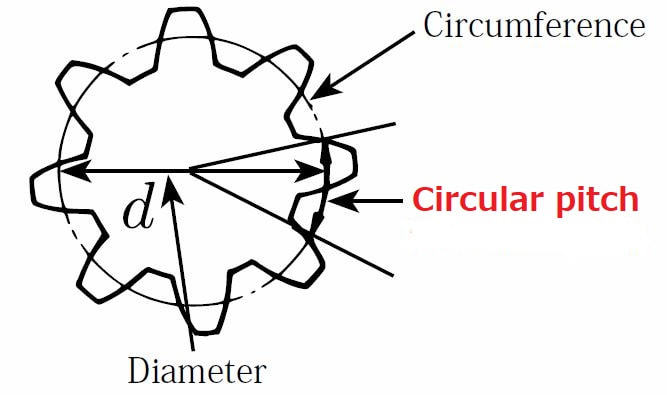
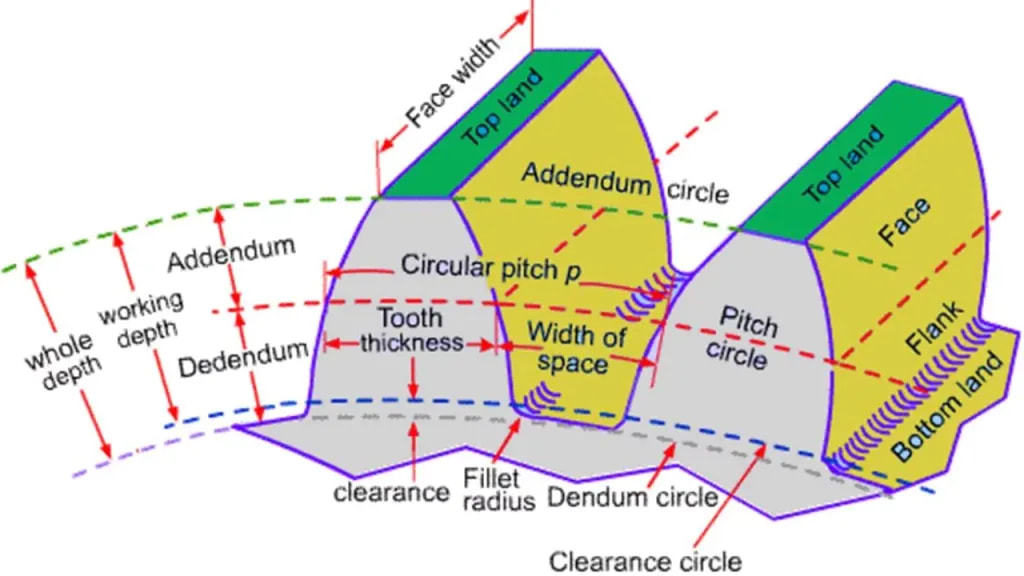
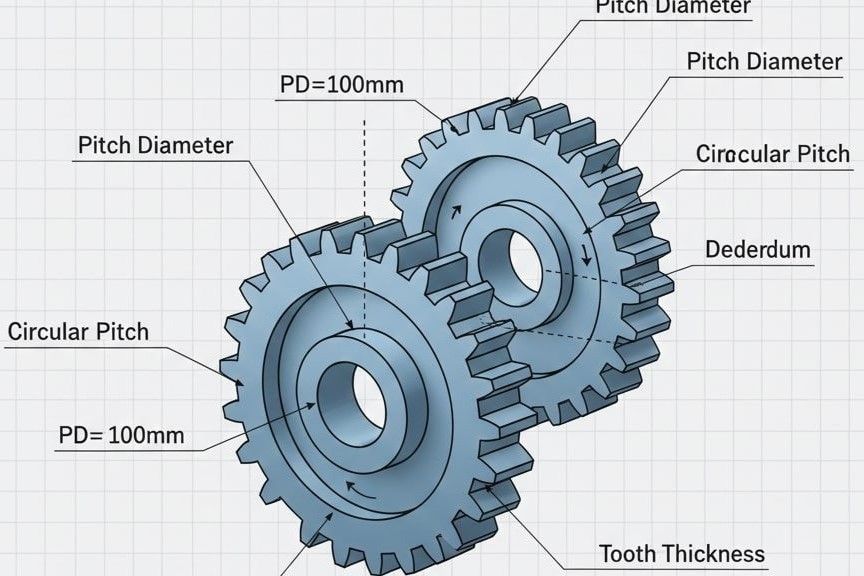
Spur gear pitch usually means circular pitch, the distance between corresponding points on two adjacent teeth measured along the pitch circle.
3. Why pitch matters more than many teams expect
Pitch is a meshing parameter before it is a formula. Two gears can have similar outside diameters and the right-looking tooth count, but if the pitch system does not match, they will not mesh correctly. That usually shows up as noise, impact, abnormal wear, or complete assembly failure.
Pitch also changes the character of the gear. A larger pitch generally means larger, thicker teeth with stronger roots, which often suits medium-speed, higher-load applications. A smaller pitch generally means finer teeth, smoother running, and a better fit for high-speed or precision applications. So pitch is closely tied to load capacity, running smoothness, and packaging.
Finally, pitch affects manufacturing and sourcing. Standard pitch values usually support more mature tooling and better interchangeability, which can simplify production planning, spare-part replacement, and maintenance. In real purchasing work, a clear pitch definition often prevents the most expensive mistake: buying a part that looks right but cannot work in the system.
4. Common pitch terms in spur gear work
| Pitch term | Meaning | Typical use | Key note |
| Distance between adjacent teeth along the pitch circle | Default pitch in most spur gear discussions | Main focus in practical design and inspection | |
| Base pitch | Distance between corresponding points on adjacent teeth measured on the base circle | Involute meshing analysis | Equal base pitch is essential for correct involute meshing |
| Number of teeth per inch of pitch diameter | Inch-based gear systems | Must not be confused with metric module | |
Estimated pitch from OD | Quick back-calculation using tooth count and outside diameter | Spare-part screening and field checks | Only a rough estimate, not a precision acceptance method |
5. Where spur gear pitch matters most
● Agricultural Machinery
Mixed loads, dirt, and long operating hours make correct pitch selection important for durability and replacement compatibility.
● Heavy Truck
Spur gear stages and related components often require predictable load sharing and low variation across batches, which depends on pitch accuracy.
● Construction Equipment
Shock loads and harsh duty make tooth size and pitch deviation control important for strength and service life.
● EV drivetrain
Compact packaging, speed, and smooth running make pitch selection and deviation control more sensitive in precision transmission stages.
6. How to calculate and measure spur gear pitch
| Item | Formula / method | Purpose | Practical note |
Circular pitch | p = πd / z | Main theoretical pitch value | Uses pitch diameter, not outside diameter |
Diametral pitch | P = z / d | Inch-system gear sizing | Confirm units clearly |
Base pitch | pb = p × cos α | Involute meshing relationship | Pressure angle must be known |
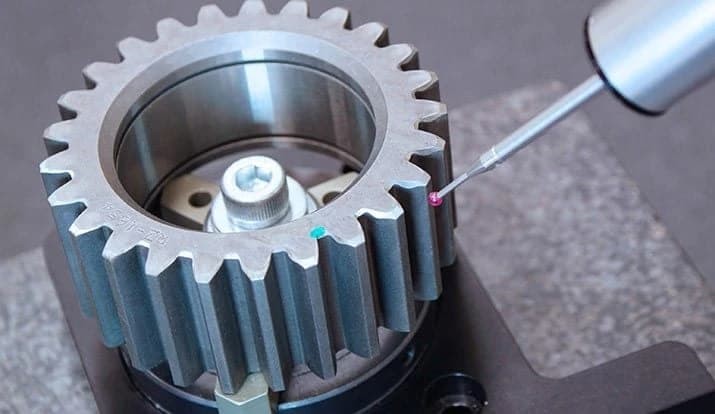
| Chordal pitch method | Measure tooth-to-tooth distance with calipers or micrometer | Quick practical check | Works well when tooth count is not too low |
| Gear measuring instruments | Pitch tester, dividing instrument, comprehensive gear tester | Higher-accuracy inspection | Best for formal quality verification |
| OD-based estimation | Back-calculate with OD and tooth count | Fast spare-part screening | Good for estimation, not final acceptance |
In workshops, OD-based estimation is often used first because it is quick. That is fine for fast comparison or spare-part screening. But it should not replace proper pitch-circle-based evaluation when the gear is part of a precision or high-risk application. If the project depends on stable meshing, low vibration, or repeatable assembly, pitch should be checked together with pressure angle, tooth form, and key geometry tolerances.
Quick example
if a spur gear has a pitch diameter of 120 mm and 30 teeth, its circular pitch is p = π × 120 / 30 ≈ 12.57 mm. That number helps define whether a mating gear belongs to the same meshing system. If another gear looks similar but uses a different pitch system, the teeth may not engage correctly even if the outside diameter is close.
7. What correct pitch selection improves
| Benefit | What improves | Practical result |
Correct meshing | Tooth engagement matches the intended geometry | Lower risk of impact and abnormal contact |
Better load matching | Tooth size suits the duty cycle | Improved durability and strength balance |
| Smoother running | Finer, consistent pitch reduces variation | Lower vibration and noise |
| Better manufacturability | Standardized pitch values support mature tooling | Lower process complexity and better interchangeability |
| Easier sourcing and replacement | Spare parts can be compared more reliably | Lower risk of wrong-part procurement |
Pitch selection is also a cost issue. Oversized teeth may increase part size and space demand. Undersized or overly fine teeth may improve smoothness but reduce bending strength if the load is too high. The right pitch is therefore not the largest or smallest value, but the one that best matches the full application.
8. Supplier selection tips for pitch-sensitive projects
● Confirm what "pitch" means in the drawing. Ask whether the project uses circular pitch, module, or diametral pitch. Never assume both sides mean the same thing.
● Verify pitch together with pressure angle and tooth form. Pitch alone does not guarantee correct meshing; these parameters must be aligned as a set.
● Ask how pitch is measured. A supplier should explain whether they use calipers for quick checks, dedicated gear instruments, or formal pitch deviation inspection.
● Check whether the supplier understands application priorities. A good supplier will not choose pitch only from a formula; they will also consider load, noise, space, and replacement requirements.
● Do not rely only on outside diameter for final decisions. OD is useful for estimation, but critical programs should verify pitch through proper gear geometry methods.
One supplier may speak in module, another in DP, while the buyer only says pitch. If the unit system is not written and repeated clearly in the RFQ, two suppliers can quote for different tooth systems and both still believe they are following the same request. A short parameter confirmation at the beginning usually saves far more time than a late-stage correction.
9. Why Choose Us
At PairGears, we do not treat spur gear pitch as an isolated number. We evaluate it together with meshing compatibility, load target, manufacturing route, and inspection method.
● matching pitch, module/DP, and pressure angle as one system
● reviewing whether the pitch fits the actual duty cycle
● helping customers avoid spare-part mismatch in sourcing and maintenance
● supporting four core sectors: Agricultural Machinery, Heavy Truck, Construction Equipment, and EV drivetrain
● planning practical inspection steps for both prototypes and repeat orders
For many projects, the value is not only in supplying the part. It is in reducing the chance of ordering the wrong gear in the first place.
10. FAQ
Q1: What Does Spur Gear Pitch Usually Mean?
In most practical discussions, it means circular pitch unless another type of pitch is clearly specified.
Q2: Is Outside Diameter The Same As Pitch Diameter?
No. Outside diameter can be used for quick estimation, but it does not replace pitch diameter in formal calculation.
Q3: Does A Larger Pitch Always Mean A Better Gear?
No. A larger pitch often improves tooth strength, but it also increases size and may reduce smoothness in some applications.
Q4: Why Can Two Gears With The Right Tooth Count Still Fail To Mesh?
Because pitch, pressure angle, or tooth system may not match, even when the tooth count looks correct.
Q5: Why Is Pitch Deviation Important?
Because it affects transmission smoothness, noise, vibration, and long-term service life. Too much deviation can create impact contact and early wear.
11. Conclusion
Spur gear pitch is not just a number in a formula. It directly affects meshing correctness, load capacity, running smoothness, interchangeability, and even manufacturing and installation choices. Many gear problems that appear later as quality issues actually begin much earlier with an unclear pitch definition or incomplete parameter matching.
If you are selecting a spur gear, replacing a spare part, or checking compatibility between drawings and actual parts, you are welcome to Contact Us with your drawing, tooth count, outside diameter, module or DP data, and operating conditions. PairGears can help review whether the pitch is practical for the application and which related checks should be controlled in production and inspection.