What Is a Gear Wheel and Where Is It Used
Introduction
In many projects, people use gear, gear wheel, wheel, and pinion as if they mean the same thing. In casual conversation, that usually does not cause trouble. But once a project moves into drawing review, quotation, sampling, replacement, or failure analysis, those small wording differences start to matter.
At PairGears, we manufacture custom precision gears and gear sets for agricultural machinery, heavy truck, construction equipment, and EV drivetrains. In factory communication, a gear wheel is not just a generic gear term. It usually refers to a specific wheel-shaped gear component, often used in cylindrical gear transmission. This article explains what a gear wheel is, its common types, its role in transmission, and how it differs from gear, wheel, and pinion in practical engineering use.
What is a gear wheel?
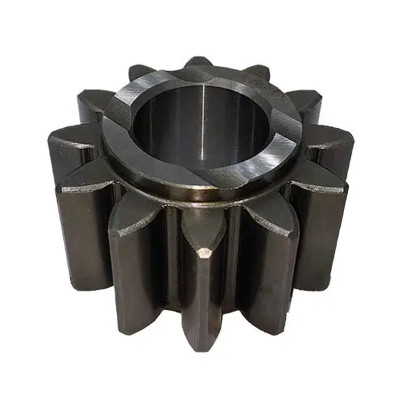
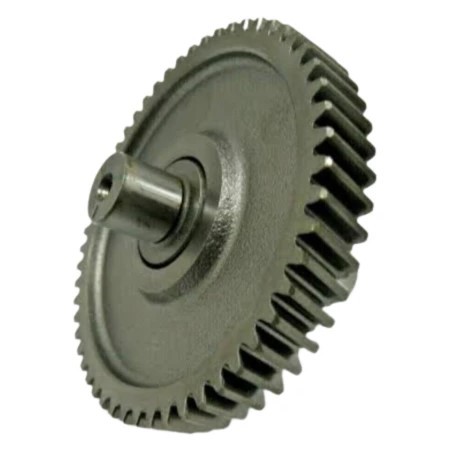
A gear wheel is a wheel-shaped gear component with teeth on its outer or inner circumference, used to transmit motion and torque by meshing with another toothed part.
Why the term "gear wheel" matters in real projects
People often use "gear wheel" and "gear" as if they mean the same thing. Sometimes that is acceptable, but in engineering they are not always equal. "Gear" is the broader term. It can refer to spur gears, helical gears, bevel gears, worms, racks, gear shafts, and other toothed transmission parts. "Gear wheel" usually refers to a wheel-shaped gear part, not the whole gear category.
That difference matters in real projects. Part shape affects machining, inspection, mounting, and assembly. A wheel-type external gear is handled differently from a gear shaft. An internal gear wheel is also different from a standard spur gear wheel in both manufacturing and installation. If the wording is too loose, teams may agree on module and tooth count but still picture different parts.
The same problem appears in sourcing. A customer may ask for "a gear", while the actual requirement is a wheel-type external gear, an internal gear wheel, or a gear wheel matched to a pinion or shaft assembly. Clarifying the term at the start helps prevent a common mistake: quoting the right tooth data for the wrong part form.
Common types of gear wheels
| Type | Main feature | Best fit | Watch-outs |
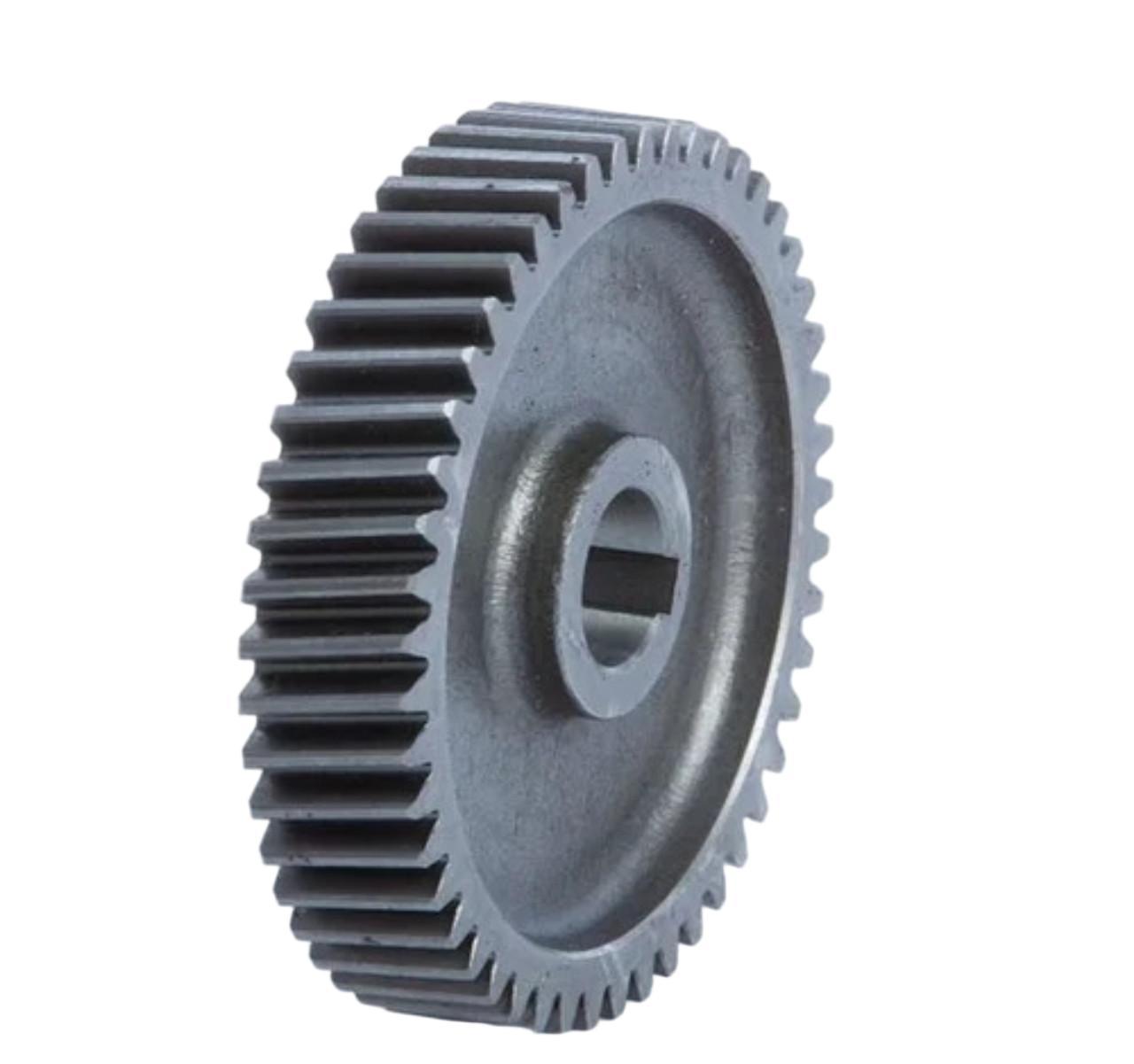
| Spur gear wheel | Straight teeth parallel to the shaft | Simple transmissions, lower-speed applications, cost-sensitive projects | More noise and impact at higher speed |
| Helical gear wheel | Teeth cut at a helix angle | Smoother running, higher load, medium to higher speed | Generates axial force and needs proper support |
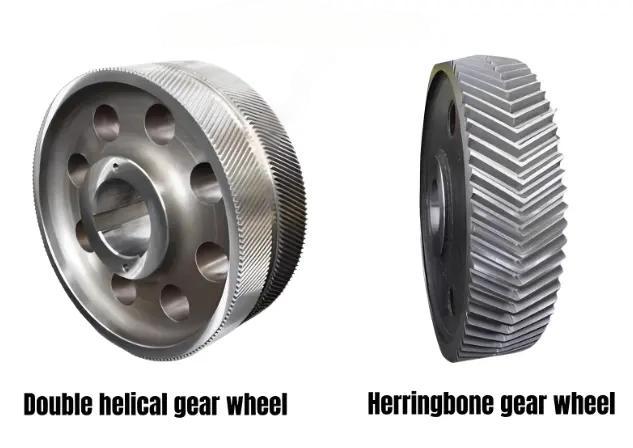
| Double helical / herringbone gear wheel | Opposite helix directions on the same wheel | Heavy-duty, smoother high-load transmission | More complex manufacturing and higher cost |
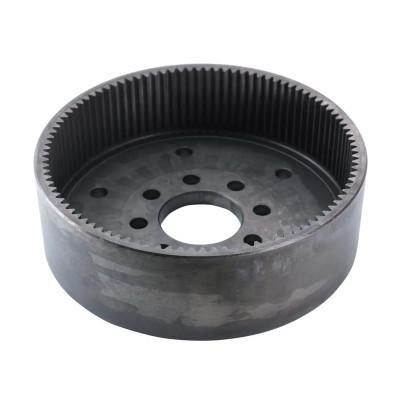
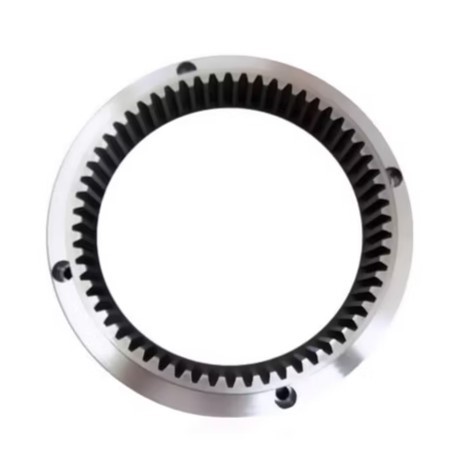
Internal gear wheel | Teeth on the inner diameter | Planetary systems, compact transmissions, same-direction meshing with pinion | Harder machining and inspection |
A practical note on selection
The "best" gear wheel type is not the one with the most advanced structure. It is the one that fits the application. Spur gear wheels are often the most practical choice when simplicity and cost matter. Helical gear wheels become more attractive when smooth running and load capacity matter more. Internal gear wheels are often chosen when the layout must stay compact.
Where gear wheels are commonly used
●Agricultural Machinery
Gear wheels are used in reducers, feeders, and transmission stages where durability, replacement logic, and cost control all matter.
●Heavy Truck
Gear wheels appear in transmission-related systems where load capacity, consistent geometry, and long service life are important.
●Construction Equipment
Gear wheels are used in high-load and shock-prone systems where tooth geometry, material route, and heat treatment must work together.
●EV Drivetrains
Gear wheels are used in compact transmission stages where running smoothness, efficiency, and repeatability become more critical.
These applications do not use the same gear wheel for the same reason. What they share is the need for correct tooth geometry and stable meshing in the real assembly.
What engineers and buyers should check first
| Check item | What to confirm | Why it matters |
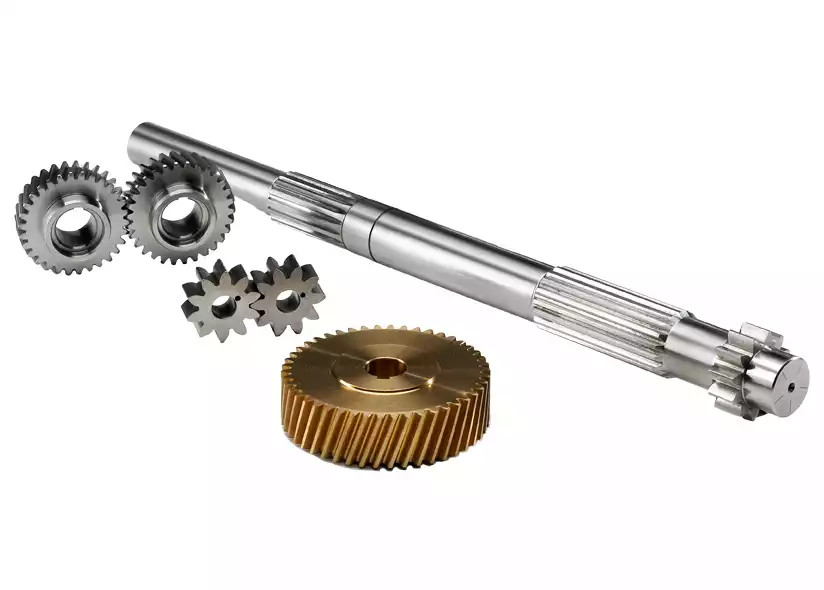
Part type | External gear wheel, internal gear wheel, or gear shaft | Prevents wrong manufacturing route |
Tooth form | Spur, helical, or double helical | Affects smoothness, load, and assembly logic |
Module or DP | Metric or inch system | Defines tooth size and meshing compatibility |
Tooth count | Number of teeth on the wheel | Affects ratio, pitch diameter, and pairing |
Pressure angle | Common geometry parameter for mating parts | Must match for correct meshing |
| Interface structure | Bore, keyway, spline, hub, or mounting face | Controls how the gear wheel connects to the system |
| Tooth quality plus datum relationship | Supports smooth operation and repeatable assembly | |
| Heat treatment and material | Surface hardness, core strength, and wear route | Strongly affects life and failure risk |
Practical factory note
A gear wheel should never be judged by outside diameter and tooth count alone. In production, many problems come from what is hidden behind the teeth: bore accuracy, hub relationship, face runout, heat-treatment distortion, or the way the gear wheel locates in the housing.
What a correctly selected gear wheel improves
| Benefit | What improves | Practical result |
Better meshing stability | Geometry and mating conditions match | Less noise, impact, and contact variation |
Better load performance | Tooth form and material fit the duty cycle | Longer service life and lower failure risk |
| Better sourcing clarity | The part type is defined correctly from the start | Fewer quotation and sampling errors |
| Better assembly fit | Interface structure is reviewed early | Less rework during build |
| Better replacement logic | Spare parts can be identified more accurately | Lower risk of wrong-part procurement |
In many real projects, these benefits matter more than theoretical performance claims. A gear wheel that is slightly more conservative but easy to manufacture and replace may be more valuable than a more ambitious design that creates sourcing and assembly problems later.
Gear wheel vs gear, wheel, and pinion
Gear wheel vs gear
A gear is the broader term for toothed transmission parts. A gear wheel is usually a wheel-type gear part. All gear wheels are gears, but not all gears are gear wheels. A rack, worm, or gear shaft may belong to the gear family without being called a gear wheel.
Gear wheel vs wheel
A wheel is usually a smooth rotating part used for rolling, support, or movement. A gear wheel has teeth and works by meshing with another toothed part. The main difference is not that one is round and the other is not. The real difference is that one is for rolling support, while the other is for torque transmission through tooth engagement.
Gear wheel vs pinion
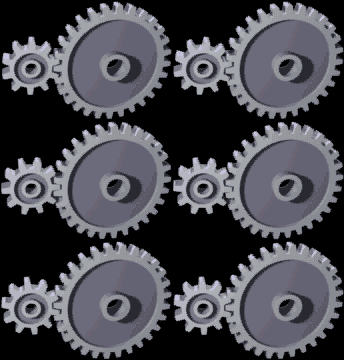
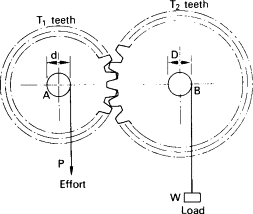
In a mating pair, the pinion is usually the smaller member, and the gear wheel usually refers to the larger member. This is a relative naming relationship, not a separate gear family. The pinion often runs faster and becomes the more wear-sensitive side. The larger gear wheel often carries load in a more distributed way. In real design and sourcing work, both parts must be treated as a working pair.
Practical review points when discussing a gear wheel with a supplier
● Confirm the exact part type early.
Do not stop at "gear", Make clear whether the part is a gear wheel, internal gear wheel, pinion, or gear shaft.
● Clarify the mating relationship.
A gear wheel rarely works alone. It should be reviewed together with the pinion, shaft, backlash, and center-distance logic.
● Review the interface, not only the teeth.
Bore tolerance, hub design, spline, keyway, and face datum are often just as important as the tooth data.
● Check the intended process route.
A spur gear wheel, an internal gear wheel, and a helical gear wheel may all need different manufacturing and inspection routes.
● Use the discussion to test supplier clarity.
A supplier that can clearly explain what kind of gear wheel the project needs is usually easier to work with through sampling and repeat production.
Why Choose Us
At PairGears, we do not treat a gear wheel as just a toothed round part. We review it in the context of the full transmission system.
We focus on:
●practical application fit for Agricultural Machinery, Heavy Truck, Construction Equipment, and EV drivetrains
●correct distinction between gear wheel, pinion, internal gear, and gear shaft structures
●process planning that matches the actual part form and inspection requirement
●geometry and interface review tied to real assembly conditions
●support from early drawing clarification through repeat production
For many customers, the real value is not only getting a gear wheel made. It is making sure the part type, mating logic, and manufacturing route are correct before production starts.
FAQ
Q1: Is A Gear Wheel The Same As A Gear?
Not exactly. A gear wheel is usually a wheel-type gear component, while gear is the broader family term.
Q2: Is Every Wheel With Rotation A Gear Wheel?
No. A normal wheel can rotate without transmitting torque by tooth meshing. A gear wheel is defined by its teeth and meshing function.
Q3: Is A Pinion Also A Gear Wheel?
It can be. In many gear pairs, the smaller member is a pinion and may also be a wheel-type gear part. The term pinion describes its relative role in the pair.
Q4: Why Does The Exact Term Matter In An RFQ?
Because part type affects machining route, interface details, inspection, and how the part works with its mating component.
Q5: What Should I Send When Asking For A Gear Wheel Quote?
A drawing or clear dimensions, tooth count, module or DP, pressure angle, material target, heat-treatment request, and mating-part information if available.
Conclusion
A gear wheel may sound like a simple term, but in practical engineering it carries real meaning. It points to a specific kind of toothed component with its own structure, process route, mating logic, and inspection needs. Once the difference between gear wheel, gear, wheel, and pinion is clear, drawing review, supplier communication, and replacement planning all become easier.
If you are reviewing a gear wheel drawing, checking which type of toothed part you actually need, or comparing a gear wheel with its mating components, you are welcome to Contact Us with your drawings, parameters, and operating conditions so we can help align the part definition with a practical manufacturing and inspection plan.