What Is a Miter Gear and Where Is It Used
Introduction
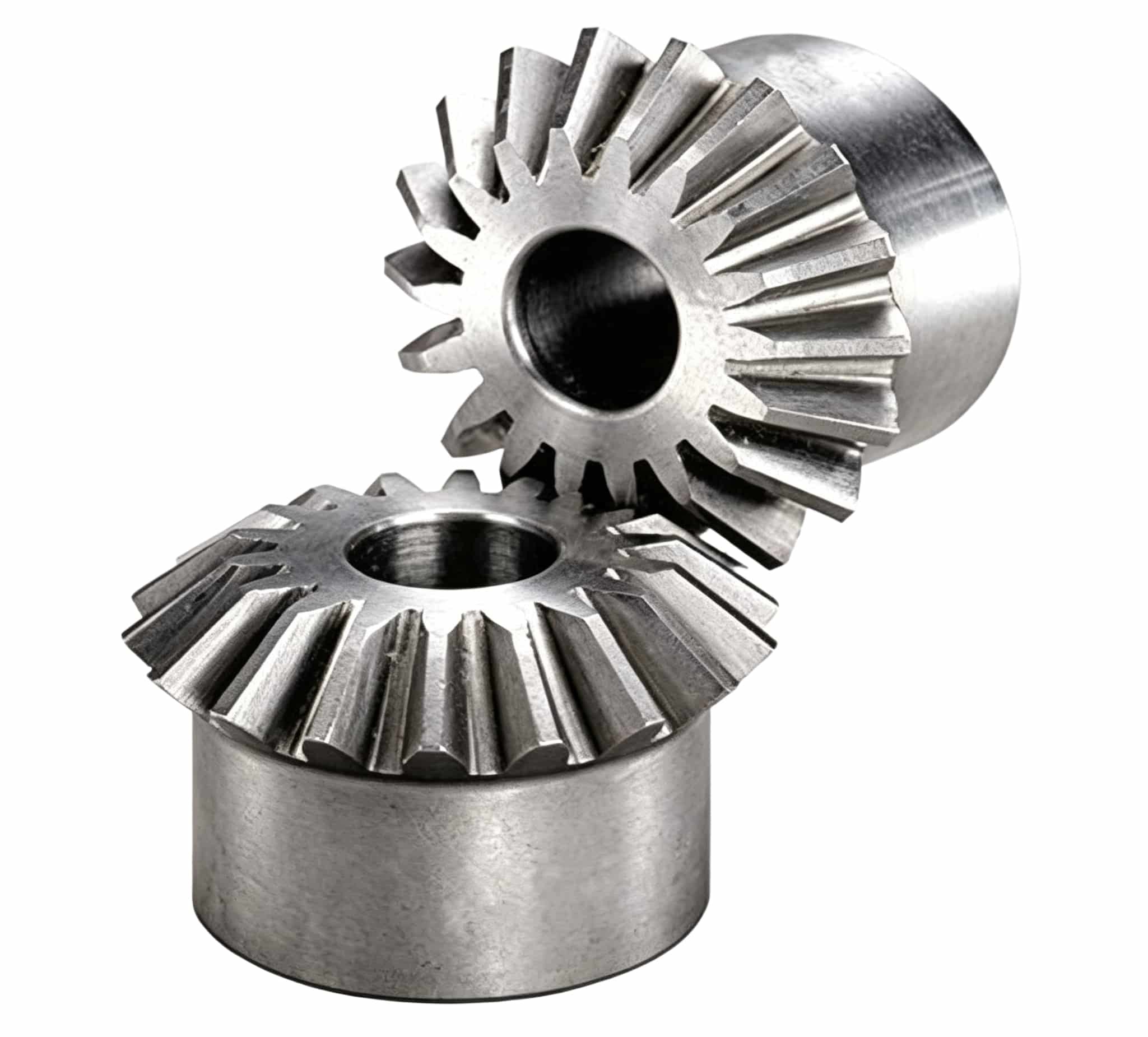
A miter gear is often treated as a simple right-angle gear set, but in real projects it is more specific than that. It is not just any bevel gear that changes direction. A true miter gear pair works at a 90-degree shaft angle and a fixed 1:1 transmission ratio, which means the two gears have the same number of teeth and usually the same pitch cone angle.
At PairGears, we manufacture custom precision gears and gear sets for Agricultural Machinery, Heavy Truck, Construction Equipment, and EV drivetrains. In factory work, miter gears are usually selected when the application needs compact right-angle power transfer with constant speed, practical assembly, and controlled cost. This guide explains what a miter gear is, how it differs from general bevel gears, where it fits best, and what buyers should check before sourcing.
What is a miter gear?
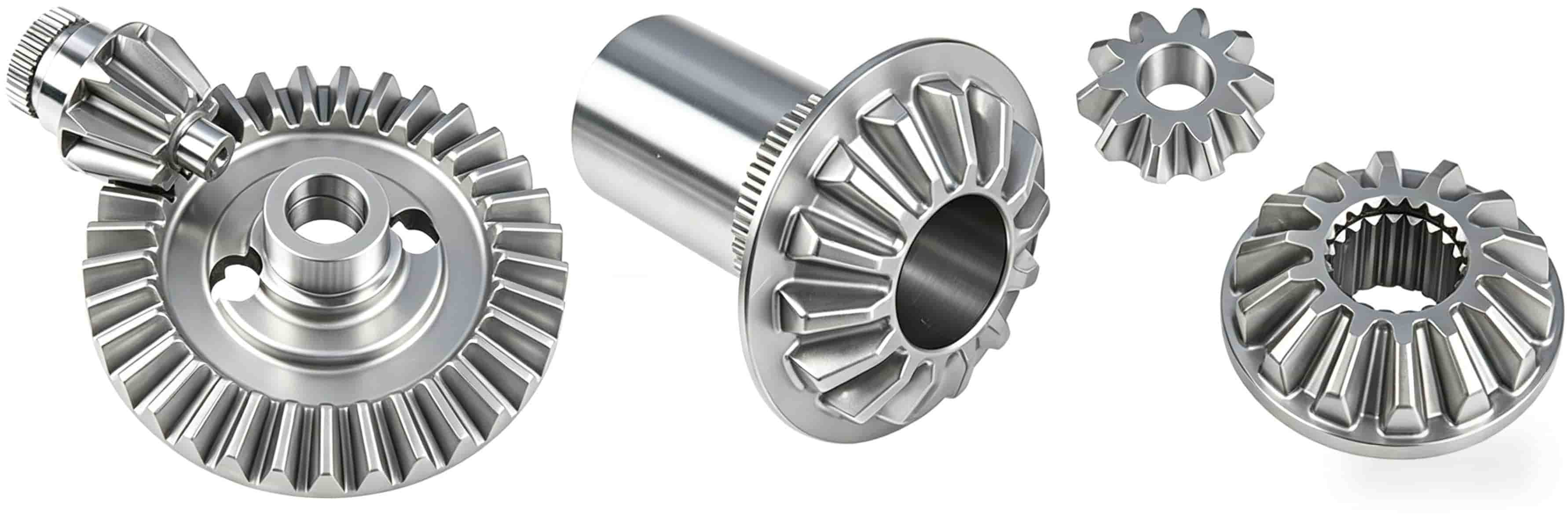
A miter gear is a special type of bevel gear set that transmits motion between two intersecting shafts at 90 degrees with a fixed 1:1 ratio.
Why miter gears matter in practical applications
The value of a miter gear is not in changing speed or multiplying torque. Its value is in changing direction cleanly while keeping the transmission ratio constant. In other words, it is chosen when the system needs right-angle power transfer without adding ratio complexity.
That makes miter gears useful in applications where space is limited and the design only needs to redirect motion. In these cases, a more complex bevel solution may not be necessary. A miter gear set can often achieve the required layout with simpler geometry, easier assembly logic, and lower cost.
However, that same simplicity is also a limitation. Because a miter gear always operates at 1:1, it cannot solve problems that require speed reduction, torque multiplication, or flexible ratio design. In factory terms, a miter gear should be chosen because the application needs constant-speed right-angle transmission, not because it happens to look similar to another bevel gear set.
Common miter gear options and why they are used
| Type | Main feature | Best fit | Watch-outs |
| Straight miter gear | Straight tooth trace and simpler manufacturing | Compact right-angle drives, light to moderate load, cost-sensitive projects | More impact and noise at higher speeds |
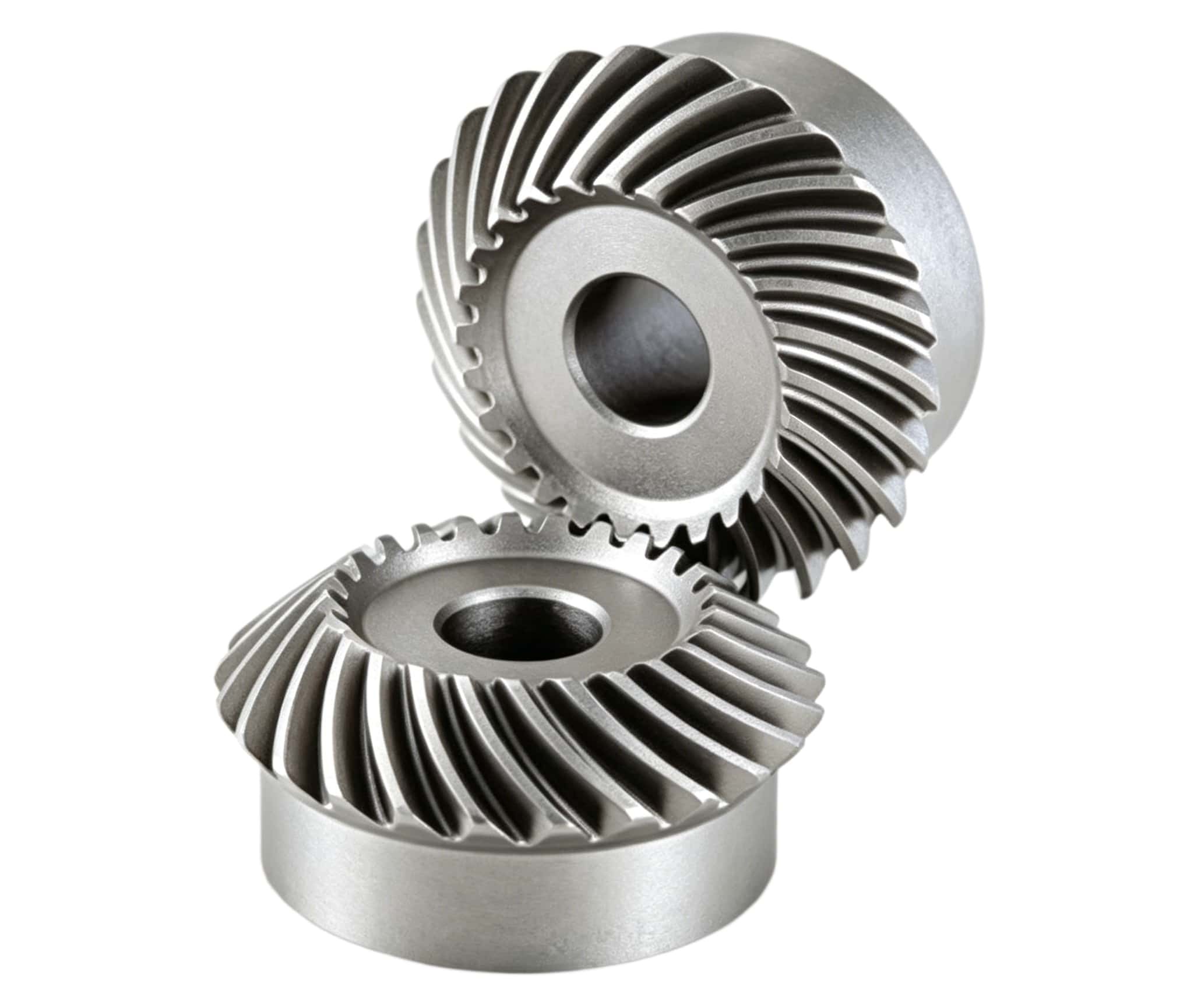
| Spiral miter gear | Curved tooth trace and smoother meshing | Higher-speed right-angle drives, smoother running targets | More complex processing and higher cost |
Matched miter gear pair | Supplied and controlled as a pair | Applications needing repeatable meshing and stable assembly | Mounting distance and pair control still matter |
| Stock-size miter gear set | Standard tooth counts and sizes | Fast replacement, prototypes, standard machine layouts | Limited freedom for custom bores, hubs, or interfaces |
In practice, straight miter gears are more common when cost, compactness, and simple assembly matter most. Spiral miter gears are preferred when smoother engagement and better running quality are needed. For spare parts and maintenance, stock-size sets can be practical, but once the interface becomes application-specific, custom geometry and controlled pairing usually matter more than catalog convenience.
Where miter gears are commonly used
● Agricultural Machinery
Used in auxiliary right-angle drives, feed systems, and compact transfer mechanisms where constant speed is needed.
● Heavy-Duty Trucks
More common in secondary mechanisms, accessories, or auxiliary motion-transfer systems rather than the main drivetrain.
● Construction Equipment
Applied in attachments, accessories, and control systems where a simple right-angle drive matters more than ratio flexibility.
● EV Drivetrains and Precision Motion Systems
Used in compact electromechanical transfer points where layout efficiency and constant speed are the priority.
A simple rule: if the application needs a right-angle drive with the same input and output speed, a miter gear is worth considering first. If torque increase or speed reduction is also needed, a general bevel gear set is usually the better choice.
What makes a miter gear different from a general bevel gear
| Item | Miter gear | General bevel gear |
| Shaft angle | Fixed at 90 degrees | Commonly 90 degrees, but not limited to it |
| Transmission ratio | Always 1:1 | Can be designed for different ratios |
| Tooth count relationship | Same on both gears | Usually different when ratio is not 1:1 |
Pitch cone angles | Equal, typically 45° each | Usually different between pinion and gear |
Main function | Change direction only | Change direction, and often speed/torque too |
Processing complexity | Usually simpler and more symmetric | More variable, often more complex |
Assembly sensitivity | Often easier, but still needs control | More sensitive to exact pairing and setup |
This comparison matters because customers often use "miter gear" and "bevel gear" interchangeably. They are related, but not the same. A miter gear is a type of bevel gear with a more specific design purpose: equal tooth count, equal pitch cone angles, and no ratio change.
What the right miter gear choice improves
| Benefit | What improves | Practical result |
| Compact right-angle layout | Direction changes without extra stages | Cleaner machine layout and easier packaging |
| Constant-speed transfer | No ratio change | Predictable output behavior and simpler system logic |
| Simpler design matching | Equal tooth count and equal pitch cone angles | Easier parameter confirmation during design and sourcing |
Practical assembly | Less ratio-related complexity | Lower setup burden in straightforward applications |
Cost control | Simpler than many custom bevel solutions | Better fit for direct right-angle transfer projects |
These advantages explain why miter gears remain useful despite being more limited than general bevel gears. When no ratio change is needed, their simplicity becomes a clear advantage. The benefits are not only in gear design, but also in tooling, assembly, replacement, and maintenance.
When a miter gear is the better choice
A miter gear is usually the better choice when the application needs a 90-degree change in direction but does not need a speed change. This is the clearest decision point. If the system only needs to redirect motion, adding a more complex bevel ratio set can introduce cost and installation sensitivity without enough benefit.
Miter gears also make sense when compactness and simple assembly matter more than maximum torque density. In accessories, machine attachments, instrument mechanisms, and light-to-moderate load transfer points, the fixed 1:1 logic can simplify both design review and service replacement.
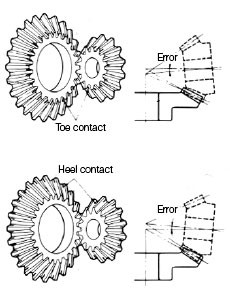
Another good fit is when interchangeability matters. In many practical right-angle systems, especially those built around standard layouts, a miter set can be easier to replace and easier to explain across teams because both gears are geometrically symmetric in function. That said, "easier" does not mean "no control needed." Mounting distance, backlash, and tooth contact still need to be checked.
Practical review points when sourcing miter gears
● Confirm that the application truly requires a 1:1 ratio. If speed or torque needs to change, a standard bevel gear set may be a better fit.
● Check the shaft angle and mounting layout. Miter gears are typically designed for 90-degree shafts, so the housing and shaft arrangement must match.
● Choose the tooth form based on speed and noise needs. Straight miter gears are simpler and more cost-effective, while spiral types can run more smoothly.
● Ask how pair matching and mounting distance are controlled. Even with simpler geometry, meshing condition still affects performance.
● Do not judge by outside size alone. Tooth count, cone geometry, backlash, tooth form, and installation assumptions must all align.
A supplier discussion should also confirm whether the gears will be supplied as a matched pair, whether the bores or hubs are standard or custom, and how sensitive the application is to noise. These details often matter more than a simple label like "right-angle gear."
Why Choose Us
● Application-fit review for Agricultural Machinery, Heavy-Duty Trucks, Construction Equipment, and EV-related systems.
● Custom and standard gear-set support depending on layout, bore, hub, and assembly requirements.
● Geometry review tied to mounting logic and meshing stability, not only nominal dimensions.
● Process planning that balances cost, accuracy, and repeatability across prototype and repeat production.
● Inspection logic that supports real assembly performance, including backlash and contact-related checks when specified.
For many projects, the value is not only in supplying a miter gear set. It is in confirming that a miter gear is the right solution before production begins and that the mounting logic will support smooth operation after assembly.
FAQ
Q1: Is A Miter Gear The Same As A Bevel Gear?
Not exactly. A miter gear is a special type of bevel gear, but it is limited to a 90-degree shaft angle and a 1:1 ratio.
Q2: Can A Miter Gear Reduce Speed Or Increase Torque?
No. A miter gear only changes the transmission direction while keeping the ratio constant.
Q3: Do Miter Gears Always Have The Same Number Of Teeth On Both Gears?
Yes. Because the ratio is always 1:1, the two gears must have the same number of teeth.
Q4: Are Miter Gears Easier To Manufacture Than Bevel Gears?
In many cases, yes, because their geometry is more fixed and symmetric. But accuracy and installation still matter.
Q5: When Should I Choose A Miter Gear Instead Of A Bevel Gear?
Choose a miter gear when the application needs a compact right-angle drive at constant speed and does not require ratio change.
Conclusion
A miter gear is not just a small bevel gear. It is a specific right-angle gear solution built for constant-speed transmission. Its main advantages are simplicity, compact structure, and practical direction change. Its limitation is equally clear: it cannot provide ratio flexibility.
If you are preparing an RFQ, reviewing a 90-degree transmission layout, or checking whether a miter gear or a general bevel gear is the better fit, you are welcome to Contact Us with your drawings, shaft layout, speed requirement, and operating conditions so we can help align the gear type with a practical manufacturing and inspection plan.