What Is a Worm Gear and How Does It Work?
1. Introduction
Worm gears are a compact way to achieve very high reduction ratios while turning motion through a right angle between separated shafts. Used correctly, they combine high torque, smooth motion and, in some layouts, useful self-locking for safety and parking functions.
As a precision gear manufacturer and custom gear supplier, PairGears designs and produces worm gears and worm wheels as components and as part of complete driveline solutions for agricultural machinery, heavy truck, construction equipment and EV. This article gives a practical overview of what worm gears are, how they work, the main types, and where they make sense in these four sectors.
2. What Is a Worm Gear Set?
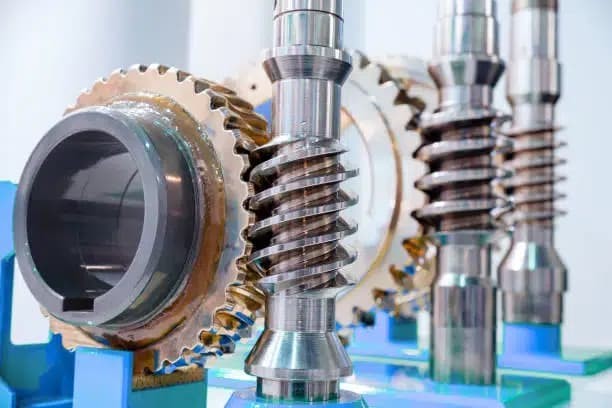
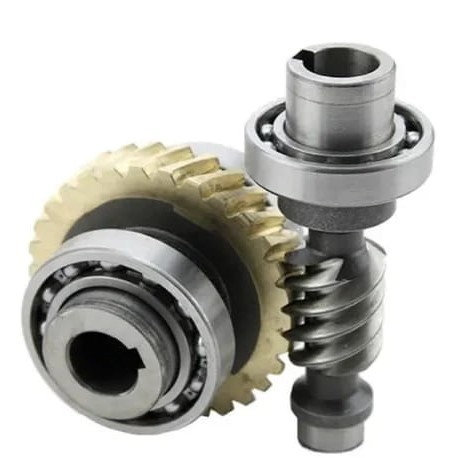
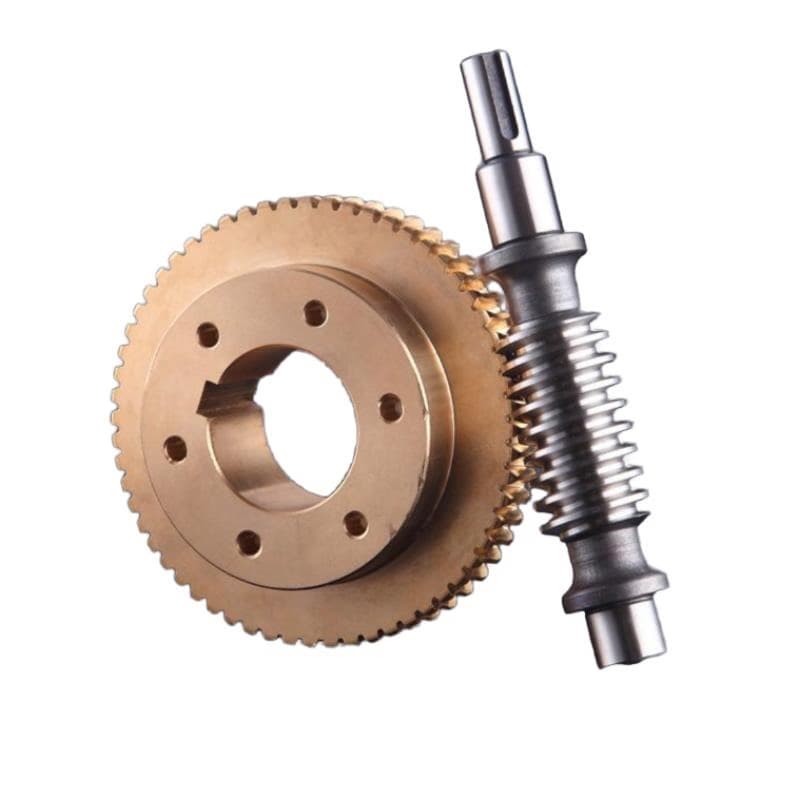
A worm gear set has two main parts: a worm, which looks like a screw on the driving shaft, and a worm wheel, a gear whose teeth mesh with the worm thread.
The ratio mainly depends on:
-the number of threads (starts) on the worm
-the number of teeth on the worm wheel
A simple way to estimate the speed ratio is:
speed ratio ≈ (worm wheel teeth) ÷ (worm starts)
For example, a single-start worm with a 40-tooth wheel gives roughly 40:1 reduction in one stage. Achieving the same ratio with only spur or helical gears usually requires multiple reduction stages and more space.
3. How Worm Gears Work
3.1 Sliding Contact and Load Transfer
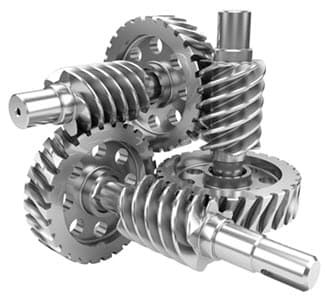
In spur and helical gears, tooth contact is mostly rolling with some sliding. In worm gears, contact is mainly sliding between the worm thread and the worm wheel teeth. As the worm turns, its surface moves along the tooth flanks and transfers torque.
This leads to two main effects: higher contact stress and friction, which demand suitable materials and lubrication; and very smooth torque transfer, because impact at mesh entry and exit can be kept low when the geometry is correct.
3.2 Direction of Power Flow and Back-Driving
Most worm gear drives are designed so that the worm drives the wheel. Whether the wheel can back-drive the worm (and the motor) depends mainly on the lead angle and the friction level in the mesh.
-With small lead angles and normal friction, back-driving is difficult and the set behaves close to self-locking.
-With larger lead angles, the tendency to back-drive increases and self-locking is reduced.
For safety-critical systems, designers should confirm back-driving behaviour by test and also use brakes or mechanical locks, instead of relying on self-locking alone.

4. Main Types of Worm Gears
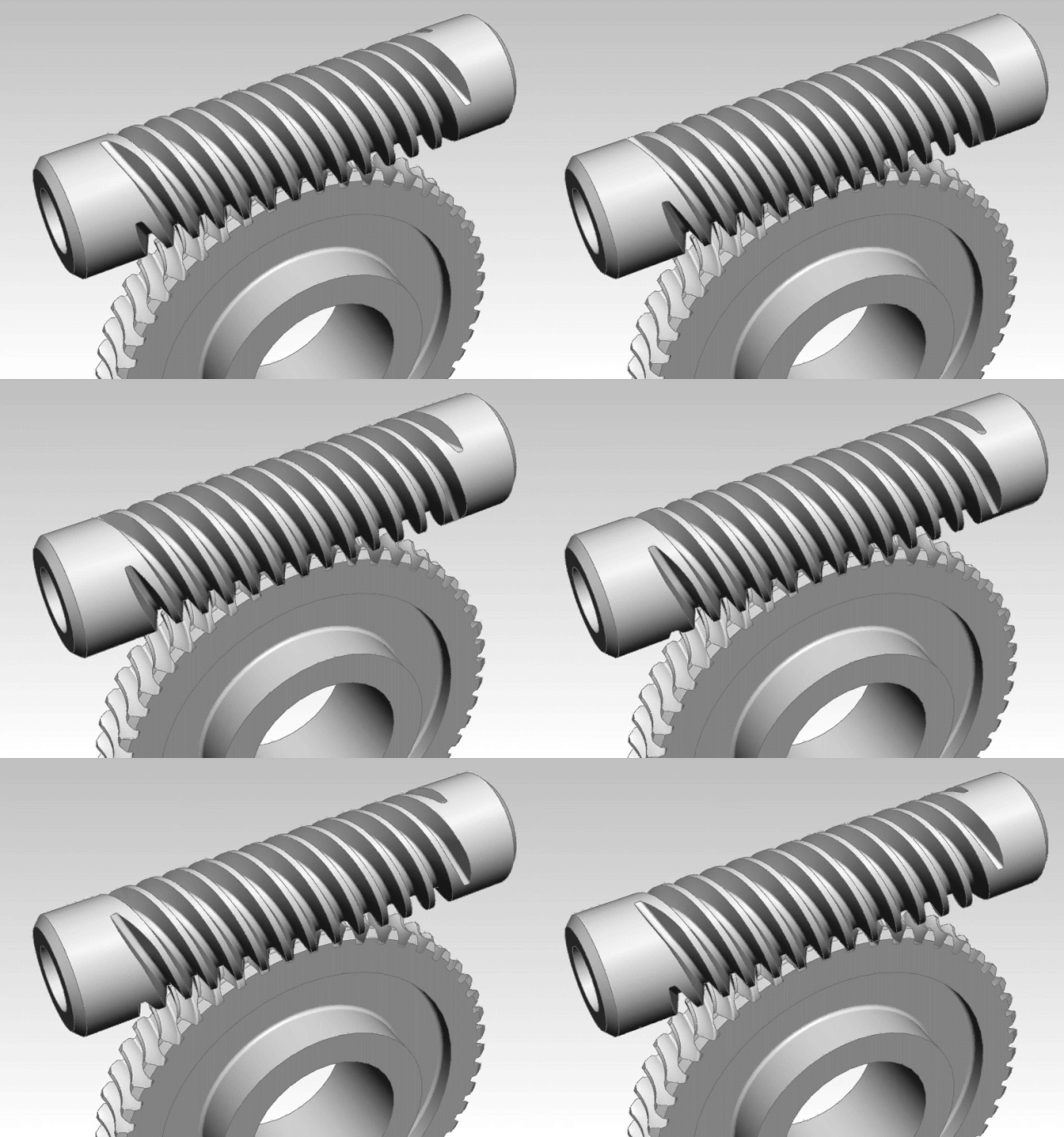
4.1 Cylindrical Worm with Throated Worm Wheel
The most common worm gear arrangement uses:
-a cylindrical worm with a defined thread profile
-a throated (concave) worm wheel that partly wraps around the worm
This shape increases contact length and helps spread the load. Worms typically have 1–4 starts. Worm wheels often have at least 24 teeth. The worm is generally hardened alloy steel, while the wheel is often bronze or a similar bearing-friendly alloy to reduce scuffing and wear.
4.2 Single-Enveloping vs. Double-Enveloping
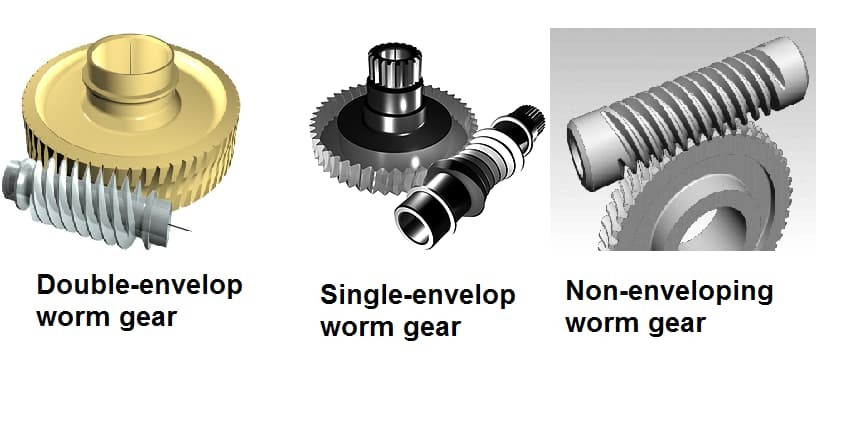
In a single-enveloping design:
-the worm is cylindrical
-the worm wheel tooth surface is throated and partially envelops the worm
In a double-enveloping design:
-the worm has a“barrel" or“hourglass" profile
-both worm and wheel surfaces envelop each other
5. Advantages and Limitations of Worm Gears
Worm gears have their own strengths and trade-offs compared with spur and helical gears. The table below summarises the key points.
| Aspect | Worm gear behaviour | Engineering meaning for customers |
Reduction & layout | Achieves high ratios (e.g. 20:1, 40:1) in a single right-angle stage | Very compact solution when you need high torque and limited space |
Self-locking | Can be difficult to back-drive at small lead angles | Useful for holding loads or positioning, but true self-locking must be validated |
| Smooth running | Sliding contact gives low-impact, low-vibration torque transfer | Good for mechanisms where smooth motion matters more than response speed |
| Efficiency & heat | More sliding friction than spur/helical gears; generates more heat | Needs careful thermal design, lubricant choice and realistic duty-cycle planning |
| Wear & lubrication | Sensitive to poor lubrication and contamination | Correct oil, material pairing and maintenance are critical for long service life |
Because of these characteristics, worm gears are best used where high reduction and compact layout are more important than maximum efficiency. They are often chosen for low- to medium-duty cycles, holding functions and auxiliary drives, rather than as the main high-efficiency power path.
6. Worm Gears in the Four PairGears Sectors
The table below shows typical worm gear uses in PairGears'four focus sectors and what usually matters most in each case.
| Sector | Typical worm gear use | Duty profile | Key design focus |
| Agricultural machinery | Auger drives, seeders, small angle drives, jacks | Dusty, intermittent, seasonal | High torque in compact space, wear resistance, self-lock |
| heavy truck | Liftgates, steering assist boxes, parking devices | Cyclic loading, safety critical | Reliable holding, controlled back-driving, material pairing |
| Construction equipment | Conveyor drives, positioning jacks, slew locks | Low speed, high torque, shocks | Load capacity, impact tolerance, thermal robustness |
EV | Parking actuators, auxiliary drives, test rigs | Limited duty, high reliability demand | Compactness, self-locking where needed, efficiency balance |
These are not the only applications, but they show where worm gears can support high-torque, low-speed or holding functions inside a larger transmission and work together with spur or helical gear stages.


7. Lubrication, Heat and Reliability Basics
Because worm gears depend on sliding contact, lubrication and heat control are central to their reliability:
-Use oils specified for worm gears, usually with EP (extreme pressure) additives and suitable viscosity.
-Set housing shape and oil level so the worm is properly wetted without too much churning.
-Add cooling features (fins, airflow or oil circulation) for continuous duty at higher ratios or loads.
-Track oil condition; dirt and oxidation quickly weaken the film and increase wear.
PairGears combines geometry, materials, surface finish and lubrication into one design package, especially for demanding duty cycles.
8. Conclusion
Worm gears are not a one-size-fits-all solution, but in the right place they offer compact high-ratio reduction, strong torque transmission and, when required, useful self-locking to support other gear types. Understanding how they work, which types exist and how heat and lubrication affect them helps engineers decide where worm gears really add value in a driveline.
As a precision gear manufacturer and custom gear supplier, PairGears develops worm gears, worm wheels and related parts for agricultural machinery, heavy truck, construction equipment and EV. If you are evaluating a worm gear application, replacing an existing set or planning a new mechanism that needs high reduction and reliable holding, Contact Us to discuss how we can support your next worm gear program with practical, application-focused design and manufacturing.
FAQ: Worm Gear Product Basics
Q1: When does it make sense to use a worm gear instead of spur or helical gears?
A: When you need a high reduction ratio in one stage, a compact right-angle layout, or some level of self-locking. Typical examples are jacks, conveyor drives, lift mechanisms and parking devices, especially where fast response is not critical.
Q2: Are worm gears always self-locking?
A: No. Self-locking depends on worm lead angle, friction and operating conditions. Some sets can be back-driven, especially with larger lead angles or very good lubrication. For safety-critical functions, do not rely only on theoretical self-locking—use extra brakes or locks.
Q3: What materials are commonly used for worm gears and worm wheels?
A: Worms are usually hardened alloy steel to handle high contact stress. Worm wheels are often bronze or similar alloys that run well against steel and help reduce scuffing, pitting and noise.
Q4: How can I improve the efficiency of a worm gear drive?
A: Improve efficiency by choosing a suitable lead angle, using good materials and surface finishes, selecting the right lubricant and managing temperature. Even then, worm gears will usually be less efficient than spur or helical gears, so they are best used where their special benefits justify the loss.
Q5: What information does PairGears need to design or replace a worm gear set?
A: Helpful data include drawings or samples, required ratio and output torque, duty cycle, desired back-driving or self-locking behaviour, installation layout, lubrication concept and the target sector (agricultural machinery, heavy truck, construction equipment or EV).