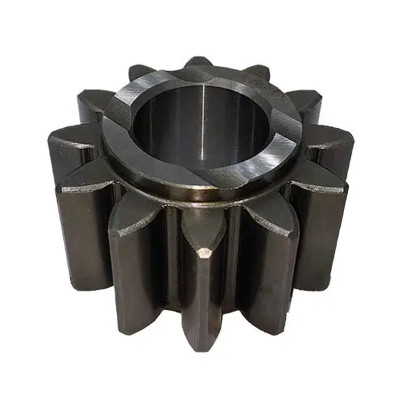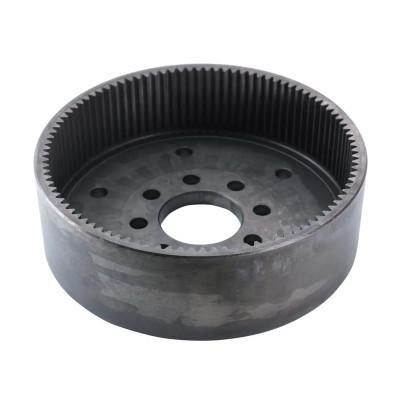
Why Do Truck Transmission Gears Wear So Fast?
Fast gear wear in heavy-duty truck applications is rarely caused by one reason alone. In many repair cases, buyers first notice noise, poor shifting, pitting, worn tooth surfaces, or damaged tooth edges. They may ask whether the material was too weak or whether the replacement part did not match the real service condition. Those are reasonable questions, but the real cause is usually more complicated than one visible worn area.
At PairGears, we manufacture custom precision gears and replacement gear solutions for heavy-duty trucks and other high-load transmission applications. When truck gears wear too fast, the review should cover load, lubrication, material, heat treatment, hardness, shaft fit, mating gear condition, and service environment together. If only the worn surface is copied and the original cause is ignored, the next replacement may wear quickly again.
Quick Answer for Buyers
Fast wear means the gear tooth surface loses material, changes contact condition, or shows visible damage earlier than expected under its real service conditions.
Truck gears usually wear too fast because load, lubrication, contamination, material, heat treatment, contact condition, and assembly fit are no longer working together properly. In many cases, more than one factor appears at the same time.
Why Fast Wear Should Not Be Judged Too Quickly
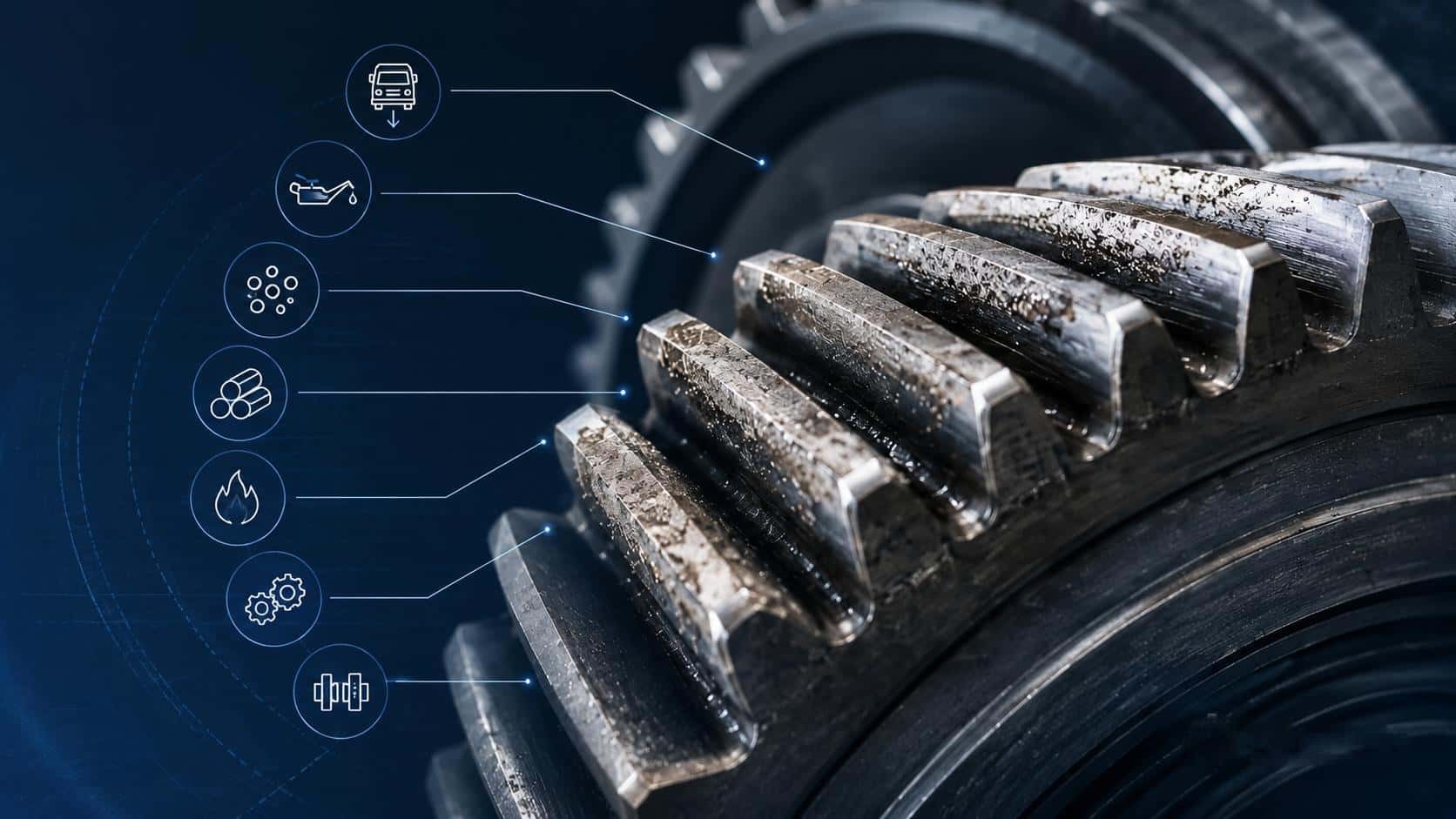
A worn gear does not automatically mean the material was wrong. It may also mean the oil film failed, abrasive particles entered the system, the contact pattern shifted, or the replacement gear was installed against a worn mating part. General gear failure modes include wear, scuffing, pitting, micro-pitting, tooth flank fracture, and tooth root fatigue fracture. These issues can be connected with friction, fatigue, loading, and lubrication conditions
Truck gears work under repeated torque, shifting cycles, vibration, heat, and road shock. The working condition becomes even more severe when the truck carries overload, starts and stops frequently, runs long distances under heavy load, or operates with poor maintenance. Under these conditions, a gear that looks acceptable on paper may still wear too quickly in service.
This is why fast gear wear should be reviewed as a system issue, not only as a single-part issue. A new gear can fail again if the shaft fit is loose, the bearings are worn, the housing alignment is unstable, or the mating gear has already lost its original surface condition.
Common Reasons Truck Gears Wear So Fast
| Cause | What Usually Happens | What Buyers Should Check |
Overload | Tooth surface stress rises and wear accelerates | Real load, route condition, operating habit |
Poor lubrication | Heat, friction, and surface damage increase | Oil type, oil level, oil change interval |
Dirty oil | Abrasive particles scratch tooth surfaces | Metal debris, dust, water contamination |
Wrong material | Surface or core strength may not match the application | Material grade, certificate, equivalent standard |
Inadequate heat treatment | Surface hardness or case depth may be insufficient | Hardness, case depth, heat treatment record |
Poor tooth contact | Load concentrates on a limited area | Contact condition, alignment, mating gear wear |
| Worn mating gear | A new gear runs against a damaged surface | Pair condition, surface pattern, backlash |
| Poor shaft or spline fit | Load transfer becomes unstable | Bore tolerance, spline wear, shaft condition |
| Misalignment | One side of the tooth carries more load | Bearing wear, housing support, shaft runout |
Wrong replacement data | The new part does not truly match the original working logic | Tooth count, module or DP, pressure angle, helix angle |
Most early-wear cases involve more than one cause. A gear may survive moderate overload if lubrication, contact, and heat treatment are all suitable. The same gear may wear quickly when poor lubrication, worn bearings, and wrong backlash appear together.
Who Should Review Truck Gear Wear Carefully?
Truck repair teams often see the visible failure first, but the real cause may involve mating parts, bearings, oil condition, and assembly fit.
Replacement part buyers need to confirm that the new gear matches the original tooth data and the real working condition of the application.
Fleet maintenance teams may find that repeated wear across multiple units points to lubrication, overload, contamination, or installation-related issues rather than one bad gear.
Transmission rebuilders and driveline repair teams should review the whole set, not only the damaged gear, because worn mating parts can quickly damage a new replacement.
What Buyers Should Check Before Replacing a Worn Truck Gear
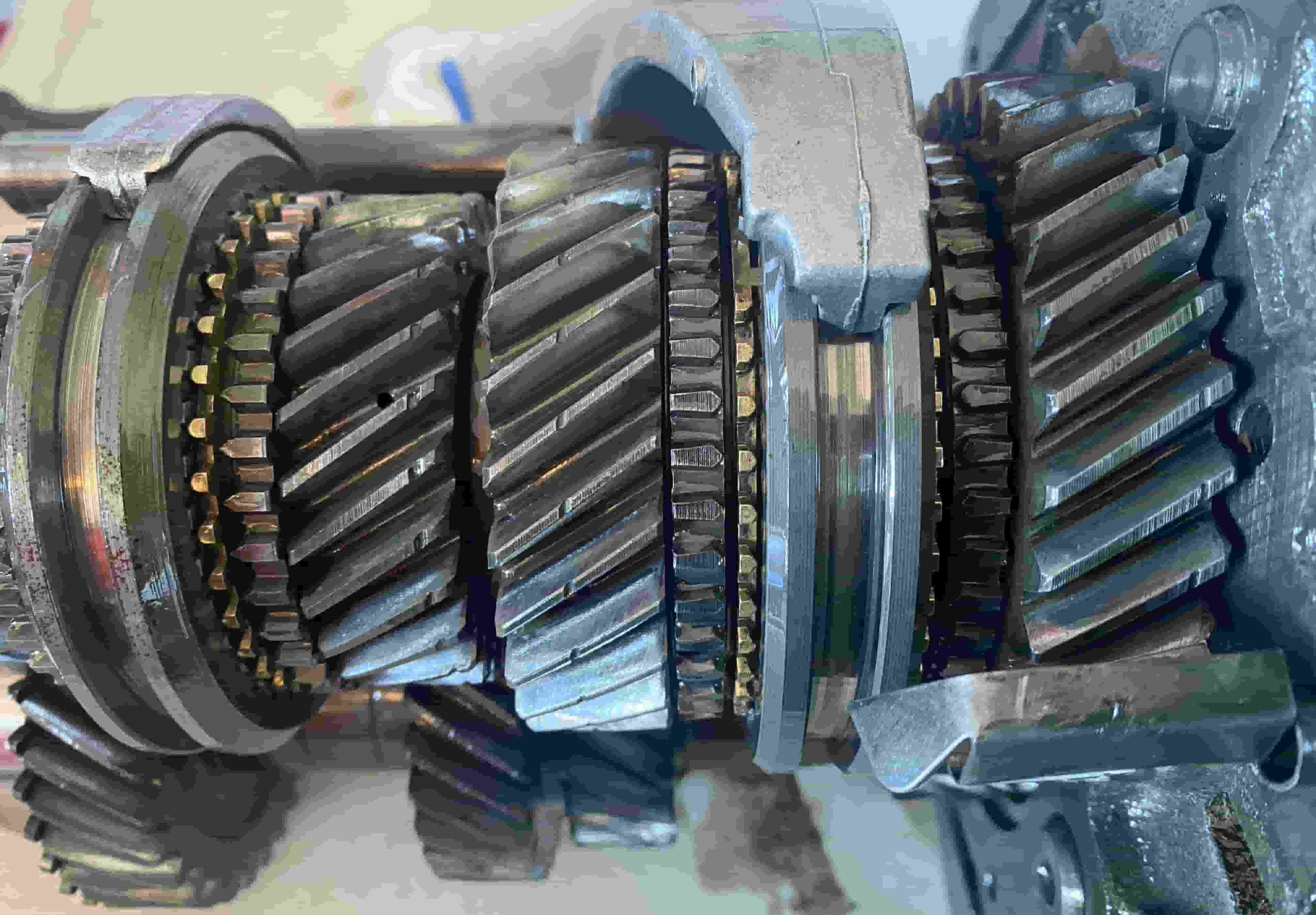
Before asking for a quote, buyers should try to collect more than one close-up photo of the worn part. The more complete the information is, the easier it becomes to judge whether the problem came from the original gear itself or from the full running condition around it.
●Tooth data: Tooth count, module or DP, pressure angle, and helix angle should be confirmed if possible.
●Mating gear condition: If the mating gear is already worn, chipped, or pitted, a new single gear may still fail quickly.
●Lubrication history: Oil type, oil change interval, oil level, and contamination condition often explain wear better than the visible surface alone.
●Material and heat treatment: If there is an old report, hardness value, or known steel grade, it should be shared early.
●Assembly fit: Shaft fit, spline condition, bearing support, and housing stability should be reviewed because poor support changes tooth contact.
●Failure pattern: Surface polishing, pitting, scoring, edge wear, tooth-end wear, or heat discoloration can each suggest a different cause.
If your replacement RFQ is still incomplete, you can still start with the available information. PairGears can review the worn gear photos, sample details, and working condition first, then advise what should be confirmed before quotation.
What photos and samples should buyers send?
If you are preparing a replacement RFQ, do not send only one close-up photo of the worn tooth.
It is better to send:
●the full gear
●the damaged area close up
●the mating gear
●the bore or spline area
●visible wear marks or heat discoloration
●the transmission model, if known
A physical sample is even better, but it should not be treated as perfect reverse-engineering data without context. Wear may have already changed the original tooth surface and fit condition.
What a Correct Failure Review Improves
| Benefit | What Improves | Practical Result |
| Better root-cause judgment | The real failure mode is identified earlier | Less guesswork and fewer repeated failures |
| Better replacement accuracy | The new gear is reviewed as part of the system | Lower risk of early repeat wear |
Better process planning | Material and heat treatment fit the real duty cycle | More reliable manufacturing route |
Better sample approval | Inspection focuses on the right risk points | Fewer avoidable revisions |
Better service life | Contact, hardness, and fit are reviewed together | More stable field performance |
A good failure review does more than explain the old problem. It helps improve the next part. That is what most buyers actually need from a replacement project.
Practical tips before sending a replacement RFQ
●Send the worn gear sample if possible. A physical sample is useful, but it works best together with photos and application details.
●Include the mating part information. A truck transmission gear cannot be judged correctly if the mating gear, shaft, or bearing condition is ignored.
●Do not separate material from heat treatment. These two should always be reviewed together because they decide how the tooth really performs.
●Describe the service condition honestly. Overload, poor lubrication, dust, water contamination, and repeated shock all matter.
●Ask for the right inspection scope. Hardness, case depth, runout, tooth data, and fit checks are often more useful than appearance alone.
Why Choose PairGears
PairGears supports custom precision gears and replacement gear projects for heavy-duty trucks and other transmission applications. For fast-wear cases, we do not only look at the damaged tooth surface. We review the working condition behind it, including tooth data, material route, heat treatment, mating gear condition, and application load.
We focus on:
●practical review of worn or damaged truck gear samples
●replacement projects from drawings, samples, OEM numbers, or photos
●material and heat-treatment planning based on real service conditions
●inspection logic that connects hardness, tooth geometry, and fit
●workable routes from failure review to sample approval and repeat production
This kind of early review is especially useful when the new gear must work with an existing mating part, or when the visible wear does not fully explain the original problem.
FAQ
Q1: Do truck transmission gears wear fast only because the material is bad?
A: No. Wrong material is one possible cause, but overload, lubrication problems, contamination, poor contact, and worn mating parts can all speed up wear.
Q2: Can poor lubrication really wear gears that fast?
A: Yes. If the oil film is unstable or contaminated, heat and surface damage can increase very quickly.
Q3: Should I replace only the worn gear?
A: Not always. If the mating gear is also worn, replacing only one side may lead to fast repeat wear.
Q4: What information is most useful for a replacement quote?
A: Photos, the worn sample, OEM number, tooth data, transmission model, lubrication history, and mating gear condition are all useful.
Q5: Can PairGears review truck gear wear from samples or OEM numbers?
A: Yes. Projects can start from drawings, samples, OEM numbers, photos, and working-condition details.
Conclusion
Truck gears usually do not wear too fast because of one simple reason. In most cases, wear comes from load, lubrication, material, heat treatment, contact condition, and assembly fit working together. Looking at only the worn tooth surface is rarely enough to judge the real cause.
If you are reviewing a worn truck gear or planning a replacement, Contact us with your drawings, samples, OEM numbers, mating gear data, photos, and working conditions. Our team can help review the project and discuss a practical manufacturing and inspection plan.