Understanding Gear Accuracy Grades for Cost, Noise and Life
Introduction
In gear projects, customers often ask a simple question: what accuracy grade do we really need? In factory work, that question is closely tied to cost, noise, service life, and batch consistency. A tighter grade can improve motion control and running smoothness, but it also increases manufacturing difficulty, inspection requirements, and sometimes lead time.
At PairGears, we manufacture custom precision gears and gear sets for agricultural machinery, heavy-duty trucks, construction equipment, and EV drivetrains. In practice, transmission accuracy is not defined by machining alone. It reflects the combined effect of design, manufacturing, heat treatment, inspection, assembly, and service conditions. This guide explains what gear transmission accuracy means and how to match accuracy grade to application needs.
What is gear transmission accuracy?
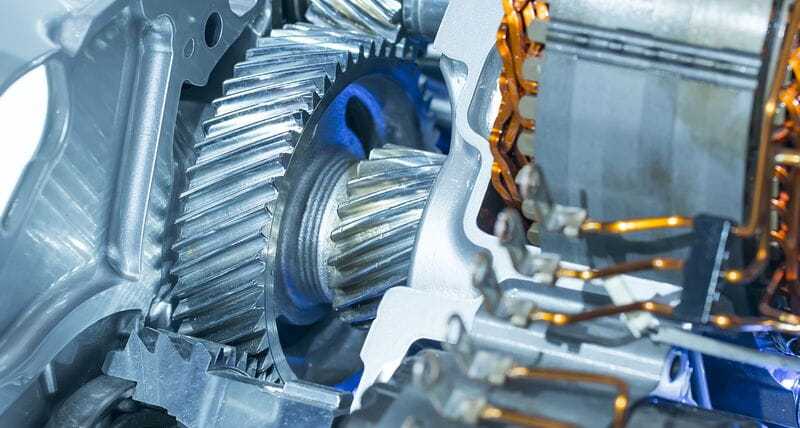
Gear transmission accuracy is the degree to which the actual motion of a gear pair matches its theoretical motion during power transmission.
Why transmission accuracy matters in real projects
Transmission accuracy is often misunderstood as the precision of a single gear. In real use, however, customers work with a complete gear system, not one isolated part. That system includes the mating gear, shaft support, housing stiffness, backlash, lubrication, mounting accuracy, and service conditions. Even a well-machined gear can perform poorly if the overall system is unstable.
When transmission accuracy is not well controlled, the effects usually appear quickly: unstable ratio, vibration, noise, heat, shock loading, and faster wear. These are not just comfort issues. They can shorten service life, reduce efficiency, and create assembly variation between units. In many cases, the first warning sign is not tooth failure itself, but drifting contact pattern, overheating, or rising noise after limited service time.
Accuracy grade should match the real application goal. ISO 1328 and GB/T 10095 classify gear accuracy from grade 0 to 12, with lower numbers indicating higher accuracy, but the highest grade is not always the best choice. In practice, the right grade depends on the problem you need to control, such as ratio error, noise, or load distribution.
What engineers actually look at when they discuss accuracy
| Accuracy aspect | What it reflects | Why it matters | Typical risk if uncontrolled |
| Angular error over a full revolution | Ratio stability and positioning behavior | Indexing errors, speed fluctuation | |
| Running smoothness | Instantaneous ratio variation within one pitch | Noise, vibration, and smooth running | Harsh sound, unstable running feel |
| Load distribution uniformity | Actual contact distribution vs ideal contact | Stress sharing and durability | Pitting, scuffing, local overload |
Backlash control | Clearance between non-working flanks | Thermal safety, lubrication, positioning | Too small: heat/seizure; too large: noise/play |
Where transmission accuracy matters most
● Agricultural Machinery
Long duty cycles, variable loading, and contamination make stable contact and practical durability more important than chasing the highest possible grade. In many agricultural drives, over-specifying grade adds cost without solving the real field problem.
● Heavy-Duty Trucks
High torque density and long-life expectations mean tooth geometry, runout, and load distribution must stay stable across batches. A truck transmission that feels acceptable in one unit and rough in another is often an accuracy-system issue, not only a material issue.
● Construction Equipment
Shock loads and harsh service conditions make robustness, contact stability, and heat-treatment distortion control especially important. Here, the practical question is whether the selected grade can survive the manufacturing route and real assembly variation.
● EV Drivetrains
Higher speeds, compact layouts, and stricter NVH expectations mean running smoothness and geometry consistency often move higher on the priority list. In these systems, small errors become more visible in sound, vibration, and perceived refinement.
What shapes gear transmission accuracy from design to maintenance
| Stage | What to review | Why it matters |
| Design | Accuracy grade, module, tooth count, pressure angle, profile shift | Sets the geometry and the performance target |
| Microgeometry | Crown relief, tip relief, lead correction | Compensates for deflection, misalignment, and thermal effects |
| Material & heat treatment | Steel grade, carburizing/nitriding/induction route | Affects wear resistance, distortion, and life |
Manufacturing | Hobbing, shaving, honing, grinding, process sequence | Determines how closely the gear reaches the target geometry |
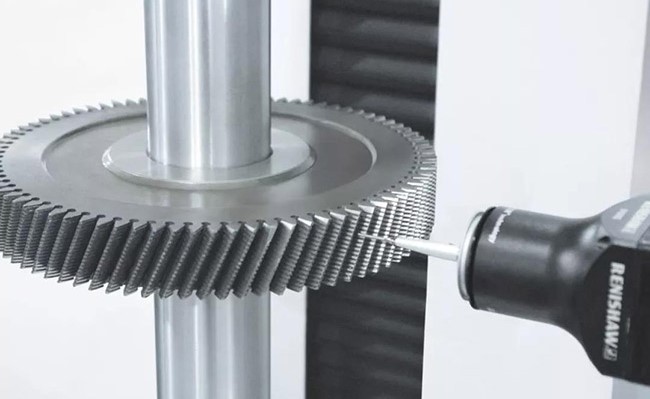
Inspection | Pitch, profile, lead, runout, and feedback loop | Prevents drift and supports repeatable output |
Assembly | Center distance, shaft alignment, bearing preload, backlash setting | Converts part accuracy into real transmission accuracy |
Operation & maintenance | Lubrication, load control, monitoring | Preserves accuracy and slows wear growth over time |
High transmission accuracy is a full-chain result. If one link is weak, the rest of the effort is limited. A good design can be damaged by uncontrolled heat-treatment distortion. A precise ground gear can still run poorly if bearing preload and center distance are wrong. A stable assembly can still lose accuracy early if lubrication is poor.
This is why factories that only talk about one process step rarely tell the full story. The useful discussion is always about how the whole chain is controlled, and which weak link is most likely to limit the application.
What the right accuracy grade improves
| Benefit | What improves | Practical result |
| Better ratio stability | More controlled motion transfer | Higher positioning reliability and smoother operation |
| Lower noise and vibration | Better profile/lead and smoother meshing | More stable running at speed |
| Longer service life | More even load distribution | Less pitting, scuffing, and local wear |
Better batch consistency | Controlled process and inspection feedback | Fewer one-unit-good, one-unit-bad problems |
Better cost balance | Grade matches the real application | Avoids both over-specification and under-performance |
From a sourcing point of view, this is where grade selection becomes important. If the grade is too low for the application, field performance suffers. If it is too high for the actual need, cost and lead time can rise without enough return. The right grade is the one that protects the project's main risk point.
Practical review points when choosing an accuracy grade
● Start with the application, not the grade table alone. Speed, torque, shock load, NVH target, and life expectation should drive the grade decision.
● Ask what process route supports the grade. A grade target means little unless the supplier can explain how design, cutting, heat treatment, finishing, and inspection support it.
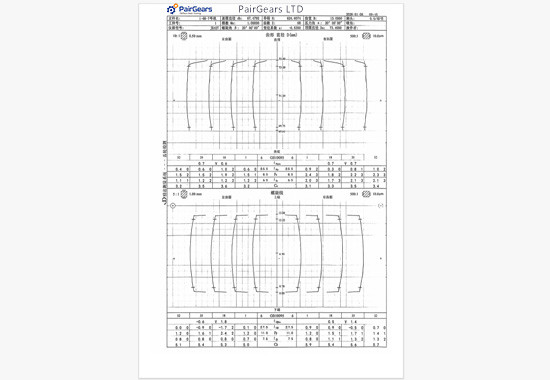
● Confirm what will actually be measured. Pitch, profile, lead, runout, backlash, and contact checks should be linked to the application, not listed as generic quality claims.
● Review assembly assumptions early. Gear accuracy on paper can be lost if shaft alignment, housing stiffness, or backlash adjustment are not controlled in the build.
● Treat maintenance as part of accuracy retention. Oil cleanliness, viscosity, overload events, and monitoring practices all affect how long the original transmission accuracy is preserved.
Why Choose Us
At PairGears, we do not treat transmission accuracy as a single machining number. We review it as a system issue that starts in design and continues through production, assembly, and service.
We focus on application-fit review for Agricultural Machinery, Heavy-Duty Trucks, Construction Equipment, and EV drivetrains; practical balancing of accuracy grade, cost, noise, and service life; process planning that links geometry targets with a realistic manufacturing route; inspection logic tied to actual risk points such as runout, contact, and smoothness; and support from drawing review through repeat production.
For many projects, the value is not in making the highest grade gear. It is in making the right grade gear for the real operating condition.
FAQ
Q1: Is A Higher Gear Accuracy Grade Always Better?
A: Not necessarily. A higher grade can improve smoothness and precision, but it also increases manufacturing and inspection cost. The right grade should match the application.
Q2: What Is The Difference Between Motion Accuracy And Running Smoothness?
A: Motion accuracy reflects low-frequency transmission error over a full revolution. Running smoothness reflects shorter-interval variation that affects noise and vibration more directly.
Q3: Does Backlash Count As An Accuracy Problem?
A: Backlash itself is not an error. It is a necessary design allowance, but it must be controlled correctly for the application.
Q4: Can Good Machining Alone Guarantee High Transmission Accuracy?
A: No. Design, heat treatment, inspection, assembly, and lubrication all affect the final result.
Q5: What Should I Include In An RFQ If Transmission Accuracy Matters?
A: Share the target grade or performance expectation, speed, torque, duty cycle, noise requirements, and any inspection items that matter for approval.
Conclusion
Gear transmission accuracy is not created in one operation. It is built step by step through design, manufacturing, assembly, and maintenance. That is why the same nominal gear can perform very differently depending on how the full chain is controlled.
If you are preparing an RFQ, comparing accuracy grades, or reviewing why a gear set is noisy, unstable, or wearing early, you are welcome to Contact Us with your drawings, target grade, inspection requirements, and operating conditions so we can help align the design target with a practical manufacturing and inspection plan.