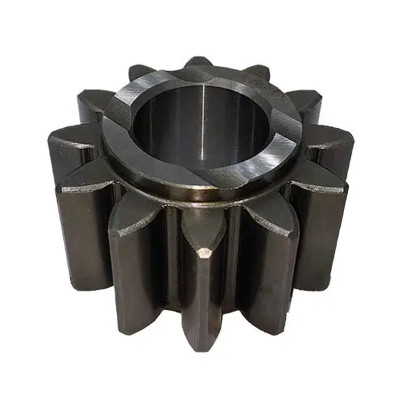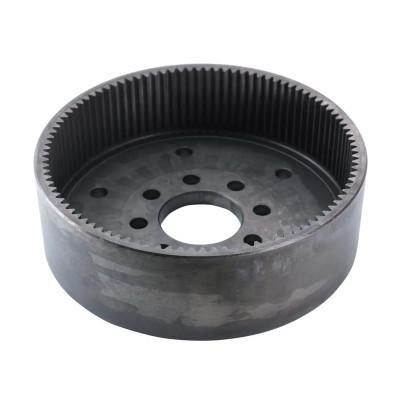
Custom Gear Manufacturing: From Drawing to Production
Introduction
Custom gear manufacturing is not just "making parts according to a drawing." A project runs more smoothly when technical details are clear, samples are checked properly, and production standards are confirmed before manufacturing starts.
In a custom gear manufacturing project, the drawing is only the starting point. Gear type, application position, load, mating parts, and order quantity all affect whether the project can move directly to quotation, reverse engineering, or sampling.
For buyers, the real question is not only "Can this gear be made?" but also "Is the project ready for production?"
What Custom Gear Manufacturing Means for Buyers
Custom gear manufacturing means producing non-standard gears, gear shafts, spline shafts, bevel gears, helical gears, spur gears, or other transmission parts based on drawings, samples, OEM numbers, or application requirements.
It is different from buying a stock part. A custom gear project usually moves through technical review, process planning, sample confirmation, inspection, and final delivery. Each step can affect cost, lead time, fit, and service performance.
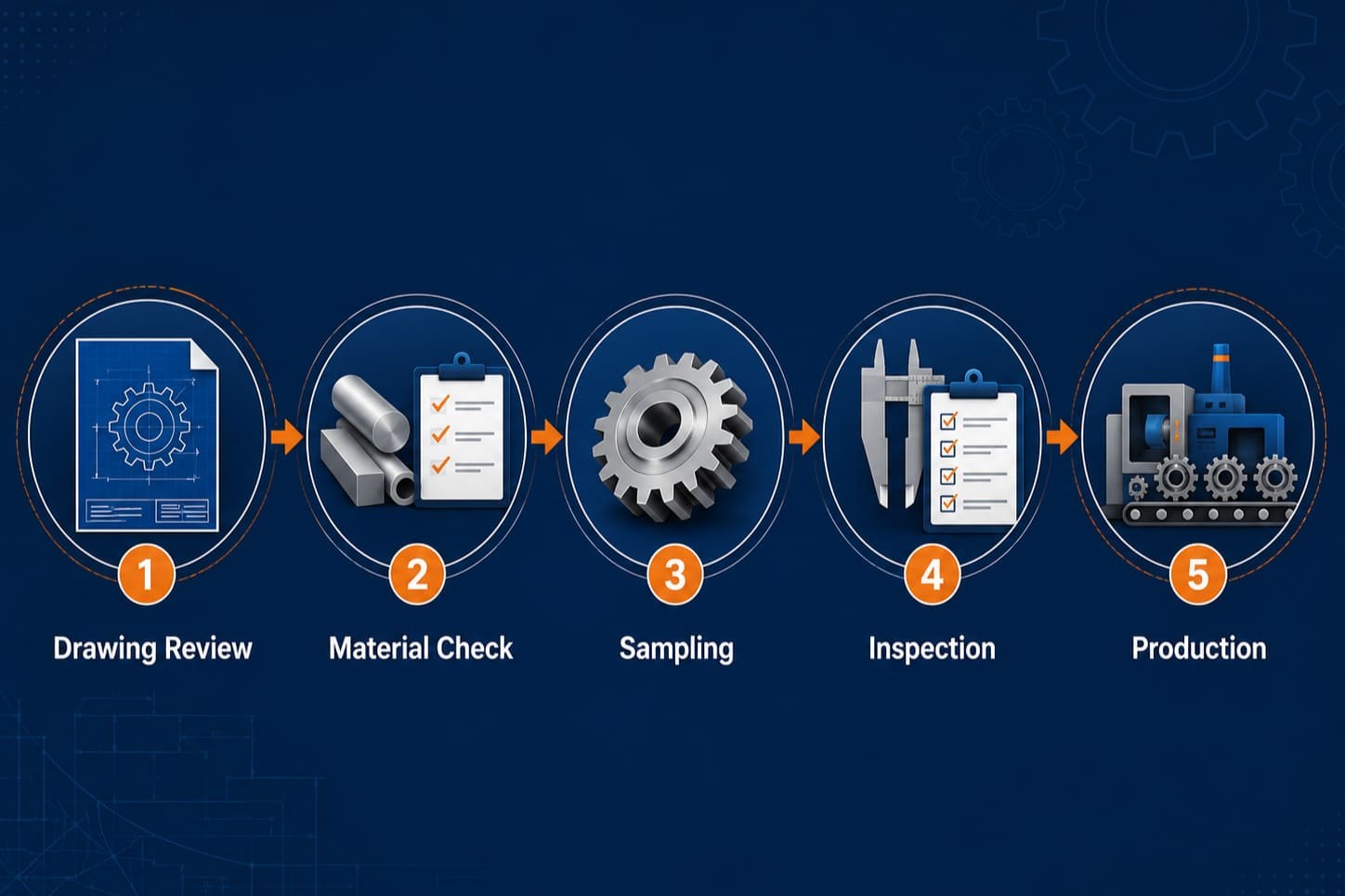
A typical project may include:
▷Drawing or sample review;
▷Material and process confirmation;
▷Sample or first-article verification;
▷Inspection scope confirmation;
▷Batch production;
▷Packaging, rust prevention, and delivery.
These steps help catch possible risks before production, instead of leaving problems to appear during assembly or operation.
Step 1: Review the Drawing, Sample or OEM Number
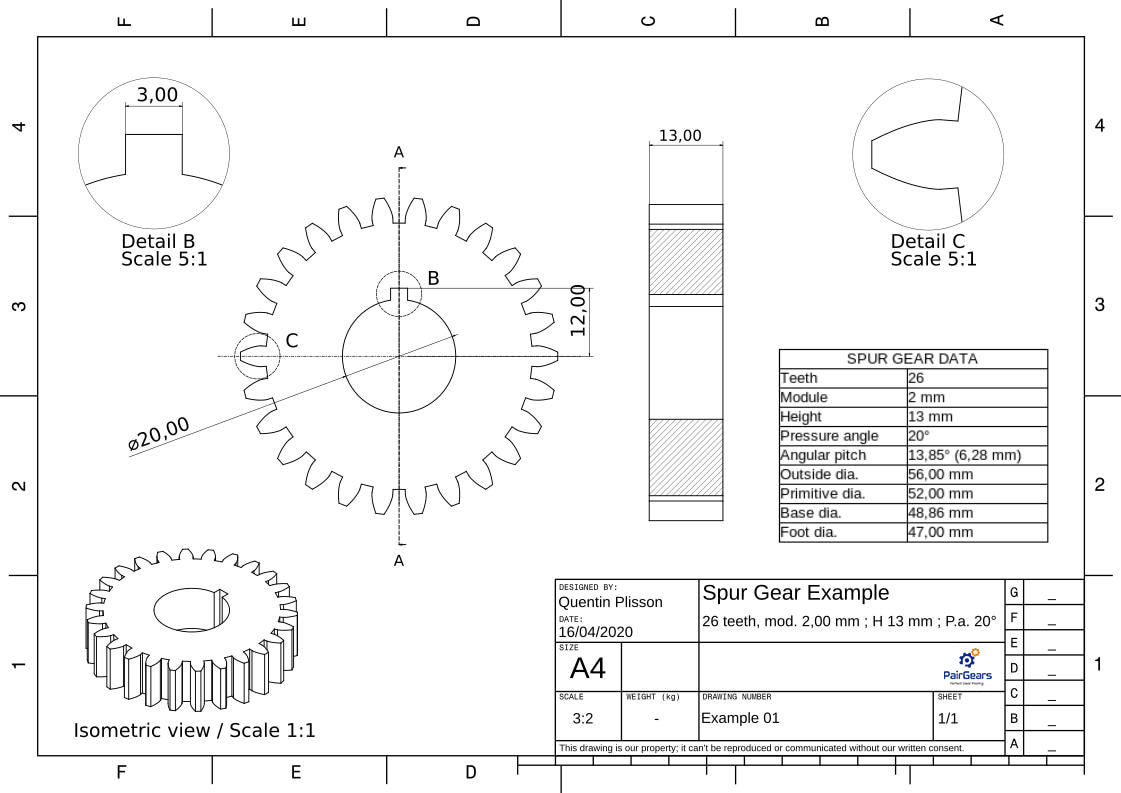
A clear 2D or 3D drawing helps the supplier confirm dimensions, tolerances, tooth count, module or DP, pressure angle, face width, bore size, keyway, spline, material, and surface requirements.
If no drawing is available, an old sample or OEM number can support an initial review. However, a worn sample may no longer reflect the original dimensions, and an OEM number cannot fully describe the manufacturing details. For replacement projects, producing only from the outside shape of an old part can create risk.
At this stage, the supplier usually checks whether the drawing is complete, whether the sample is usable, whether key dimensions are missing, whether the mating part should be reviewed, and whether reverse engineering or sampling is needed.
The clearer this stage is, the more stable the quotation and production plan will be.
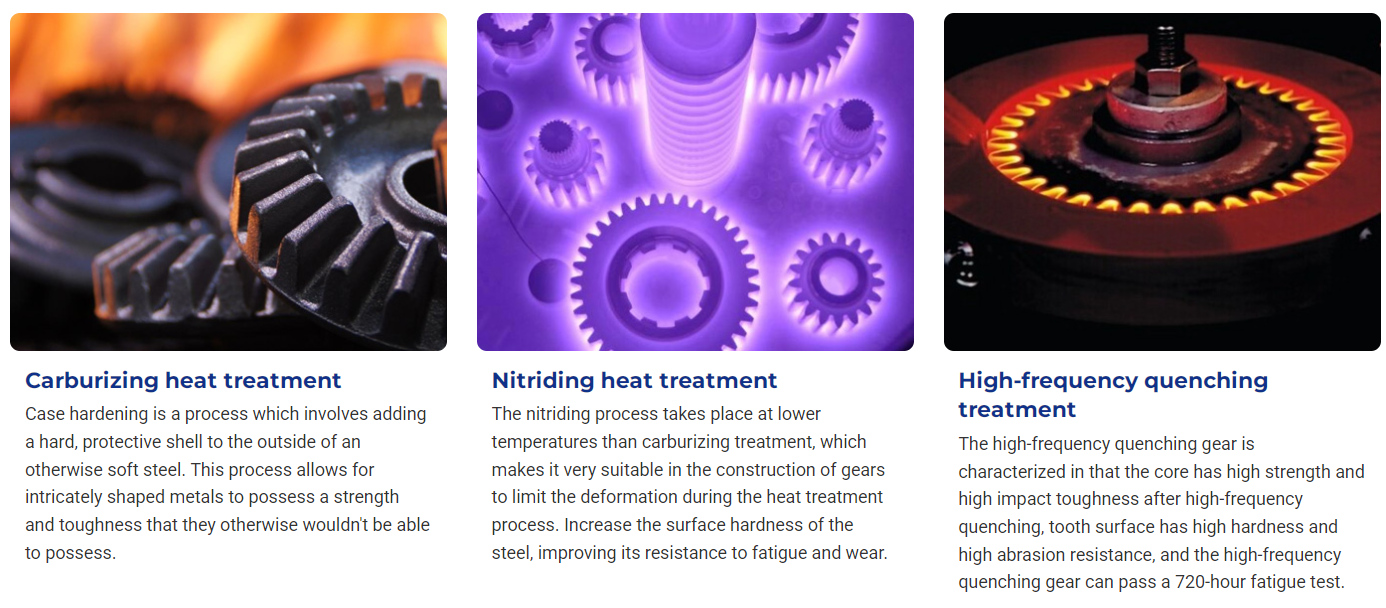
Step 2: Confirm Material and Heat Treatment
Material and heat treatment affect gear strength, wear resistance, service life, and manufacturing risk. When sending an RFQ, buyers should provide material grade, hardness range, heat treatment method, case depth, or other key requirements whenever possible.
If the drawing does not specify material, the supplier may suggest an option based on the gear function and application position. Still, material should not be changed casually. Different materials vary in strength, machinability, distortion after heat treatment, and cost.
Heat treatment should also be discussed early. Carburizing, quenching, tempering, and similar processes can improve surface hardness and core strength, but poor distortion control may affect assembly and meshing.
Step 3: Evaluate the Manufacturing Process
Different gear structures require different manufacturing routes. Gear type, size, accuracy, quantity, material, and heat treatment requirements can all affect process selection.
Common processes include gear hobbing, shaping, grinding, shaving, milling, post-heat-treatment finishing, internal spline machining, and other secondary operations. Buyers do not need to know every process in detail, but they should understand one point: the same drawing may require a different route if accuracy, heat treatment, or inspection scope changes.
A common replacement gear may only need standard cutting and basic inspection. A higher-accuracy gear may require grinding after heat treatment and stricter tooth profile checks. Sample orders and batch orders may also be arranged differently.
This is why two suppliers may quote different prices or lead times for the same project. The difference may come from process planning and quality control scope, not only from margin.
Key Checks Before Moving to Production
Before sampling or batch production, buyers should confirm the following details to reduce later changes.
| Item to Confirm | Why It Matters |
| Drawing version | Avoids producing parts from outdated or incomplete drawings |
| Critical dimensions | Controls fit, assembly and function |
| Gear data | Includes tooth count, module or DP, pressure angle and face width |
Material | Affects strength, wear resistance and machining route |
Heat treatment | Influences hardness, distortion and service life |
Hardness requirement | Helps confirm surface and core performance |
Sample or old part condition | Supports replacement or reverse engineering projects |
Mating part information | Important for paired gears or meshing accuracy |
Order quantity | Affects cost, tooling, production method and lead time |
Inspection scope | Defines what will be checked before shipment |
Packaging requirement | Reduces rust, impact damage and transport risk |
This checklist helps reduce uncertainty. Complete information makes it easier to decide whether the project can be quoted directly or should start with reverse engineering or sampling.
Step 4: Sampling Before Batch Production
For many custom gear projects, sampling is not just a formality. It is especially useful for old-sample reverse engineering, replacement part development, complex structures, or first-time cooperation.
During the sample stage, buyers usually check whether the part matches the drawing, assembles correctly, meshes with the mating part, remains stable after heat treatment, and meets the agreed inspection standard.
A passed sample does not automatically mean batch production will be stable. Sampling proves feasibility. Production still depends on material batch control, process stability, and consistent inspection.
Step 5: Inspection Before Shipment
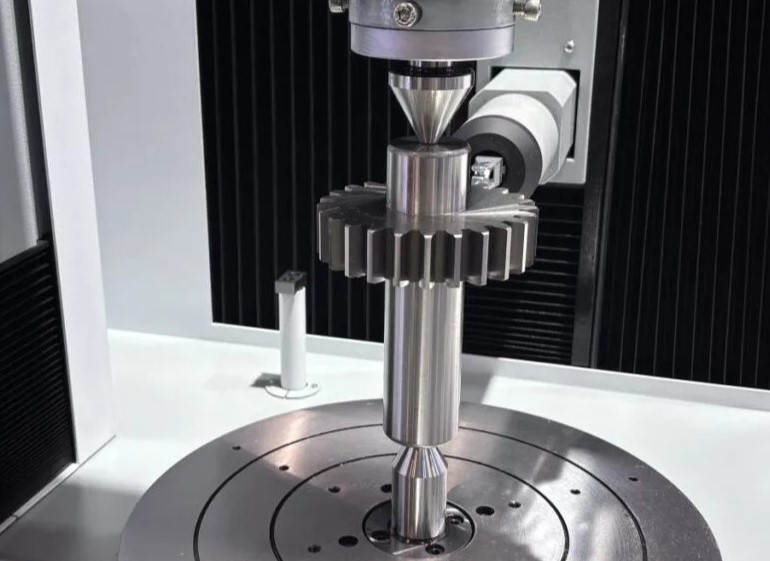
Inspection confirms whether the part meets the drawing, assembly, and application requirements before shipment.
Common inspection items include dimensional checks, hardness testing, visual inspection, runout inspection, tooth profile and lead inspection, material certificates, heat treatment records, and packaging checks. Not every project needs a full report package, but the scope should be agreed during quotation.
For export projects, packaging also matters. Gear teeth, end faces, keyways, and splines may be damaged or rusted during transport, so rust prevention, separation, labeling, and outer carton protection should be confirmed early.
Common Mistakes from Drawing to Production
Sending Incomplete Drawings
If the drawing lacks tolerances, material, heat treatment, or key gear data, the supplier can only make a preliminary judgment. Once new requirements are added later, the quotation, lead time, and process may change.
Treating OEM Numbers as Full Technical Data
An OEM number can help identify a part, but it cannot replace a complete drawing or sample information. Custom and replacement projects still need dimensions, structure, gear data, and application details.
Skipping Sample Review
If the drawing is incomplete, the old sample is badly worn, or the mating relationship is unclear, moving directly to batch production can create unnecessary risk.
Confirming Inspection Too Late
Late inspection requests can affect cost and lead time. It is better to confirm required reports during the RFQ stage.
Ignoring Production Consistency
Sample approval is only the first step. Batch production also depends on material batch control, heat treatment stability, machining consistency, and packaging protection.
How PairGears Reviews Custom Gear Projects
When reviewing custom gear manufacturing projects, PairGears first checks the available drawings, sample condition, key dimensions, material requirements, quantity, and inspection expectations.
For projects based only on an old sample or OEM number, the review focuses more on wear condition, mating part information, application position, and whether further reverse engineering is needed. The goal is not simply to copy the outside shape, but to judge whether the project is ready for stable production.
When a project moves into sampling or batch production, PairGears arranges machining, heat treatment, inspection, and packaging according to the confirmed technical requirements. The more complete the early information is, the easier it is to control communication and production risks.
If you need custom gears, replacement gears, or reverse engineering from old samples, you can prepare drawings, sample photos, OEM numbers, key dimensions, quantity, and inspection requirements for initial project review.
FAQ About Custom Gear Manufacturing
Q1: What information is needed for custom gear manufacturing?
Common RFQ information includes drawings, sample photos, gear data, material, heat treatment, hardness, quantity, application details, and inspection requirements. If a complete drawing is not available, an old sample, OEM number, and key dimensions can support an initial review.
Q2: Can custom gears be made without drawings?
An initial review may be possible, but accuracy depends on sample condition and information completeness. If the old part is heavily worn, reverse engineering or sample confirmation may be needed.
Q3: Is sampling always required before production?
Not every project requires sampling. However, for first-time cooperation, old-sample reverse engineering, complex structures, or higher-requirement gears, sampling is recommended.
Q4: What affects the production plan for custom gears?
Main factors include gear type, size, material, heat treatment, accuracy requirement, inspection scope, quantity, and lead time. Changes in key requirements may affect production planning.
Q5: What should buyers confirm before batch production?
Buyers should confirm the final drawing version, material, heat treatment, hardness, inspection standard, sample result, quantity, packaging, and delivery requirements.
Conclusion
Custom gear manufacturing is a project process from technical review to production delivery. Complete early information helps the supplier evaluate the route, sampling needs, inspection scope, and production standard more accurately.
For projects moving from drawing to production, early confirmation is often more valuable than solving problems later. If the project involves old samples, replacement parts, or batch production, key requirements should be clarified during the RFQ stage. PairGears can review the project information and help buyers decide whether the next step should be quotation, sampling, or production.