How to Compare Custom Gear Quotations From Suppliers
Custom gear quotations from different suppliers can vary a lot. The price difference does not always come from profit margin alone. It may also come from different material choices, heat treatment, accuracy requirements, inspection scope, tooling, lead time, packaging, and quotation scope.
When comparing custom gear quotations, unit price alone does not tell the full story. PairGears recommends first checking whether each supplier is quoting the same technical and commercial scope.
Quick Answer: How Should Buyers Compare Custom Gear Quotations?
Buyers should compare custom gear quotations by confirming that suppliers are pricing the same material, heat treatment, finishing, accuracy, inspection, quantity, tooling, lead time, and packaging scope. A lower price is not necessarily incomplete, and a higher price is not automatically better—the key is to compare the same technical and commercial scope.
Why Custom Gear Quotations Can Vary Between Suppliers
Custom gears are not standard parts. Even when two suppliers receive the same drawing, their quotations may still differ because they may understand the material, manufacturing route, heat treatment, inspection scope, and risk assumptions differently.
Different Technical Scope
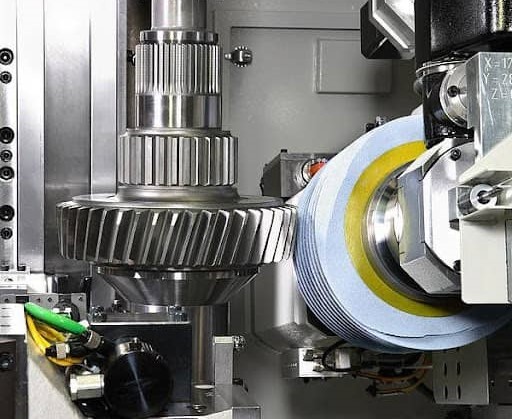
One quotation may include carburizing, gear grinding, and a tooth profile and lead inspection report. Another quotation may include only basic machining and general dimensional inspection.
Different Project Stage
A budget quotation, prototype quotation, and production quotation may not include the same scope. An early quotation may be based on assumptions, while a production quotation needs the drawing revision, material, heat treatment, accuracy, inspection, and packaging requirements to be clearly confirmed.
If buyers compare only the unit price, they may be comparing two quotations with very different scopes.
Quotation Scope Comparison: What Buyers Should Check
The following table is one of the most important parts of comparing custom gear quotations. It helps buyers check whether two quotations are truly comparable.
| Compare | Quote A | Quote B | Buyer Should Confirm |
|---|---|---|---|
| Material | 20CrMnTi | “Alloy steel” | Exact grade or approved equivalent |
| Heat treatment | Carburized | Included | Process + hardness requirement |
| Gear finishing | Grinding included | Not stated | Whether post-HT finishing is included |
| Accuracy | ISO grade stated | Not stated | Same acceptance standard |
| Inspection | Gear report included | Basic inspection | Exact report scope |
| Quantity | 500 pcs | 500 pcs | Same batch assumptions |
| Tooling | Separate | Included | Avoid false unit-price comparison |
This comparison quickly reveals unclear quotation items. For example, “alloy steel” is too broad to compare directly with 20CrMnTi, while “heat treatment included” still requires confirmation of the process, hardness range, and case depth requirements.
Tooling can also distort unit-price comparisons. If one supplier lists tooling separately while another includes it in the unit price, the quoted unit prices may not reflect the true cost difference.
Price Is Only One Part of a Gear Quotation
A custom gear quotation should not be judged by price alone. A lower quotation is not necessarily incomplete, and a higher quotation is not automatically better. The key is to confirm whether the scope behind each quotation is the same.
If these items are not aligned, the quotations cannot be compared directly. A better approach is to make the quotation scope consistent first, and then compare price, lead time, and supplier capability.
What Should Be Included in a Custom Gear Quotation?
A clear custom gear quotation does not need to be very long, but the key items should be stated clearly. After receiving a quotation, buyers can check the following points:
| Quotation Item | What Buyers Should Check |
|---|---|
| Drawing basis | Whether the drawing number, revision, 3D model, or sample basis is clear |
| Material | Whether the material grade or approved equivalent material is stated |
| Heat treatment | Whether the process, hardness, case depth, or treated area is clear |
| Gear process | Whether hobbing, shaping, shaving, grinding, or other process routes are stated |
| Accuracy | Whether ISO, DIN, AGMA, or another acceptance standard is consistent |
| Inspection | Whether dimensions, profile, lead, runout, hardness, or report scope is clear |
| Quantity | Whether quotation quantity, batch assumptions, and tier pricing are clear |
| Tooling | Whether tooling, cutters, fixtures, or setup costs are listed separately |
| Lead time | Whether prototype lead time and batch production lead time are separated |
| Packaging | Whether rust prevention, packaging, labels, and export requirements are included |
If some information is missing, it does not always mean the supplier has a problem. But buyers should ask for clarification. Many quotation misunderstandings do not come from the price itself, but from different assumptions about the scope.
Need to organize your RFQ before comparing quotations?
You can use the same information required for a custom gear quote to align the technical basis first.
Common Mistakes When Comparing Gear Quotes
1. Comparing Only the Unit Price
Comparing only the unit price is the most common mistake. The gear unit price may include different materials, processes, inspection scope, and service items. If the quotation scope is different, the unit price alone has limited value.
2. Ignoring Material and Heat Treatment Details
Material and heat treatment directly affect cost, service life, and the manufacturing route. Terms such as “alloy steel” or “heat treatment included” are not clear enough.
Buyers need to confirm the exact material grade, acceptable equivalent material, hardness requirement, and heat treatment process.
3. Missing Gear Accuracy and Inspection Scope
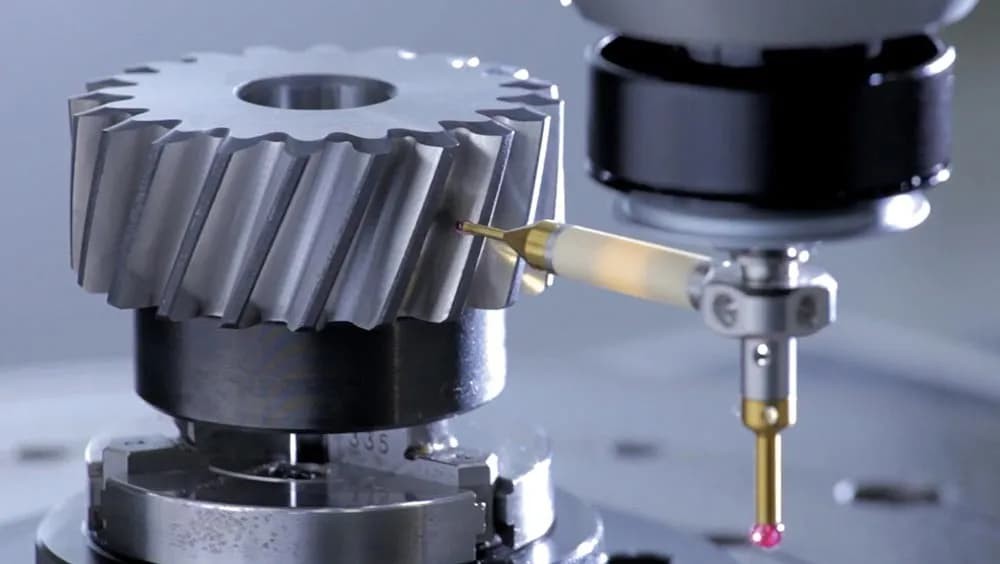
Some projects only need basic dimensional inspection, while others need tooth profile, lead, runout, hardness, or material reports. If one quotation includes full inspection reports and another only includes basic inspection, the costs will naturally be different.
4. Not Checking Post-Heat-Treatment Finishing
Whether gear grinding, finishing, or re-inspection is needed after heat treatment can significantly affect both price and lead time. If the quotation does not state the finishing scope, buyers should confirm it before placing the order.
5. Overlooking Tooling and Setup Cost
Custom gears may require tooling, cutters, fixtures, or inspection preparation. Some suppliers list these costs separately, while others include them in the unit price. Buyers should avoid directly comparing a unit price that includes tooling with one that does not.
6. Forgetting Drawing Revision and Quotation Assumptions
Different drawing revisions can lead to different quotations. If the quotation includes assumptions such as “based on current drawing” or “subject to final confirmation,” buyers should confirm which items are not yet finalized.
What Buyers Should Ask Before Confirming an Order
Before confirming an order, buyers can ask suppliers several specific questions:
These questions help buyers clarify uncertain items early and reduce later rework, additional cost, or lead time changes.
How PairGears Reviews Custom Gear RFQs
Review the Project Basis
When reviewing a custom gear RFQ, PairGears first checks the drawing, 3D model, old sample, OEM number, quantity, and application information. If the information is incomplete, the unclear items will be listed first instead of being hidden inside the quotation.
Confirm the Technical Scope
During technical review, PairGears focuses on material, heat treatment, gear parameters, accuracy grade, inspection requirements, mating part information, sample needs, and batch quantity. For replacement gears, old sample measurement, or paired gear projects, wear condition, assembly relationship, and actual working conditions may also need to be checked.
Clarify the Pricing Scope
At the quotation stage, PairGears clarifies the pricing basis and scope, including material, manufacturing, heat treatment, inspection, quantity, lead time, and packaging, so buyers can compare quotations more accurately and identify any items that still need confirmation.
What Evidence Helps Buyers Compare Gear Quotations?
A quotation document is only the final result. Buyers can also use more project information to judge whether a quotation is clear and reliable, such as:
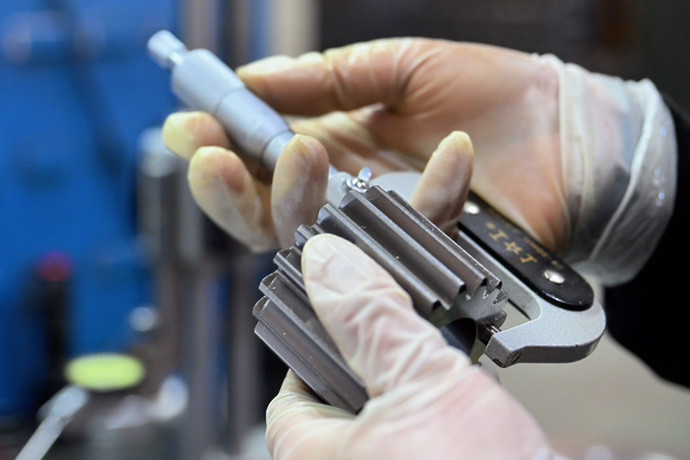
Not all of this information must be complete at the beginning, but the earlier it is confirmed, the easier it is to align quotation scope. If reports are required, buyers should also confirm the scope of gear inspection before shipment during quotation.
FAQ
Why do custom gear quotations vary so much?
Custom gear quotations may vary because suppliers include different materials, heat treatment, finishing, inspection, tooling, packaging, or lead time assumptions. Buyers should first check whether the quotation scope is the same.
Is the lowest gear quotation always risky?
Not always. A lower quotation may be reasonable if the supplier has a different production route or clear cost advantage. Buyers should confirm whether material, heat treatment, accuracy, inspection, and tooling are included before judging.
What should buyers compare besides price?
Buyers should compare drawing basis, material, heat treatment, finishing, accuracy, inspection reports, tooling, quantity, lead time, packaging, and payment terms.
Why should inspection scope be confirmed before ordering?
Inspection affects both cost and acceptance. If profile, lead, runout, hardness, or gear reports are required, they should be confirmed during quotation, not after production.
Can PairGears review an existing gear quotation?
PairGears can review the project information and help check whether the quotation scope is clear. Buyers can send drawings, sample photos, OEM numbers, material requirements, inspection needs, and quantity for technical review.
Conclusion
Comparing custom gear quotations is not only about finding the lowest price. A useful comparison starts by confirming whether each supplier is pricing the same material, heat treatment, finishing, accuracy, inspection, tooling, quantity, and delivery scope.
Before choosing a supplier, buyers should align the technical and commercial basis of each quotation.
Send Your Gear Project for Review
Send your drawing, sample photos, OEM number, quantity, and inspection requirements to PairGears for a technical review and quotation.