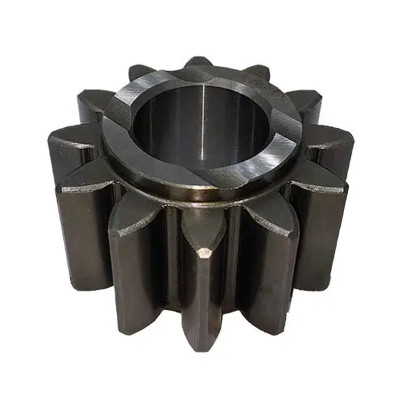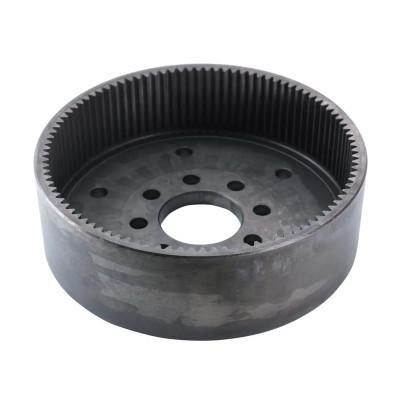
What Photos Are Needed to Identify an OEM Replacement Gear?
Quick Answer
To identify an OEM replacement gear, buyers should send clear front, back, side, tooth-detail, bore, spline or keyway, OEM marking, mating-part, and assembly-position photos. Photos help suppliers make an initial judgment about gear type, wear condition, and missing information, but accurate quotation or production usually still requires key dimensions, samples, drawings, or technical confirmation.
Why Photos Matter for an OEM Replacement Gear Project
Many replacement gear projects begin without a complete drawing. In some cases, the buyer only has a worn gear, an OEM part number, or a few photos taken at the job site. Clear photos help the supplier understand what kind of gear it is, what features are visible, and whether the project can move toward quotation, sample review, or reverse engineering.
When only one photo is provided, important details are often missed. The back side, tooth area, bore, spline, gear width, markings, and assembly position may all affect the review. If these details are unclear, the supplier will need to ask for more photos, dimensions, or even the physical sample, which slows down the early quotation stage.
For used or damaged parts, photos are also useful for showing wear, broken teeth, pitting, rust, edge damage, or assembly marks. Still, an old gear may no longer match its original dimensions. That is why drawings, sample measurement, or physical inspection may still be needed before production.
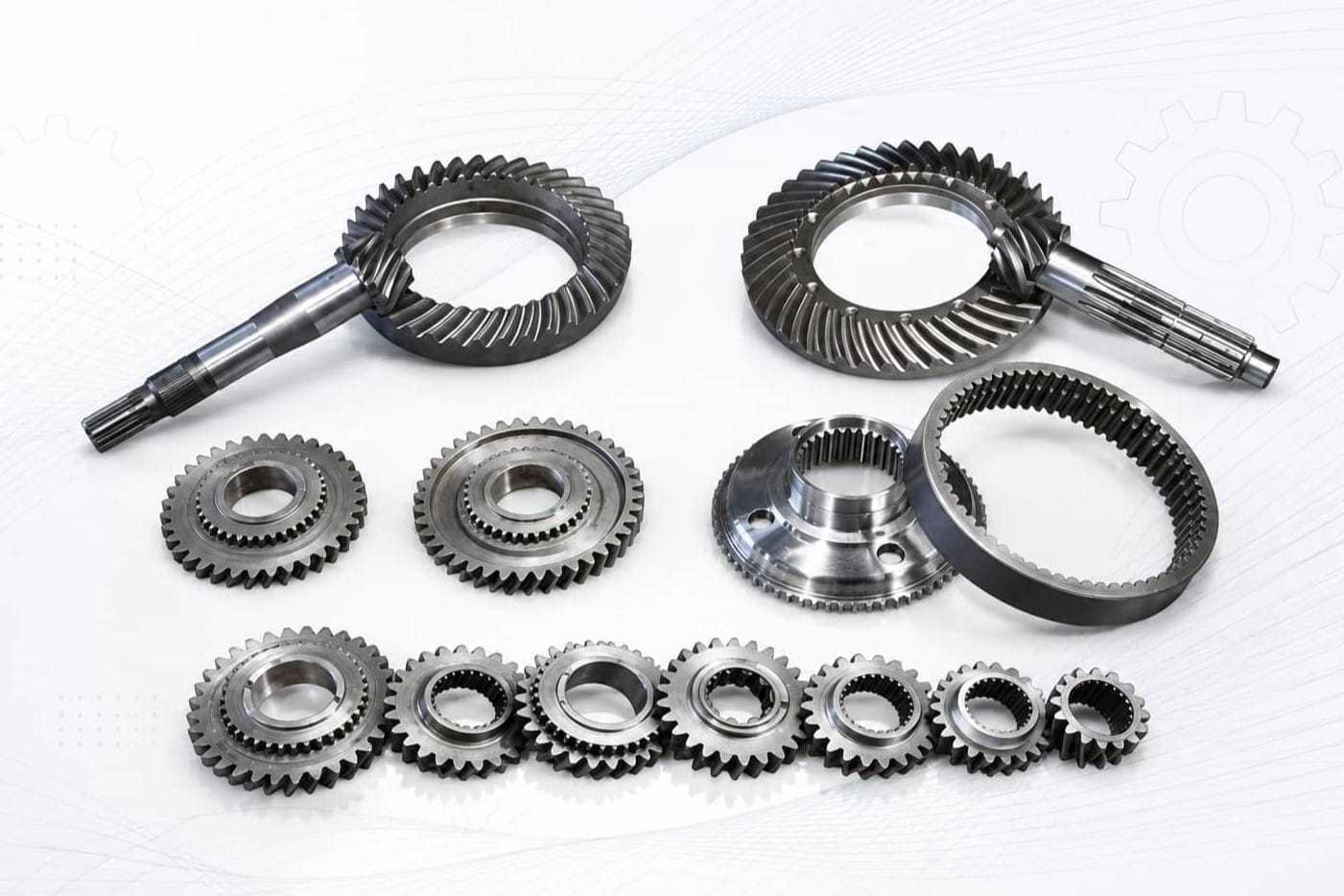
Can Photos Alone Confirm an OEM Replacement Gear?
Photos are useful for the first review, but they are rarely enough for final manufacturing confirmation. They can show the general gear type, visible damage, bore, spline, keyway, OEM markings, mating parts, and installation position.
Before a firm quotation, prototype, or production plan is made, the supplier usually needs more than photos. Key dimensions, quantity, material or hardness, application background, mating gear information, and inspection requirements may all affect the next step. For high-accuracy gears, paired gears, or heavily worn samples, reverse engineering or a physical sample review is often the safer route.
Photos Can Help Show
- General gear type and visible geometry
- Wear, pitting, cracks, rust, or broken teeth
- Bore, spline, keyway, and mounting features
- OEM markings and assembly position
- Whether more technical information is missing
Manufacturing Still May Require
- Key dimensions and complete tooth data
- Material, hardness, and heat-treatment requirements
- Mating gear or assembly relationship
- Inspection scope and report requirements
- A drawing, physical sample, or prototype approval
Photos and Details to Send
When sending an OEM replacement gear inquiry, buyers can prepare photos according to the checklist below. The photos do not need to look like advertising images, but they should be clear, complete, and taken from useful angles. A ruler or caliper is also helpful for scale reference.
| Photo or Information | What to Capture | Why It Helps |
|---|---|---|
| Front and back views | Full gear shape on both sides | Shows gear type, layout, and hidden structures |
| Side profile | Width, thickness, shoulders, and steps | Helps review machining structure |
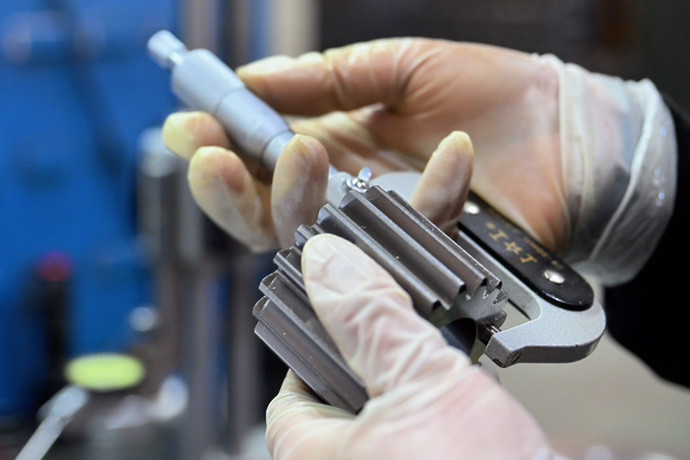
| Tooth close-up | Tooth form, wear, broken teeth, or pitting | Helps judge visible damage and gear style |
| Bore photo | Inner hole, chamfer, or wear marks | Important for fit and assembly |
| Spline or keyway | Internal spline, external spline, or keyway | Confirms torque connection features |
| OEM number or marking | Cast, stamped, engraved, or labeled number | Supports initial identification |
| Mating gear or assembly position | Paired gear and installation location | Reduces mismatch risk |
| Size reference and quantity | Caliper or ruler reference and required quantity | Helps estimate scale and quotation direction |
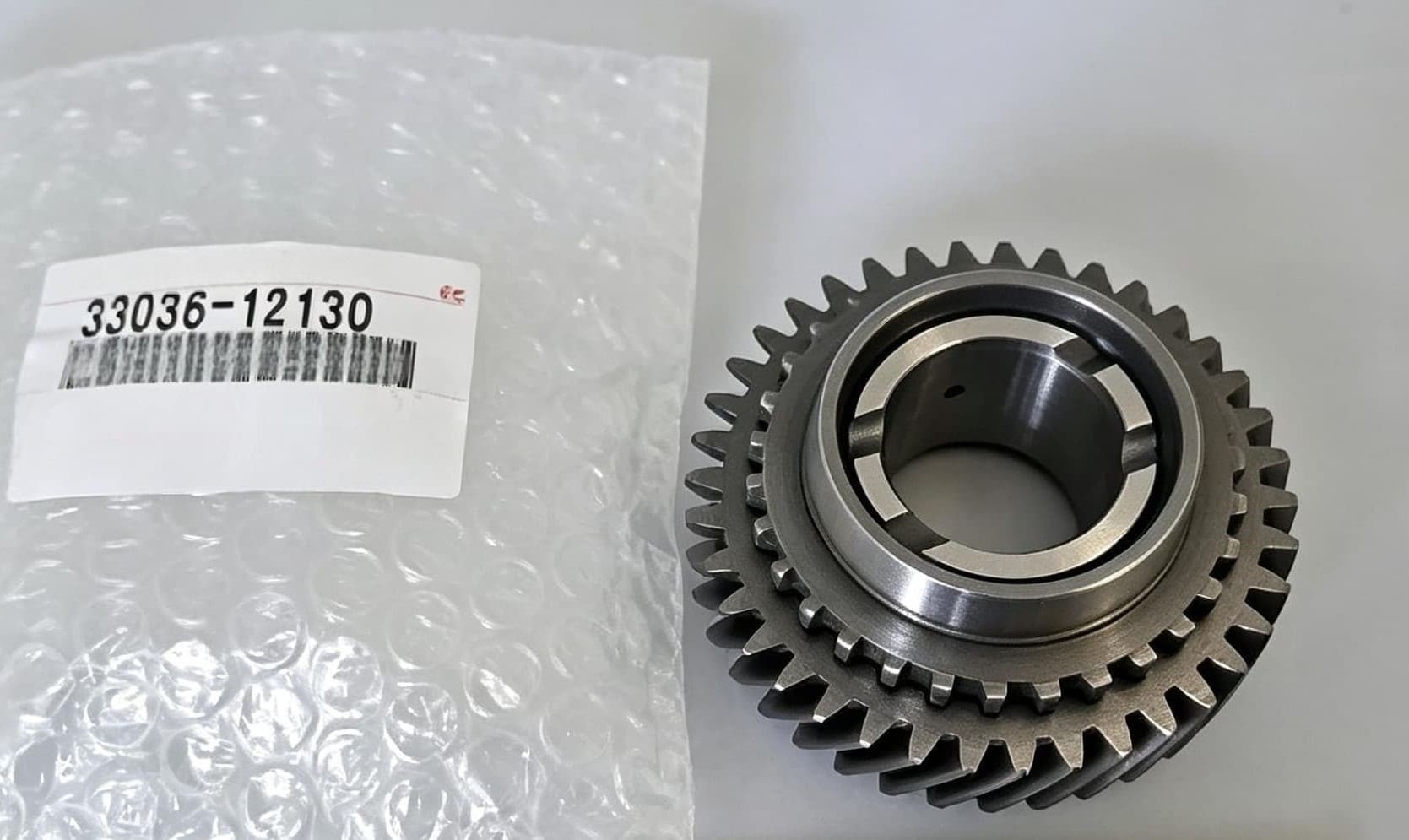
Common Photo Mistakes That Slow Down Identification
Only Sending One Photo
One front-view photo usually cannot show the back structure, gear width, steps, bore, and assembly relationship. Buyers should at least provide front, back, side, and tooth-detail photos.
Taking Blurry or Dark Photos
Blurry, dark, or highly reflective photos make it difficult to see tooth form, markings, cracks, or worn areas. Use bright, even lighting with limited glare and shadow.
Not Showing the Bore or Spline
Important identification details may be inside the bore, spline, keyway, or axial structure. If these areas are not shown clearly, fitting dimensions may remain uncertain.
Sending Only the OEM Number
An OEM number can help as a reference, but it cannot replace photos, dimensions, or samples. Different versions, batches, or fitting structures may exist.
Hiding the Mating Part
Reviewing only one gear may not reveal the meshing relationship, contact condition, or replacement risk. Include the mating part when it is available.
Technical Details That Photos Cannot Fully Confirm
Photos Do Not Replace Drawings
Photos show the actual condition, but drawings confirm dimensions, tolerances, material, heat treatment, and inspection requirements. If 2D or 3D drawings are available, send them together with the photos.
Worn Samples May Hide Original Dimensions
After long use, the tooth tip, tooth surface, bore, keyway, or spline may no longer represent the original condition. Sample measurement and mating-part information may be needed to avoid copying worn dimensions directly.
OEM Numbers Are for Reference
An OEM part number does not define all manufacturing requirements. Tooth count, module or DP, pressure angle, tooth width, bore, spline, material, hardness, and application conditions still need confirmation.
Mating Parts Affect Replacement Accuracy
The mating gear, installation position, axial relationship, and contact condition may affect whether a replacement gear can work properly, especially for bevel gears, gear sets, and heavily worn parts.
Inspection Needs Should Be Confirmed Early
Dimensional reports, hardness records, material certificates, tooth inspection, and other quality documents should be stated during quotation because the inspection scope can affect process planning, cost, and lead time.
What Buyers Should Send Along With Photos
Besides the photos themselves, the following information can help suppliers review the project faster.
| Information | Why It Matters |
|---|---|
| OEM part number | Supports initial identification |
| Equipment model or application | Helps understand working position and use |
| Quantity | Affects quotation and production planning |
| Key dimensions | Improves review accuracy before sample measurement |
| Material or hardness if known | Helps evaluate the manufacturing route |
| Mating part details | Important for paired gears and meshing relationships |
| Inspection requirements | Clarifies reports before quotation |
How PairGears Reviews Replacement Gear Photos
After receiving OEM replacement gear photos, PairGears usually starts with an initial project review instead of drawing conclusions from photos alone.
Photo, OEM Number and Sample Review
Review the overall structure, tooth condition, bore or spline, OEM number, worn areas, and visible assembly features.
Technical Clarification
Confirm the application, quantity, material, heat treatment, accuracy, inspection requirements, and mating relationship.
Reverse Engineering or Process Planning
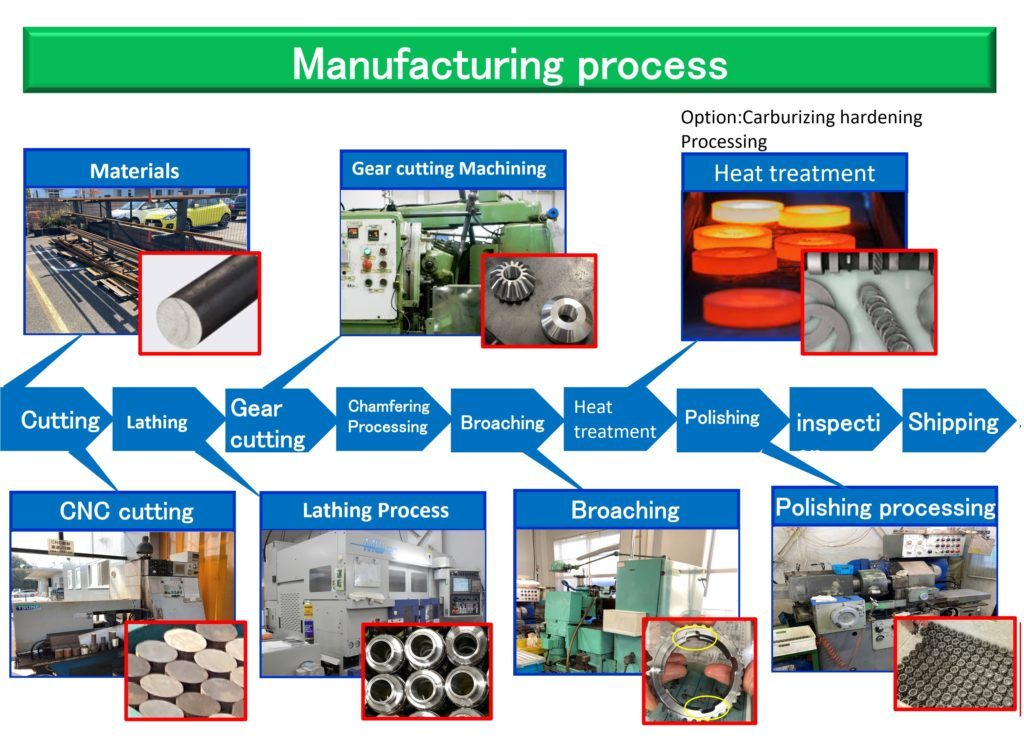
Use sample measurement, modeling, drawing review, or process evaluation according to the information available.
Prototype or First Article
Recommend a prototype or first article for old-sample reverse engineering, complex parts, or first-time cooperation.
Inspection, Approval and Production
Arrange required inspections, obtain approval, then proceed with production, rust prevention, packaging, and delivery.
What a Useful Photo Set Looks Like
A useful replacement gear photo set is usually not one product image. It should be a complete identification set.
This kind of photo set can reduce repeated communication, such as “please send a side view,” “please show the bore,” or “do you have a photo of the mating gear?”
How PairGears Supports Replacement Gear Reviews
PairGears can review replacement gear projects based on drawings, sample photos, OEM numbers, and key dimensions. The goal is not simply to copy an old part by appearance, but to consider wear condition, mating parts, application position, material, heat treatment, and inspection requirements before deciding whether the project is ready for quotation, reverse engineering, prototyping, or batch production.
- Replacement gear photo review
- Old sample or OEM number review
- Reverse engineering and sampling
- Custom gear production
- Inspection support
- Export packaging support
FAQ About OEM Replacement Gear Photos
Can an OEM replacement gear be identified from photos only?
Photos can support initial identification, but accurate quotation or production usually requires more information. Suppliers may still need key dimensions, samples, drawings, mating-part details, and application background.
What photos should I send if I do not have a drawing?
Buyers should send front, back, side, tooth-detail, bore, spline or keyway, OEM marking, mating-part, and assembly-position photos. A caliper or ruler for scale reference is also helpful.
Is an OEM number enough for quotation?
An OEM number can be used as a reference, but it is usually not enough. Quotation also requires gear structure, dimensions, tooth data, quantity, material, working condition, and inspection requirements.
Should I send photos of the mating gear?
Yes. Many replacement gear projects require mating relationship review, especially bevel gears, gear sets, or heavily worn parts. Mating-part photos can help reduce mismatch risk.
What information is needed after the photo review?
After the photo review, the supplier may request key dimensions, samples, drawings, quantity, material, hardness, inspection requirements, or application position. For complex projects, reverse engineering or prototyping may be needed first.
Conclusion
Identifying an OEM replacement gear starts with clear photos, but photos are only the first step. A useful photo set should show the full gear, tooth details, bore, spline or keyway, markings, side profile, mating part, and installation position.
For buyers, sending the right photos can reduce repeated communication and help suppliers judge whether the project is ready for quotation, reverse engineering, or sampling.
Send Your Replacement Gear Information for Review
Send your drawing, sample photos, OEM part number, key dimensions, application, quantity, and inspection requirements to PairGears for a project-based technical review and quotation.