
What are the advantages and disadvantages of bevel gears?
What are the advantages and disadvantages of bevel gears?
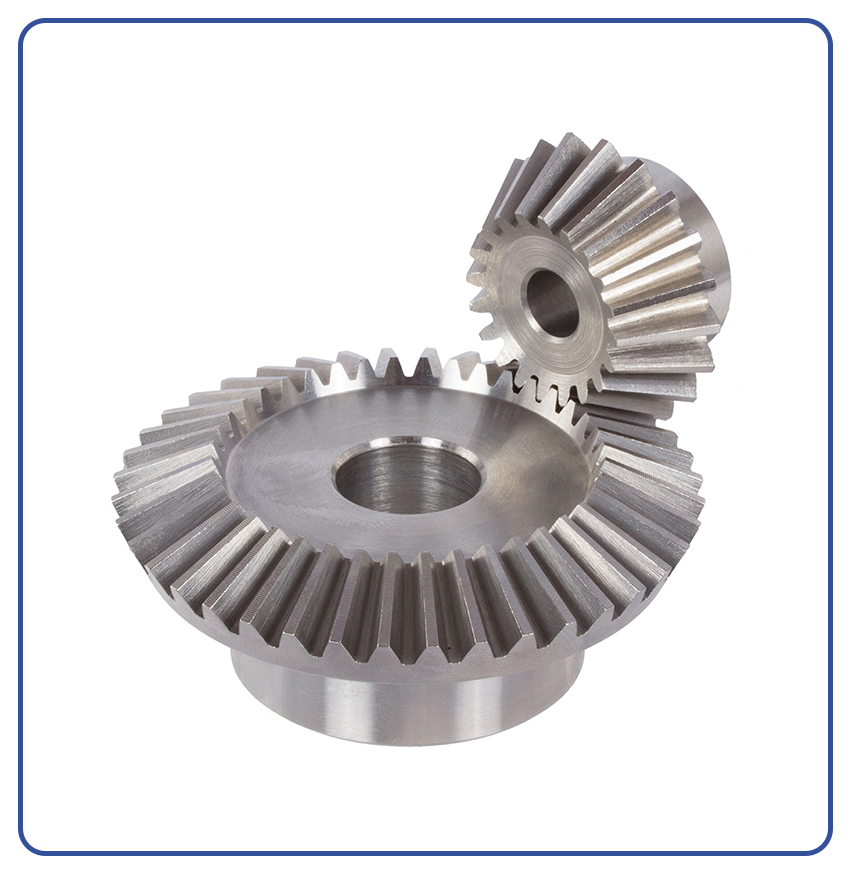
Bevel gears efficiently change power direction between intersecting shafts and fit compact right-angle drives. The drawbacks are complex tooth geometry, axial bearing loads, sensitivity to mounting and pair geometry, and more manufacturing and inspection work than a simple spur stage. Straight, spiral and Zerol variants suit different noise, speed, load, thrust and manufacturing requirements. Hypoid gears add shaft offset and more sliding.
Advantages: direction change in a compact mechanical layout
A bevel pair transmits torque between intersecting shafts, commonly at 90 degrees, while also allowing a speed ratio. That can replace a more cumbersome combination of couplings or multiple stages when the machine needs a compact directional change. Properly designed and lubricated bevel meshes can transmit power efficiently.
The family also offers useful choices. Straight bevel gears are comparatively simple; spiral bevel gears engage more gradually and suit smoother, faster operation; Zerol gears use curved teeth with a near-zero mean spiral angle. The PairGears bevel-gear selection guide compares these forms and their system requirements.
Disadvantages: geometry, thrust and installation sensitivity
Conical tooth geometry is harder to manufacture and inspect than a basic spur gear. Many bevel sets depend on controlled pair geometry, mounting distance, shaft angle, bearing setting, backlash and tooth contact. A gear that meets its individual dimensions can still perform poorly if the housing or assembly moves the contact pattern.
Straight bevel gears create separating and axial forces; spiral designs add direction-dependent thrust related to spiral hand and rotation. Bearings and housing stiffness must support those loads. Lubrication and heat removal also matter, especially as sliding increases. These requirements can raise tooling, inspection, assembly and replacement cost.
Choose the variant from the system constraint
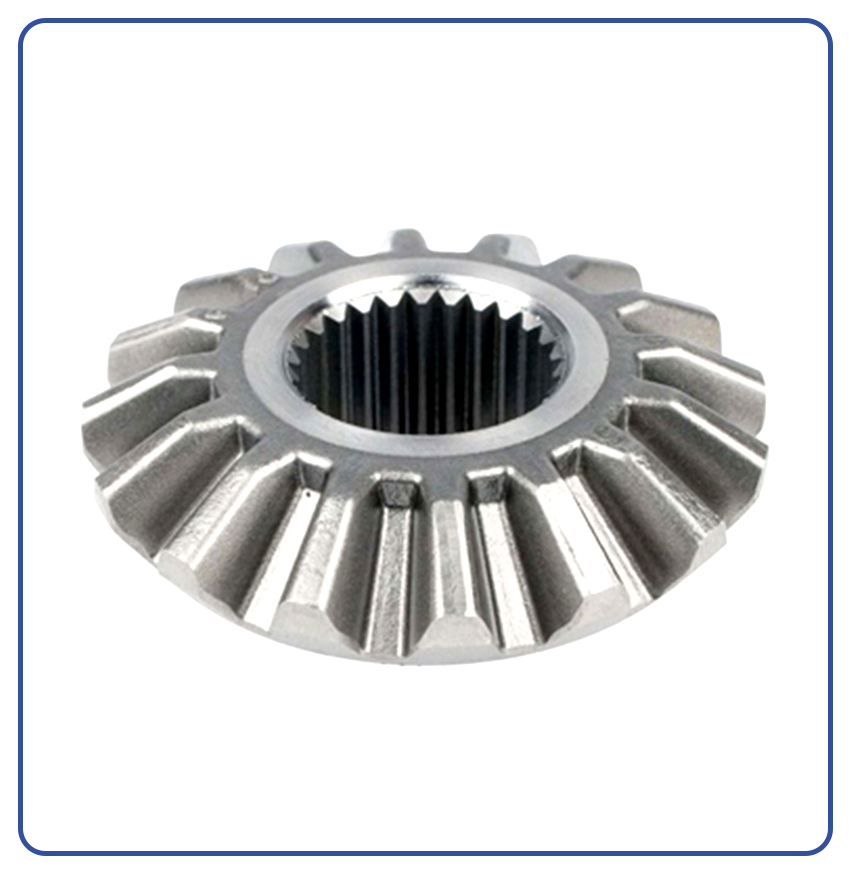
Use straight bevel gears when moderate speed, simpler manufacture and cost matter more than the smoothest engagement. Consider spiral bevel gears when load sharing, noise and higher-speed behavior justify more demanding manufacturing, matched-pair control and thrust support. Zerol gears can offer curved-tooth engagement with less spiral-related thrust than a typical spiral pair.
Hypoid gears use offset rather than intersecting shafts. They can improve packaging and load capacity, but the extra sliding raises lubricant and thermal demands. Base the final selection on shaft layout, ratio, torque, speed, duty cycle, noise limit, bearing arrangement, lubrication and service access. No single bevel type is best for every application.

Are you looking for a reliable manufacturer of down home textile products?
We can quickly provide customers with market analysis, technical support and customized services.- *Name
- Phone
- *Title
- *Content