OEM vs Custom Replacement Gears: What to Check
When an original gear becomes worn, damaged, or difficult to source, buyers often have two options: purchase an OEM part or have a custom replacement gear made.
At PairGears , many replacement gear projects begin because the original part has been discontinued, the lead time is too long, or only an old sample is available. Both OEM and custom gears can be suitable, but the right choice depends on the available technical information, the condition of the mating parts, and whether the new gear can be inspected and tested before production.
Quick Answer: OEM or Custom Replacement Gears?
If OEM gears are still available from stable stock and the price and lead time are acceptable, continuing to purchase the original parts is usually the more direct option.
When the original part has been discontinued, remains out of stock for a long time, or is required in small quantities over an extended period, custom replacement gears may be considered. Before production, however, the gear parameters, mounting dimensions, material, heat treatment, accuracy, mating gear, and actual operating conditions should be confirmed.
What Is the Difference Between OEM and Custom Replacement Gears?
In short, OEM gear is an “original standard part,” while a custom replacement gear is a “replacement part remade according to specific requirements.”
OEM replacement gears are generally supplied by the original equipment manufacturer or its supply chain. The parts have fixed identification numbers, and the equipment they are used in and the way they are installed are usually already defined. As long as the model is correct, the gear can normally be purchased and installed directly. This is convenient, but availability may be heavily affected by stock levels and discontinued production.
Custom replacement gears are manufactured by a gear supplier from drawings, samples, or confirmed parameters when the original part is no longer available. This option is more flexible, but dimensions, material, accuracy, and other requirements must be confirmed clearly before production. Otherwise, problems may occur.
| Comparison | OEM Replacement Gears | Custom Replacement Gears |
|---|---|---|
| Technical source | Original part number and OEM information | Drawings, samples, or confirmed parameters |
| Availability | Affected by stock and discontinuation | Can be reproduced according to demand |
| Small-quantity purchasing | Limited by the supplier’s policy | More flexible |
| Validation method | Usually used directly according to the original machine model | Requires first-article approval or assembly testing |
| Common risks | Incorrect version or unstable lead time | Incomplete parameters, worn samples, or repeated clarification |
Buyers should not focus only on price. More important questions include whether the part can be installed correctly, whether the machine may remain out of service, whether the part can continue to be supplied in the future, and whether there is a risk of choosing the wrong version.
What Should Be Checked for Precision Replacement Gears?
1. Drawings and Gear Parameters
Complete drawings should be used whenever possible. The tooth count, module or diametral pitch, pressure angle, helix angle, hand of helix, face width, profile shift, and other information should be confirmed.
The outside diameter and tooth count alone are usually not enough. Two gears that look similar may still fail to mesh correctly because of differences in pressure angle, helix angle, or other tooth geometry.
2. Mounting Dimensions
The bore diameter, keyway, spline, shaft shoulder, face distance, and other mounting dimensions must match the original equipment.
If the sample has already been worn, deformed, or repaired, not every measured value should be treated as an original design dimension.
3. Material and Heat Treatment
In addition to the material grade, heat-treatment requirements such as carburizing, quenching, quenching and tempering, or nitriding should be confirmed, along with surface hardness and effective case depth.
Requiring the new gear to have a hardness similar to the old part does not fully define its strength, wear resistance, or core toughness.
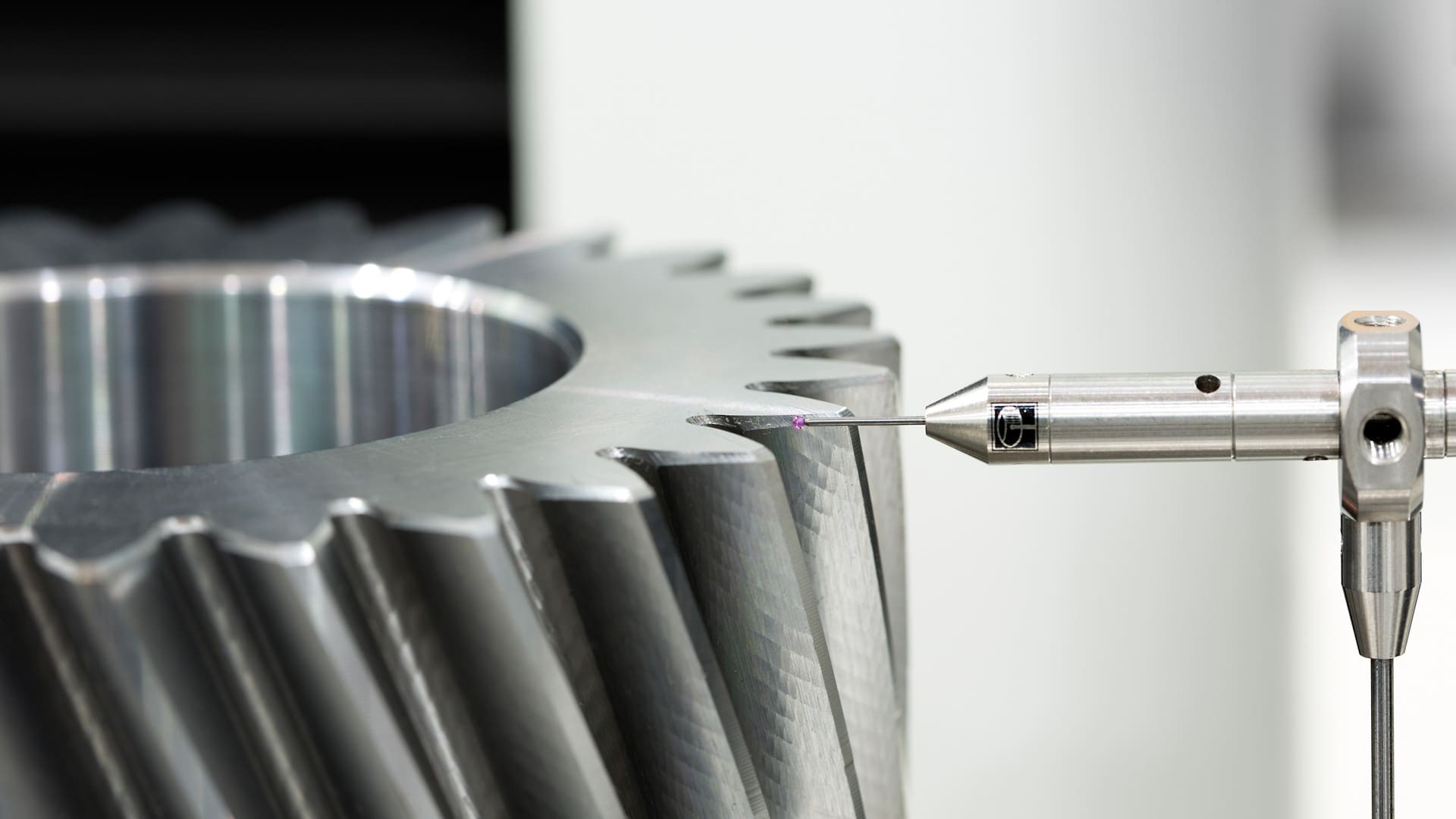
4. Accuracy and Inspection
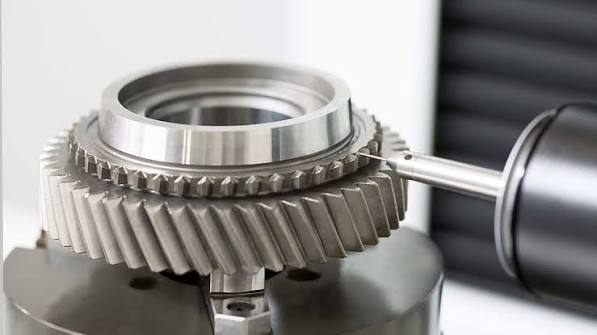
The applicable ISO, AGMA, or DIN accuracy grade should be confirmed according to the equipment requirements, together with inspection requirements for tooth profile, lead, pitch, runout, and critical dimensions.
Precision replacement gears should not be inspected only for bore diameter, outside diameter, and tooth thickness. For high-speed or noise-sensitive transmission systems, tooth accuracy and contact conditions are equally important.
5. Mating Gears and Operating Conditions
If the mating gear already shows uneven wear, pitting, or damage, replacing only one gear may still result in noise, abnormal contact, or premature wear.
Buyers should also provide information about speed, torque, shock load, lubrication, and the operating environment. For high-speed transmissions such as EV reducers, tooth microgeometry, surface quality, and NVH requirements should also be considered.
When Is It Better to Continue Purchasing OEM Gears?
The OEM option is usually more suitable in the following situations:
- The original part is still available from stable stock;
- The equipment remains under the original manufacturer’s warranty;
- Drawings, samples, or mating information are unavailable;
- First-article and assembly validation cannot be arranged;
- The part involves complex microgeometry or a proprietary design.
When Can Custom Replacement Gears Be Considered?
A custom solution may be evaluated in the following situations:
- The OEM part has been discontinued or remains out of stock for a long time;
- Complete or verifiable drawings are available;
- A sample in reasonably good condition is available for measurement;
- One-off, small-batch, or long-term spare-part supply is required;
- First-article inspection and customer assembly approval can be completed.
Why Can a Worn Sample Not Be Copied Directly?
A Used Part May No Longer Represent the Original Design
An old gear can be used for measurement, but after long-term operation, the tooth thickness, tooth profile, bore, spline, and end faces may already be worn or deformed.
If these dimensions are copied directly, the errors in the used part may also be transferred to the new gear. Sample measurement should therefore be assessed together with standard tooth geometry, unworn areas, mating parts, and the actual assembly relationship.
If the sample has missing teeth, severe uneven wear, or previous repairs, the customer will also need to provide more information about the equipment and application.
How Does a Custom Replacement Gear Project Proceed?
A typical project process includes:
For agricultural machinery, heavy trucks, construction equipment, and EV transmission systems, the specific requirements will vary depending on load, speed, operating environment, and equipment structure.
How Should You Choose Between OEM and Custom Replacement Gears?
If the OEM part is still easy to purchase and the project lacks the conditions required for revalidation, the OEM option is usually more reliable.
If the original part has been discontinued or has an excessively long lead time, and the customer can provide reliable drawings, samples, and technical information, custom replacement gears can help establish a new spare-part supply solution.
The final decision should not be based on price alone. Technical references, lead time, inspection capability, assembly validation, and long-term supply risks should all be compared.
Why Choose PairGears for Replacement Gear Projects?
The first step is to determine whether the available information is sufficient for a reliable quotation and manufacturing plan—not to copy a worn part immediately.
PairGears reviews custom replacement gear projects based on drawings, sample photos, OEM numbers, and application information. Before manufacturing, we confirm whether the available data is sufficient and check the key gear parameters, mounting dimensions, material, heat treatment, accuracy, mating conditions, and inspection requirements.
For projects without complete drawings, worn samples are evaluated together with mating gears and equipment information rather than copied directly. A first article or small sample batch can then be produced, inspected, and approved before further production. This approach is suitable for discontinued parts, small-batch replacement needs, and long-term supply projects.
FAQ
Are Custom Replacement Gears Exactly the Same as OEM Gears?
Not necessarily. Custom gears are manufactured according to drawings, samples, or technical information confirmed by the customer. Whether they can replace the original part must be determined through inspection and actual assembly validation.
Can a Gear Be Manufactured from an Old Sample Without a Drawing?
It can be evaluated, but feasibility depends on the degree of wear and the complexity of the sample. A severely worn, broken, or deformed sample may not fully reflect the original design.
Can a Quotation Be Provided with Only an OEM Number?
An OEM number can help identify the part, but the equipment model, part photos, purchase quantity, and other technical information are usually also required. Different versions may exist within the same equipment series.
Should the Mating Gear Be Checked When Replacing One Gear?
Yes. If the mating gear is already severely worn, abnormal contact may occur between the new and existing gears. Its tooth surface and operating condition should therefore also be checked.
What Validation Is Required Before Mass Production?
The drawing or technical information should normally be confirmed first, followed by first-article production, inspection of critical dimensions and gear accuracy, and customer assembly approval.
Conclusion
OEM gears may be more practical when the original part is still available, while custom replacement gears are worth considering for discontinued parts or stable small-batch supply. In either case, the choice should be based on confirmed gear parameters, mounting dimensions, material, heat treatment, accuracy, mating conditions, and inspection requirements—not price alone.
Have a Replacement Gear Project to Review?
Send your drawing, sample photos, OEM number, required quantity, and application information. Our team will review the available details and help identify what should be confirmed before manufacturing.