What Affects Custom Precision Gear Cost?
Introduction
Custom precision gear cost is never one fixed number. Even when two parts look similar on a drawing, the price can still be very different once the real production requirements are reviewed.
At PairGears, we quote custom gear and replacement gear projects based on the part itself and the work behind it. Material, heat treatment, machining route, accuracy, quantity, and inspection requirements all affect the final quotation. Buyers who prepare clearer RFQs usually get clearer pricing and fewer revisions later.
Quick Answer
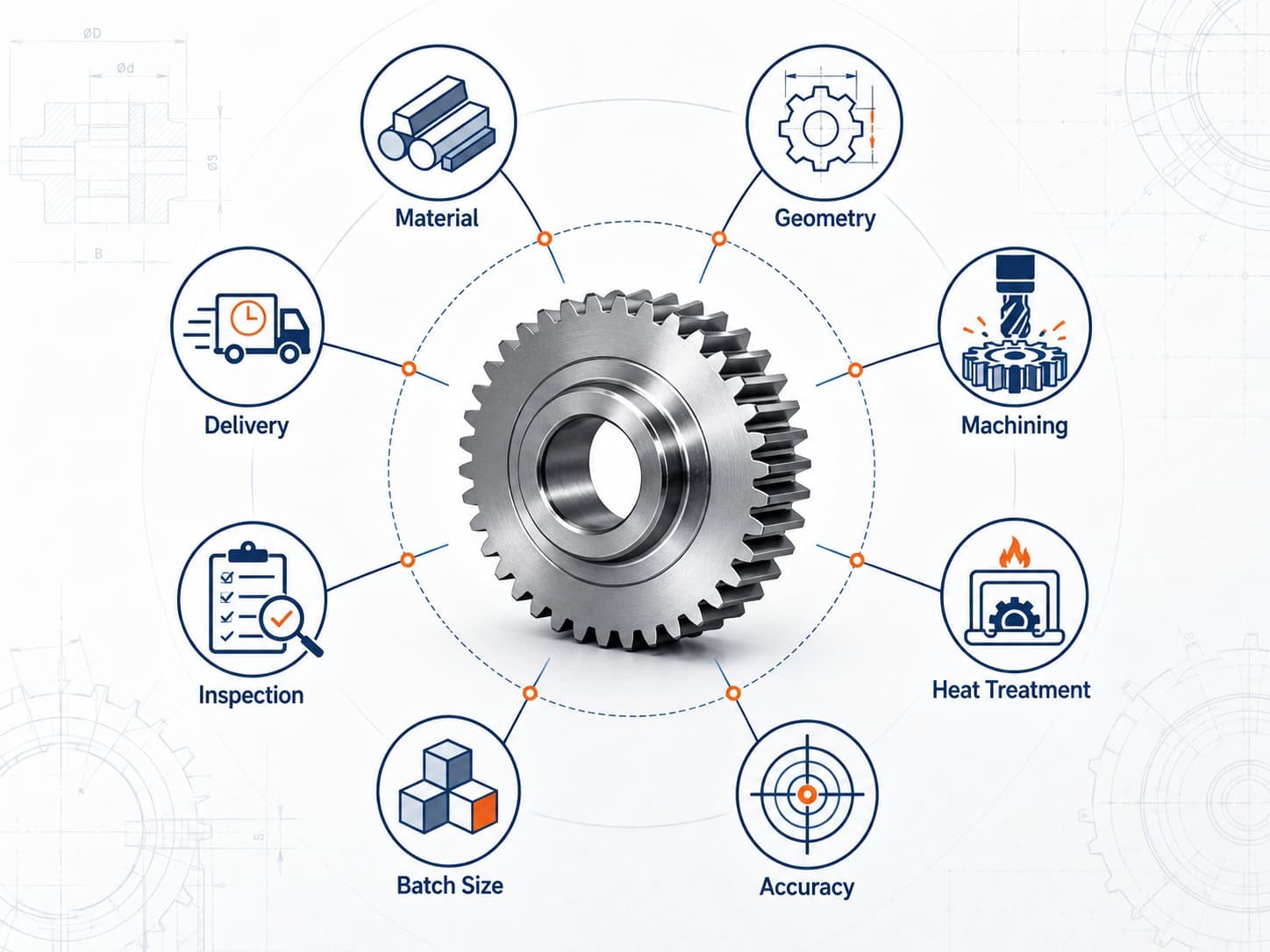
Custom precision gear cost is mainly shaped by material, gear geometry, machining process, heat treatment, accuracy grade, batch size, inspection scope, and delivery requirements.
Why custom precision gear cost is not fixed
A custom gear is not priced like a standard catalog part. The quotation depends on what the gear needs to do and what it takes to make it do that job reliably.
For example, two gears may have similar outside dimensions, but one may be used in agricultural machinery and the other in an EV drivetrain. One may need stronger impact resistance and long wear life. The other may need lower noise, tighter geometry, and better consistency across batches. Those differences change the process route, and that changes cost.
The RFQ itself also matters. A complete drawing with clear material, hardness, quantity, and inspection notes is easier to quote. If key details are missing, the supplier needs more time to review the part before the quotation becomes stable.
That is why custom precision gear cost is not based on size or weight alone. The real cost comes from the full manufacturing plan behind the gear.
The main factors behind custom precision gear cost
▶Material
Material affects both raw cost and machinability. Carbon steel, alloy steel, and case-hardening steel do not create the same cost structure. Some are easier to machine. Others are chosen for higher strength, better wear resistance, or longer fatigue life.
▶Gear Geometry
Simple external spur gears are usually easier to quote than gears with helical teeth, internal teeth, spline features, shaft integration, or tighter datum relationships. As geometry becomes more complex, machining and inspection usually become more demanding.
▶Machining Route
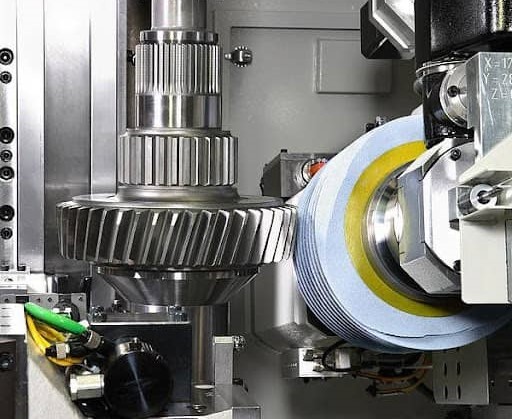
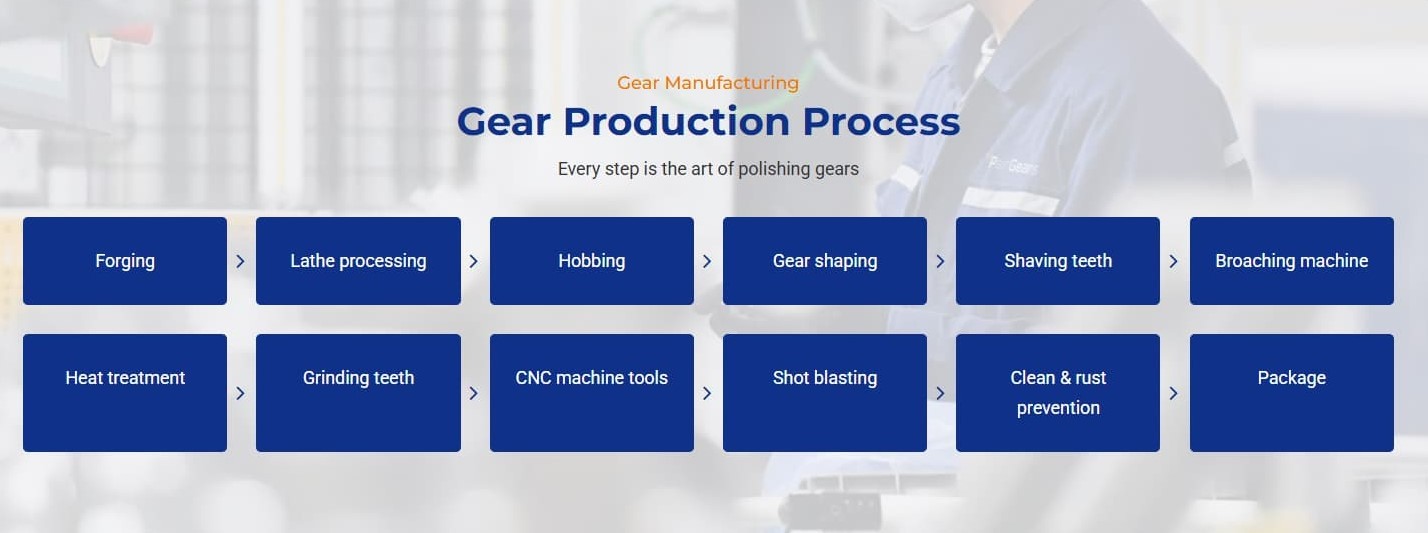
The manufacturing route has a direct effect on cost. A basic hobbed gear is very different from a part that also needs shaping, grinding, broaching, spline work, or multiple turning and milling steps.
▶Heat Treatment
Processes such as carburizing, nitriding, induction hardening, quenching and tempering, or stress relieving add process steps and tighter control requirements. In many industrial gears, heat treatment is necessary, but it also changes the quotation level.
▶Accuracy Grade
Higher accuracy usually means tighter control of profile, pitch, lead, runout, and concentricity. In some cases, it also means grinding or more detailed inspection.
▶Quantity
Small orders usually have a higher unit cost because engineering time, setup time, and machine preparation are spread over fewer parts. Larger orders usually improve unit cost.
▶Inspection and Reports
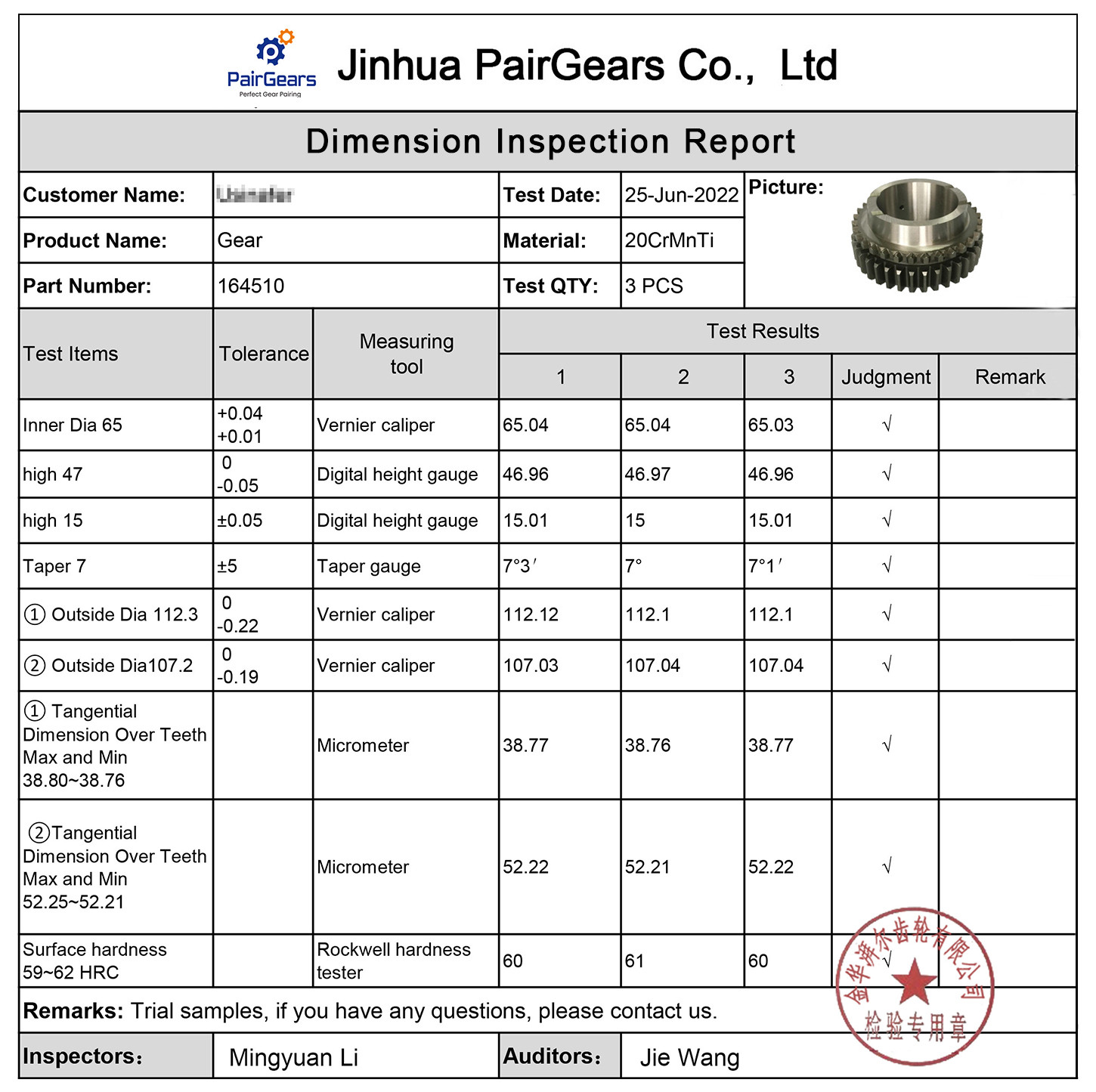
Inspection can become a major cost factor. A simple dimensional check is very different from a project that also requires hardness reports, material certificates, gear inspection reports, CMM data, or full traceability.
▶Lead Time
Urgent delivery can raise cost because it may require schedule changes, faster material allocation, or compressed production planning.
Where these cost differences matter most
▶Agricultural Machinery buyers
Usually care most about durability, fit, and repeat replacement reliability under mixed load and dirty service conditions.
▶Heavy-Duty Truck projects
Often need stronger control of hardness, tooth strength, spline fit, and service-life consistency.
▶Construction Equipment teams
Usually need to balance shock-load durability, wear resistance, and stable batch production.
▶EV drivetrain and compact drive projects
More often focus on noise, geometry stability, precision, and repeatability.
These sectors do not buy gears for the same reason, so they do not evaluate quotation the same way either.
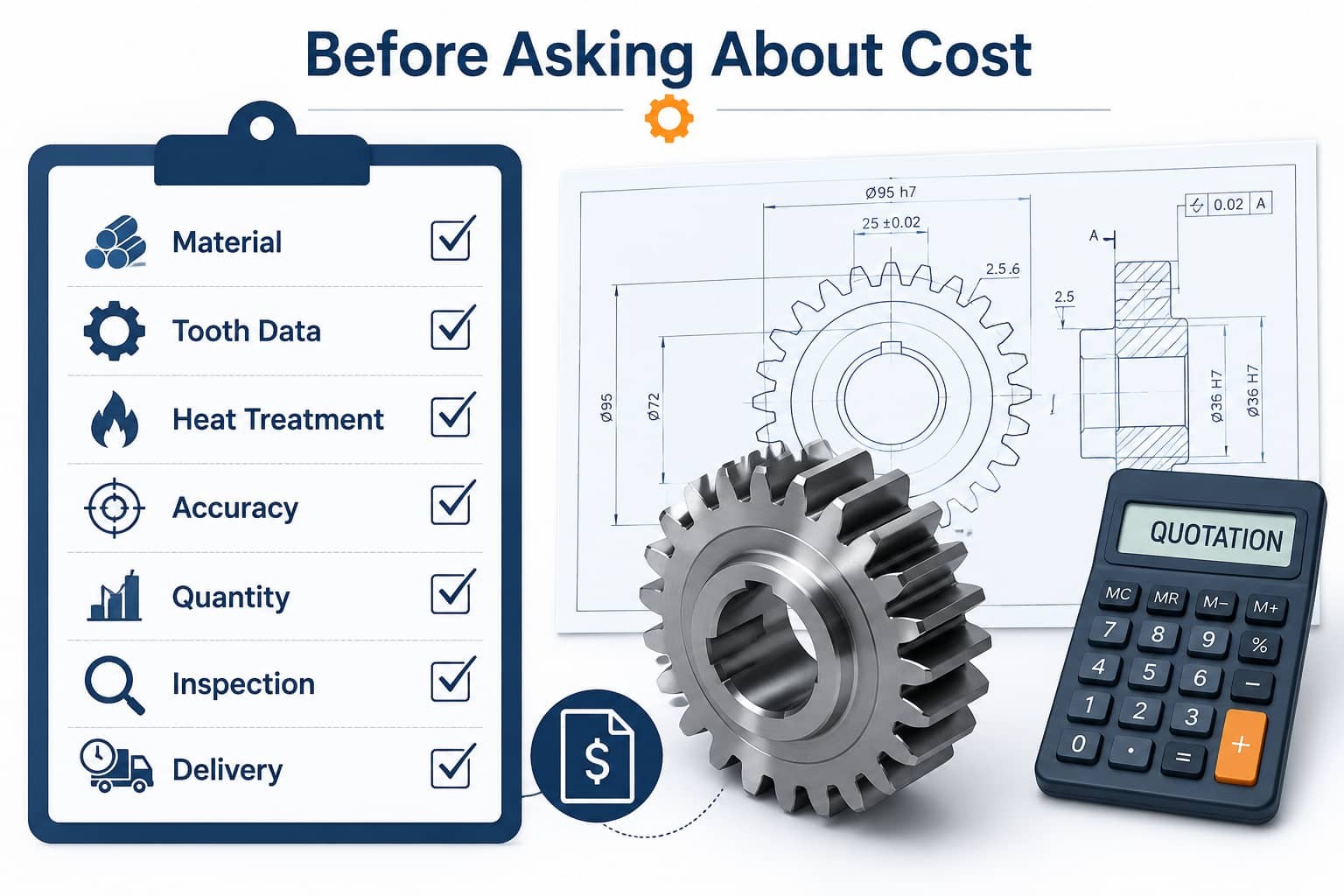
What buyers should confirm before asking about cost
| Cost Factor | What Should Be Confirmed | Why It Matters |
| Material | Steel grade, equivalent standard, availability | Changes raw cost and machining behavior |
| Tooth geometry | Gear type, tooth count, module or DP, pressure angle, helix angle | Defines the manufacturing route |
Heat treatment | Process type, hardness, case depth | Adds process steps and control requirements |
Accuracy grade | ISO, DIN, AGMA, or project-specific standard | Higher grade usually means higher cost |
Quantity | Sample, trial, or production order | Unit cost changes with setup distribution |
| Inspection scope | Dimensional checks, hardness, material certs, gear reports | More reporting means more time and cost |
Delivery requirement | Standard or urgent lead time | Compressed schedules can raise price |
A quotation can still be prepared when the RFQ is incomplete, but uncertainty increases. Missing details do not always make the price higher, but they usually make the quotation less stable until the project is clarified.
For replacement work, this matters even more. Old samples and OEM numbers can help start the review, but they do not always show the full design intent. If reverse review is needed before production, that becomes part of the quotation logic as well.
What better RFQ information improves
A better RFQ does not always make the price lower, but it usually makes the quotation more reliable.
When buyers provide enough technical detail, they usually get:
● a more accurate quotation
● fewer back-and-forth questions
● a clearer process route
● more stable sample planning
● less risk of changing material or inspection requirements later
● a fairer comparison between suppliers
● In many projects, cost between suppliers
In problems do not start with the first quotation. They start when key requirements are added too late.
Practical ways to control custom precision gear cost
Send complete drawings whenever possible.
A full drawing gives the supplier a solid basis for pricing.
Review material and heat treatment together.
These two should not be split, because both affect service performance and cost.
Explain the application clearly.
Load, speed, environment, and duty cycle all influence the right manufacturing route.
Separate sample quantity from production quantity.
A sample price and a production price are usually built on different assumptions.
Define inspection requirements early.
If you need hardness reports, material certificates, or gear measurement reports, state that before the quotation is finalized.
Avoid late technical changes.
Changing material, hardness, accuracy grade, or inspection scope after quotation usually affects both price and lead time.
Why Choose PairGears
At PairGears, we do not quote custom gears by size alone. We review each project through the drawing, application, material route, heat treatment, machining process, quantity, and inspection requirements.
● practical review for Agricultural Machinery, Heavy-Duty Trucks, Construction Equipment, and EV drivetrains
● custom gear and replacement gear evaluation from drawings, samples, OEM numbers, or photos
● material and heat-treatment planning based on service conditions
● production routes that balance accuracy, durability, and cost
● inspection logic that supports quotation, sampling, and repeat production
This is especially useful for buyers who want a quotation that reflects how the part will actually be made and used, not just a rough reference number.
FAQ
Q1: Why is custom precision gear cost different between suppliers?
Custom precision gear cost can differ because suppliers may assume different materials, machining routes, heat treatment methods, accuracy levels, and inspection scopes.
Q2: What factors increase gear manufacturing cost the most?
The biggest cost drivers are usually material, complex geometry, heat treatment, gear grinding or other precision finishing, small quantity, and detailed inspection requirements.
Q3: How can buyers reduce custom gear cost?
Buyers can reduce cost uncertainty by providing complete drawings, clear material requirements, application details, order quantity, and inspection standards before RFQ.
Q4: Does material choice affect gear price?
Yes. Material choice affects raw cost, machining difficulty, heat treatment route, and sometimes availability. This can change both cost and lead time.
Q5: Is heat treatment always included in gear cost?
Not always. Some gears may not need heat treatment, but many industrial gears require it for hardness, wear resistance, and fatigue strength. Buyers should confirm this before quotation.
Conclusion
Custom precision gear cost is shaped by several technical and production factors at the same time. Material, machining route, heat treatment, accuracy, quantity, inspection, and lead time all influence the final quotation.
The best way to control cost is to send complete technical information before RFQ. That helps the supplier review the project more accurately and reduces avoidable revisions later.
If you are preparing a custom gear project or a replacement part inquiry, you are welcome to Contact Us with your drawings, samples, OEM numbers, or application details so PairGears can help review the project and discuss a practical quotation and manufacturing route.