When Is Gear Polishing Necessary After Grinding?
Gear polishing after grinding is necessary when the finished tooth surface requires further improvement beyond what conventional grinding can achieve. For a precision gear manufacturer, this decision depends on surface roughness, operating conditions, lubrication, and final specifications. A custom gear supplier should evaluate whether additional finishing is technically necessary before recommending another operation.
Gear grinding is commonly used to achieve accurate tooth profiles and improve surface quality, especially after heat treatment. However, certain applications require finer tooth surfaces to meet specific engineering requirements. At PairGears, we manufacture precision gears and gear sets for agricultural machinery, heavy-duty trucks, construction equipment, and electric vehicle applications. This article explains when additional finishing is useful, compares common processes, and outlines what buyers should confirm before production.
When Is Additional Gear Finishing Actually Necessary?
Additional finishing is worth considering when conventional grinding cannot achieve the required tooth surface condition. Three situations commonly justify further evaluation.
When Surface Roughness Exceeds the Required Limit
The final roughness of a ground gear depends on grinding wheel condition, dressing, feed rate, machine setup, and process parameters.
If the measured Ra or Rz value does not meet the drawing requirement, an additional finishing operation may be needed.
Some precision transmission gears require finer tooth surfaces to meet specific contact and lubrication requirements. In these cases, polish grinding or superfinishing may be considered.
Learn more about gear grinding and how it helps control tooth geometry and surface quality.
When Operating Conditions Require Better Surface Performance
High-speed transmissions and heavy-duty gear systems can experience significant friction and contact stress.
Under suitable conditions, reducing excessive surface peaks may improve local contact conditions and reduce some friction-related losses. This can be relevant to certain EV drivetrain and industrial transmission applications.
However, operating speed and load alone do not determine whether additional finishing is necessary. Gear geometry, lubrication, contact pattern, and assembly accuracy must also be considered.
When Grinding Marks or Surface Defects Need Treatment
Grinding may leave directional marks on tooth flanks. Their significance depends on depth, direction, and distribution.
If inspection identifies unacceptable marks, minor burrs, or other surface defects, honing or another suitable finishing process may be considered.
The actual surface condition should be identified before selecting a treatment. Additional finishing is not a substitute for correcting major manufacturing errors.
What Changes When a Gear Receives Additional Finishing?
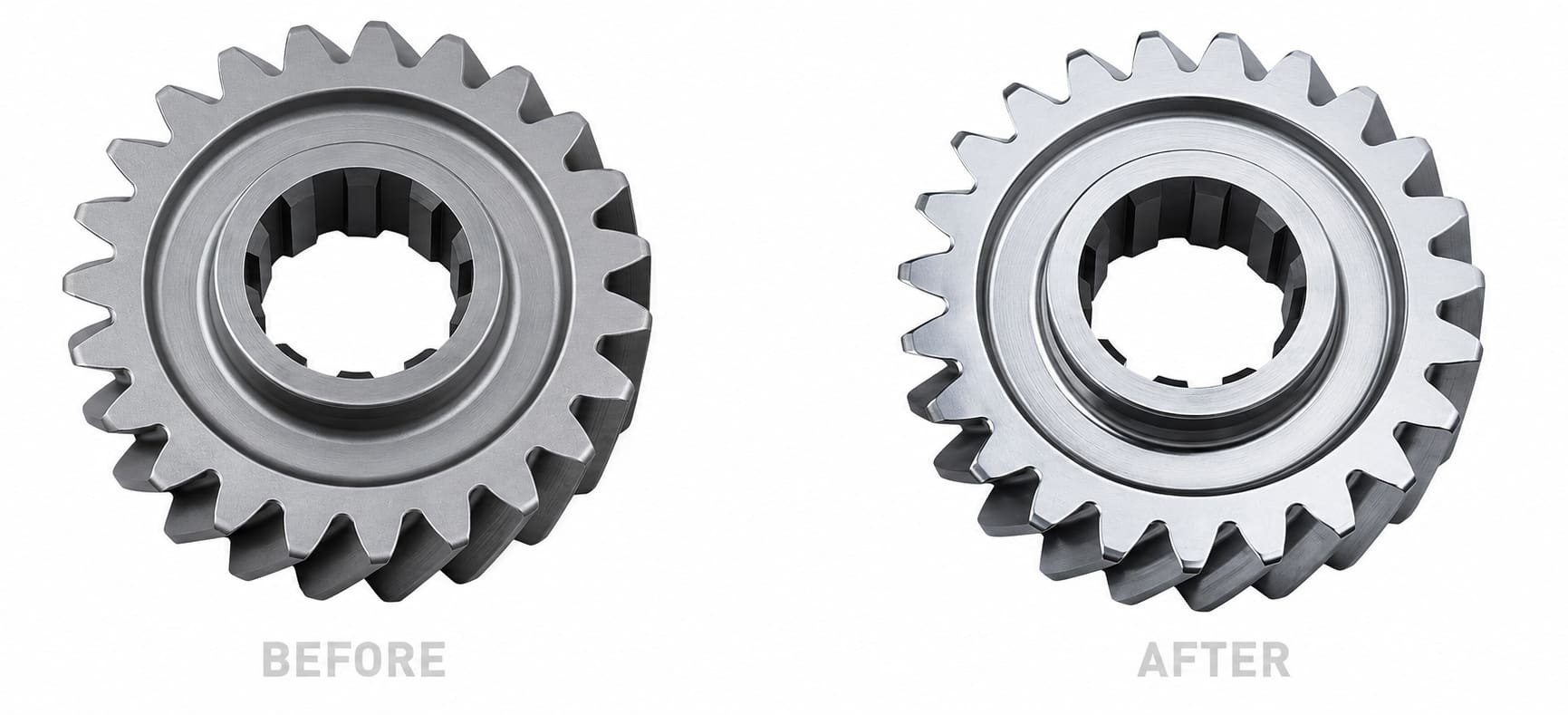
The main purpose of additional finishing is to improve tooth surface texture rather than replace the geometric correction achieved through grinding. Buyers should understand three different surface characteristics:
| Characteristic | Meaning | Main Concern |
|---|---|---|
| Roughness | Small peaks and valleys on the tooth surface. | Friction and surface contact. |
| Waviness | Larger, repeated surface variations. | Contact stability. |
| Form Deviation | Errors in the specified tooth profile or lead. | Meshing accuracy and load distribution. |
A suitable finishing process mainly reduces surface irregularities. It should not be expected to correct significant profile, lead, pitch, or radial runout errors.
Important distinction: Surface roughness is not the same as gear accuracy. A gear may meet its dimensional tolerances but fail a specified roughness requirement, or have a smooth surface while its tooth geometry remains outside tolerance.
Our guide to gear surface roughness explains these differences in more detail.
Which Gear Finishing Process Should You Choose?
Different finishing methods have different working principles and applications. The right choice depends on gear design, material, surface requirements, and manufacturing conditions.
Polish Grinding
Polish grinding is a finishing approach associated with gear grinding operations. Depending on the machine and process setup, a finer abrasive specification or dedicated finishing pass can reduce tooth surface roughness after conventional generating grinding. Its purpose is to improve surface condition while maintaining the required tooth geometry.
Gear Honing
Gear honing uses an abrasive tool that meshes with the gear to refine the tooth flanks. It can help remove certain grinding marks, minor surface damage, and burrs. Depending on the setup, honing may also support controlled flank correction.
Isotropic Superfinishing
Isotropic superfinishing is a controlled surface treatment that reduces surface asperities and produces a more uniform texture. It is used in some demanding gear applications where friction and wear behavior are important. The actual results depend on material, lubrication, treatment parameters, and operating conditions.
Gear Lapping
Gear lapping uses an abrasive compound between mating gear surfaces to refine their contact condition. It is particularly relevant to certain matched gear sets, including bevel gear applications, where tooth contact and mating behavior are important. Lapping and polishing are different processes and should not be treated as interchangeable.
For a closer comparison, see our guide to gear honing, lapping and grinding.
| Process | Main Purpose | Typical Application |
|---|---|---|
| Polish Grinding | Reduce tooth surface roughness. | Finishing after generating grinding. |
| Gear Honing | Refine tooth flanks and remove certain surface marks. | Tooth surface refinement. |
| Isotropic Superfinishing | Improve surface texture. | Applications with demanding friction requirements. |
| Gear Lapping | Refine contact between mating gears. | Matched gear sets. |
The best method is not necessarily the one that produces the smoothest surface. It should meet the specified functional requirements without introducing unnecessary manufacturing risks.
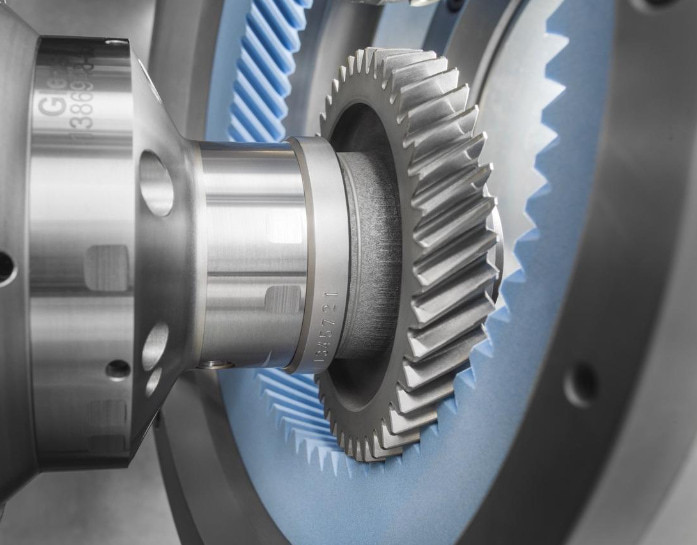
When Is Additional Gear Polishing Not Necessary?
Not every ground gear requires another finishing operation. If the existing process already meets the drawing and application requirements, further treatment may offer little practical benefit.
Additional finishing may be unnecessary when:
Surface requirements are already met: The measured finish meets the agreed acceptance criteria.
Operating demands are moderate: The application does not require further surface refinement.
The main issue is geometric accuracy: Profile, lead, pitch, or runout errors require appropriate corrective machining.
No surface finish target is specified: Polishing should not be added simply to improve appearance.
The existing surface supports lubrication requirements: Further smoothing may not provide an advantage.
Material removal is another important consideration. Abrasive finishing can affect tooth thickness, edge condition, and the remaining hardened case depth if it is not properly controlled.
For carburized gears: The finishing allowance and effective case depth should be evaluated together. Every additional operation should have a clear technical purpose and an appropriate inspection plan.
How Should a Precision Gear Manufacturer Verify the Result?
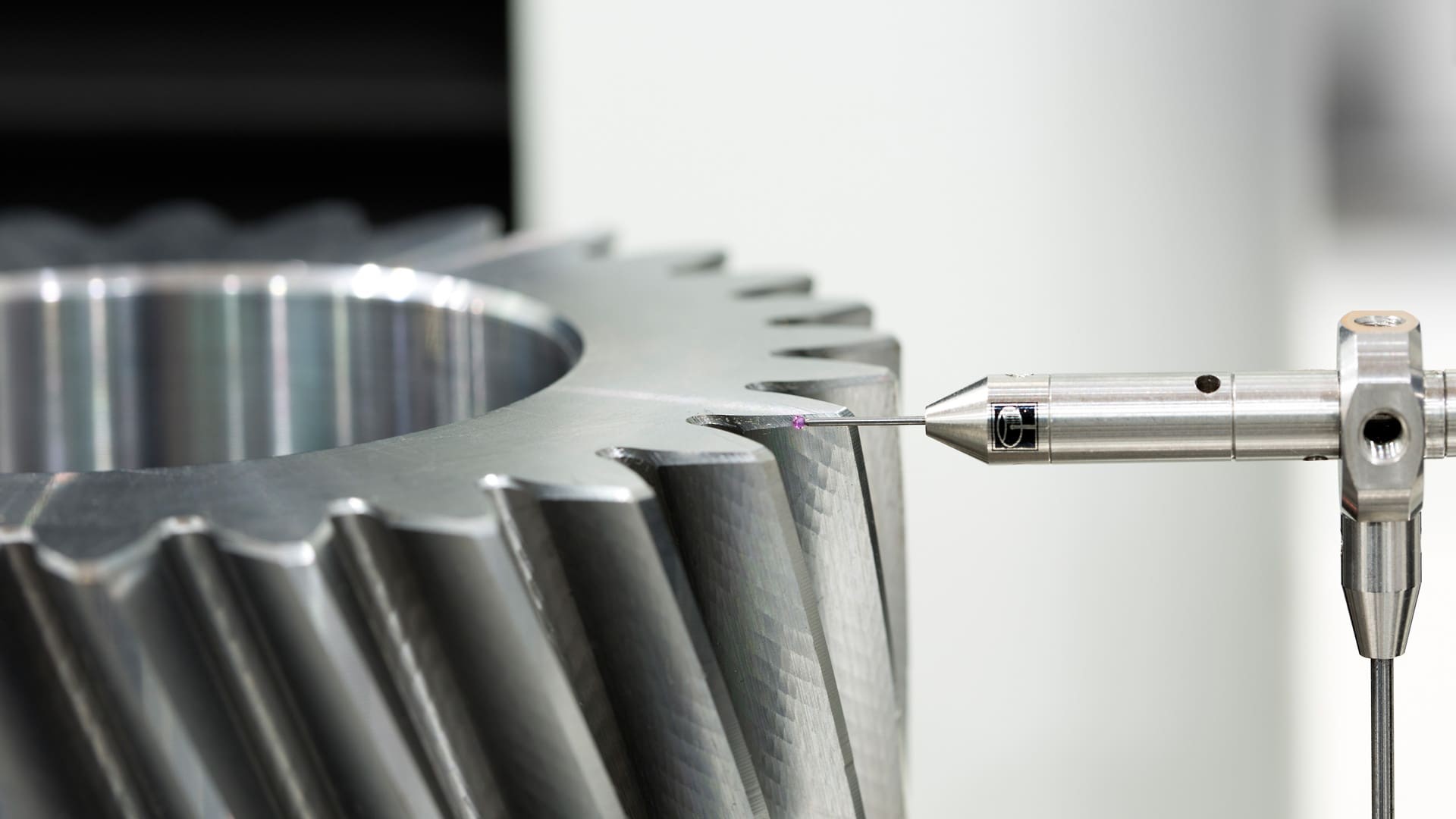
Visual inspection alone cannot confirm whether a finished gear meets its engineering requirements. Both tooth geometry and surface condition should be checked.
Tooth Geometry Inspection
A gear measuring center can evaluate critical characteristics such as:
▶ Tooth profile deviation
▶ Tooth lead deviation
▶ Pitch variation
▶ Radial runout
▶ Tooth thickness, where specified
These measurements help confirm that finishing has not affected the required gear geometry.
Surface Roughness Measurement
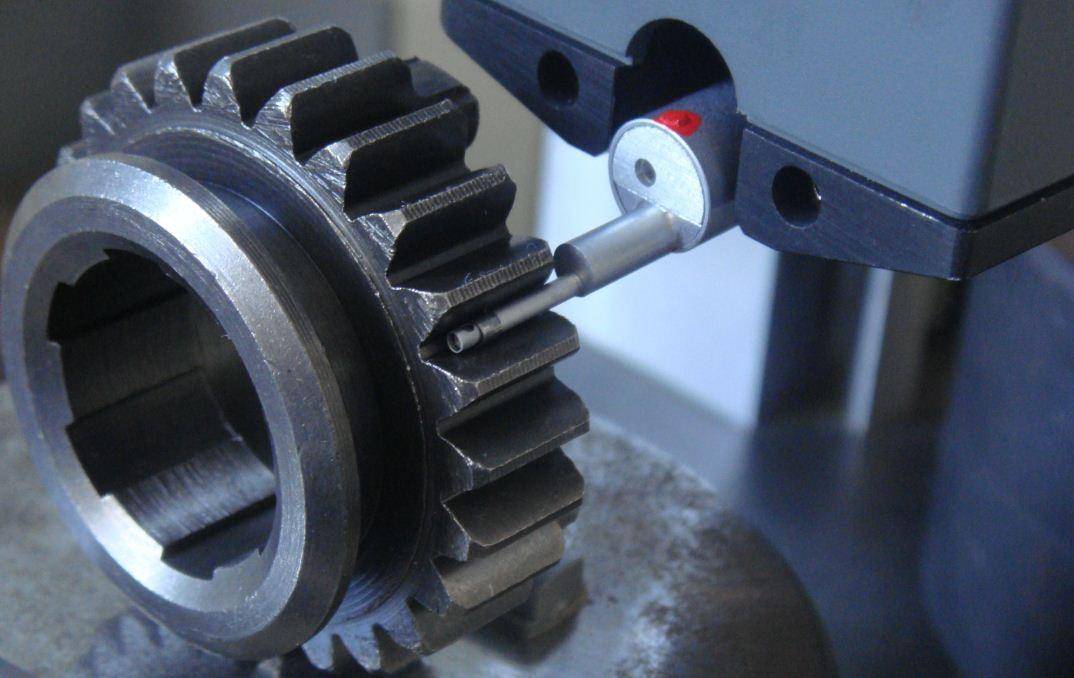
A suitable surface roughness tester or profilometer should be used when the drawing specifies a roughness requirement.
The measurement location, direction, and method should be agreed upon before production. Ra and Rz are commonly used parameters, but acceptance values must come from the engineering specification.
Contact Pattern and Material Verification
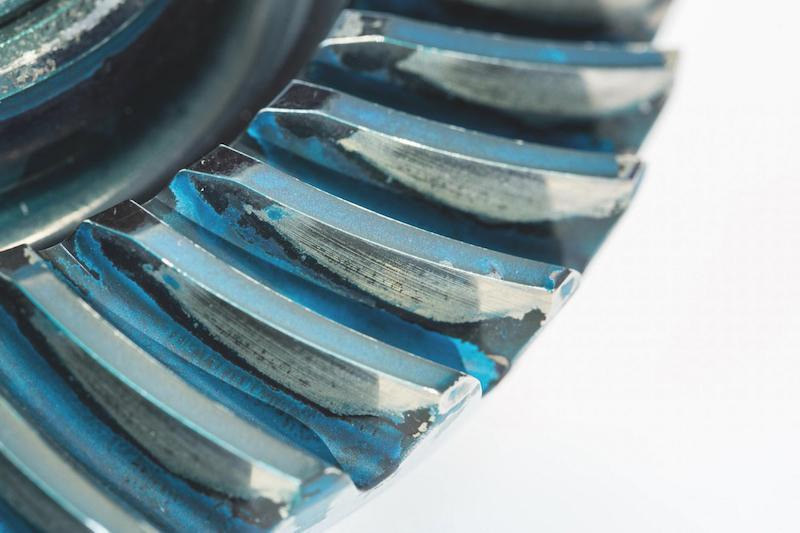
For matched gears, contact pattern inspection helps evaluate how the mating teeth engage, especially in bevel gear applications.
For hardened gears, surface hardness and effective case depth should also be verified where specified. Final inspection results should be compared with the original drawing and agreed acceptance criteria.
You can learn more about our product inspection services and quality verification for applicable gear projects.
What Should You Confirm With a Custom Gear Supplier?
Before requesting additional finishing, buyers should provide enough information for the supplier to evaluate the actual requirements. The following details help make technical reviews and quotations more accurate.
Gear Drawing
Tooth geometry, dimensions, tolerances, and surface finish requirements.
Material and Heat Treatment
Material grade, hardening method, and specified hardness.
Operating Conditions
Working speed, load, duty cycle, and lubrication information.
Mating Gear Details
Matching component information when contact behavior is important.
Inspection Requirements
Surface roughness, tooth profile, lead, pitch, and runout reports.
Production Quantity
Prototype and production volumes for manufacturing planning.
As a custom gear supplier, PairGears reviews gear drawings, material requirements, manufacturing processes, and inspection targets before determining a suitable production route.
Our manufacturing capabilities include gear cutting, heat treatment, grinding, CNC machining, and quality inspection. For projects requiring specific polishing or superfinishing processes, availability and technical feasibility should be confirmed against the project specifications before quotation.
FAQ
Is Gear Polishing Always Required After Grinding?
No. If grinding meets the required tooth geometry and surface finish, additional treatment may not be necessary.
Does Gear Polishing Improve Gear Accuracy?
Not as a replacement for geometric correction. Polishing mainly improves surface texture, while major tooth geometry errors require appropriate machining.
What Is the Difference Between Polish Grinding and Superfinishing?
Polish grinding is a finishing approach associated with gear grinding, while superfinishing covers a broader range of processes for improving surface texture.
Can Gear Polishing Reduce Noise or Micropitting?
It may help reduce certain surface-related risks under suitable conditions. However, gear geometry, lubrication, material, hardness, and assembly accuracy also affect these results.
What Information Is Needed to Evaluate Additional Gear Polishing?
Provide a gear drawing, material and heat treatment details, surface roughness target, operating conditions, mating gear information, and inspection requirements.
Conclusion
Gear polishing after grinding is an engineering decision, not a standard requirement for every gear. Additional finishing may be useful when the specified surface condition cannot be achieved through grinding alone. However, the process must match the actual application and should not replace proper control of tooth geometry.
A reliable precision gear manufacturer and custom gear supplier should evaluate the complete manufacturing route, from tooth cutting and heat treatment to grinding and final inspection.
Need Help Evaluating Your Gear Finishing Requirements?
Contact PairGears with your drawings, samples, or technical specifications. Our team can review your requirements and discuss a suitable manufacturing and inspection plan.