Why Do Planetary Gear Sets Wear Unevenly?
Uneven wear in a planetary gear set often points to differences in load sharing, alignment, support stiffness or lubrication. A planet gear carrying more load than intended may wear faster, while misalignment can concentrate contact near one edge of a tooth.
The key question is not only which gear is damaged, but why. Replacing one worn planet gear without checking the mating components may leave the original problem unresolved. Diagnosis should start with the wear pattern and extend to the complete gear system.
For a broader overview of planetary gear components and matching considerations, see our guide to custom internal gears for planetary gearboxes.
What Does Uneven Planetary Gear Wear Look Like?
Two patterns should be distinguished.
Different Wear Between Planet Gears
One planet may show more wear, pitting or scoring than the others. This can point to unequal load sharing, gear geometry differences or incorrect carrier pin positions.
Uneven Contact Across One Tooth Face
Wear may be concentrated near one edge. Possible factors include shaft misalignment, carrier or pin deflection, bearing clearance and gear positioning.
These patterns are clues, not diagnoses. Inspect the sun gear, all planet gears, ring gear, carrier and bearings before deciding what to replace.
A planet gear meshes with both the sun gear and the internal ring gear. The two mesh relationships must be considered together; correcting one contact condition without checking the other may not solve the problem. The inspection should follow the gearbox design and include the relevant mounting references, not just the visible tooth marks.
Recommended image: Planetary gear set exploded view identifying the sun gear, planet gears, internal ring gear, carrier and bearings.
Six Common Causes of Uneven Wear
Manufacturing Errors
A planetary gear set depends on accurate relative positions of the sun gear, planet gears and internal ring gear. Errors in planet pin hole position, runout, tooth thickness or tooth geometry can change gear engagement and load sharing.
Inspection should go beyond basic dimensions. Depending on the drawing, check tooth profile, tooth lead, radial runout, tooth thickness and carrier hole position.
For more detail on dimensional control during production, read our guide to gear accuracy control.
Planet Carrier or Pin Deflection
The carrier and planet pins support the gears under load. If they deflect beyond the design allowance, gear alignment and tooth contact can change, leading to edge contact or different load shares. Elastic deflection is not automatically a defect; it matters when it moves components outside the intended operating range.
Gear Eccentricity and Runout
Eccentricity occurs when a gear's actual rotational center differs from its intended center. Excessive radial runout can make mesh conditions vary during rotation, changing local contact loads or backlash. Check the sun gear, planet gears and ring gear against the drawing, considering mounting datums and support conditions.
Bearing Clearance and Misalignment
Bearings maintain the position of rotating parts. Wear, excessive clearance, damaged rolling elements or incorrect fits can allow a planet gear to move or tilt. Alignment between shafts, carrier, bearing seats and housing also affects the gear mesh. Localized loading can occur even when the gears meet their dimensional specifications.
Poor Lubrication or Contamination
Insufficient oil supply, unsuitable viscosity or contaminated lubricant can reduce tooth-surface protection. Hard particles may cause abrasive scratches; inadequate lubrication can contribute to adhesive wear or scuffing. Micropitting and pitting are surface-fatigue forms influenced by contact stress, surface condition and lubrication.
Poor lubrication does not necessarily cause unequal load sharing, but it can accelerate damage in an already highly loaded area. Check oil level, specification, supply passages and filtration. Oil analysis may help identify contamination or abnormal wear debris.
Overload and Material or Heat-Treatment Issues
Repeated overloads, shock loading or operation outside the intended duty cycle can increase contact stress, especially in an already highly loaded mesh.
Material and heat treatment also affect surface durability. For carburized steel gears, verify surface hardness, effective case depth and core requirements against the drawing and process specification.
For more information, see our guide to gear hardness and case depth.
Recommended image: Close-up comparison of planetary gear tooth wear, including edge wear, pitting, scoring and surface fatigue.
Wear Pattern: What Should You Check?
Use the table below as a starting point for inspection. Each pattern can have more than one cause, so treat the suggested checks as diagnostic leads rather than proof.
| Observed Condition | Possible Contributing Factors | What to Inspect |
|---|---|---|
| One planet gear wears faster | Unequal load sharing, pin position error, runout | Carrier pin positions, gear runout, contact pattern |
| Wear is heavier at one tooth edge | Misalignment, carrier or pin deflection | Shaft alignment, support condition, tooth contact |
| Fine gray marks or micropitting | Surface fatigue, lubrication conditions | Oil condition, surface finish, contact stress |
| Pitting or material flaking | Repeated contact stress, material or heat-treatment factors | Load history, hardness, case depth, tooth surface |
| Scratches or scoring | Abrasive contamination or inadequate lubrication | Oil cleanliness, filtration, oil supply |
How to Inspect a Planetary Gear Set
A consistent inspection sequence helps compare findings and avoid replacement decisions based only on appearance.
Record Each Component
Mark the position of every planet gear and photograph the sun gear, ring gear and carrier. Record where wear appears and whether it is concentrated across the tooth width.
Review Contact Pattern and Backlash
Use the inspection method and limits specified for the gearbox. Look for edge contact or an abnormal pattern, but do not use visual inspection as a substitute for measurement.
Measure Critical Geometry
Check relevant gear runout, tooth profile, tooth lead, tooth thickness and carrier pin hole positions against the drawing.
Inspect Bearings and Supports
Check bearing condition, clearance, fits, planet pins and carrier for wear or deformation.
Review Lubrication and Operating History
Confirm the oil specification, level, supply and filtration. Ask whether the gearbox has experienced overloads, shock loads or unusual temperature changes.
Verify Material and Heat Treatment When Needed
Hardness testing and effective case-depth checks may be appropriate when the surface condition suggests a material or process issue.
Connect the physical damage with measured conditions; one measurement rarely explains the full failure. For a closer look at the records buyers can request, see our guide to the gear inspection report.
Recommended image: Gear inspection in progress, showing a planetary gear set and a gear measuring instrument or inspection setup.
How Can Uneven Wear Be Reduced?
Prevention spans design, manufacturing, assembly and maintenance.
Control Critical Tolerances
Specify and inspect the gear geometry, runout, carrier pin positions and mating dimensions that affect alignment and load sharing.
Consider Load Sharing in the Design
Depending on the application, features such as a floating sun gear or flexible support elements may help accommodate certain alignment and manufacturing variations. They are design choices, not universal fixes.
Assemble to the Specified Procedure
Correct bearing fits, pin locations, clearances and alignment are essential. A dimensionally acceptable gear can still operate poorly if the assembled system is out of position.
Match Material and Heat Treatment to the Duty
Confirm the required material, hardness and case depth for the actual load and operating conditions.
Maintain the Lubrication System
Use the specified lubricant and keep oil supply and filtration in good condition.
Inspect the Complete Gear Set
Do not focus only on the most damaged planet gear. Related components may show the reason for the wear.
What Should Buyers Provide When Sourcing Replacement Planetary Gears?
Provide a clear technical package to help the manufacturer assess the replacement:
A 2D drawing or 3D model, if available.
Gear parameters such as module, tooth count, pressure angle and face width.
Details of the mating sun gear, planet gears and ring gear.
Material, heat-treatment and accuracy requirements.
Operating information, including torque, speed and duty cycle.
Sample quantity and expected production volume.
If drawings are unavailable, provide clear photographs, a physical sample and the OEM part number. A worn sample may no longer represent the original dimensions, so assess it alongside mating parts and available technical records.
For a practical list of information to prepare before contacting a supplier, use our replacement gear RFQ checklist.
Recommended image: Replacement planetary gear RFQ package with a gear drawing, sample photos, OEM number and mating-component references.
Custom Planetary Gears from PairGears
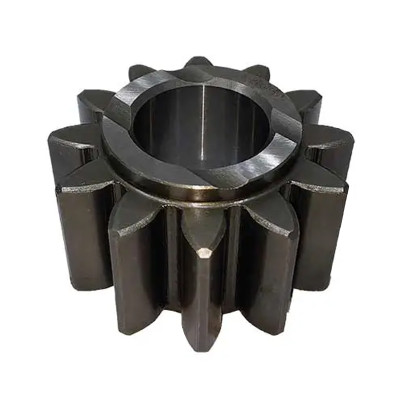
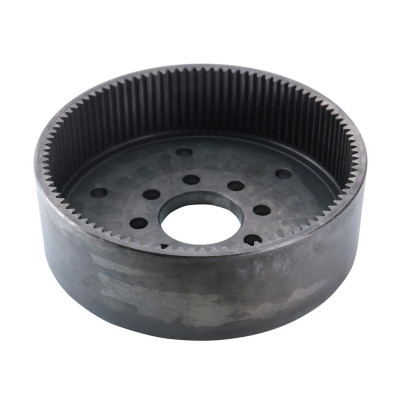
Recommended image: PairGears planetary gear set or internal ring gear product photo on a clean white background.
PairGears manufactures precision gears and shafts for agricultural machinery, heavy trucks, construction equipment and electric vehicles. For planetary transmission projects, we review drawings, samples and technical requirements for custom planetary gear sets and custom internal gears for planetary gearboxes.
Depending on the design, manufacturing may include hobbing, shaping, shaving, grinding and suitable internal gear machining. Heat treatment and inspection are selected against the drawing and application. Checks may cover tooth profile, tooth lead, runout, critical dimensions and specified hardness requirements.
If you are developing a planetary transmission or sourcing replacement gears, send PairGears your drawing, sample photos, OEM part number and quantity plan for a technical review.
For related component options, you can also review custom internal ring gears for planetary gearboxes.
Frequently Asked Questions
Should all planet gears wear at exactly the same rate?
No. Tolerances, support stiffness, assembly and operating loads can create differences. A significant wear gap deserves investigation.
Can I replace only one damaged planet gear?
It depends on the gearbox and service requirements. Inspect the other gears, carrier and bearings, and address the original cause.
Will higher gear accuracy prevent uneven wear?
It can reduce geometric errors, but alignment, carrier stiffness, bearings, lubrication and load also affect contact.
What information is needed for a replacement quote?
Provide drawings or samples, gear parameters, mating component details, material and heat treatment, operating conditions and quantity. Available information can support an initial review.
Can worn planetary gears be used as replacement samples?
Yes. However, worn dimensions may differ from the original specifications. Mating parts and OEM information should also be checked.
Conclusion
Uneven planetary gear wear is a symptom to investigate, not simply a reason to replace one component. Compare wear patterns, check critical geometry and review bearings, lubrication and operating conditions to identify the likely cause.
For custom or replacement gears, clear specifications and an inspection plan help control manufacturing. Contact PairGears with your drawing, sample or OEM number to discuss your project.
Need Support With a Planetary Gear Project?
Send PairGears your drawing, sample photos, OEM part number, operating conditions and quantity plan. Our team can review the gear requirements and discuss a suitable manufacturing and inspection route.