
What is the difference between spur gears and helical gears?
What is the difference between spur gears and helical gears?
Spur gears have teeth parallel to the shaft; helical gears have angled teeth. Spur gears are simpler, avoid helix-generated axial thrust and often suit moderate-speed, cost-sensitive stages. Helical gears engage more gradually and can run more smoothly and quietly or carry more load in a similar envelope, but they create axial thrust, sliding, lubrication and bearing demands, and usually greater manufacturing complexity.
Spur gears favor a direct, simple parallel-shaft stage
Spur-gear teeth run parallel to the shaft. Engagement begins across the tooth face more abruptly than in a comparable helical mesh. The geometry is widely used, comparatively straightforward to manufacture and inspect, and it does not create helix-related axial thrust. Those features can simplify bearings and housing support.
The tradeoff is that tooth engagement can produce more excitation and noise as speed rises, especially when accuracy, alignment, stiffness or lubrication are not well controlled. Spur gears are not limited to low speed, but a noise-sensitive high-speed stage needs a complete dynamic and accuracy review rather than a tooth-form shortcut.
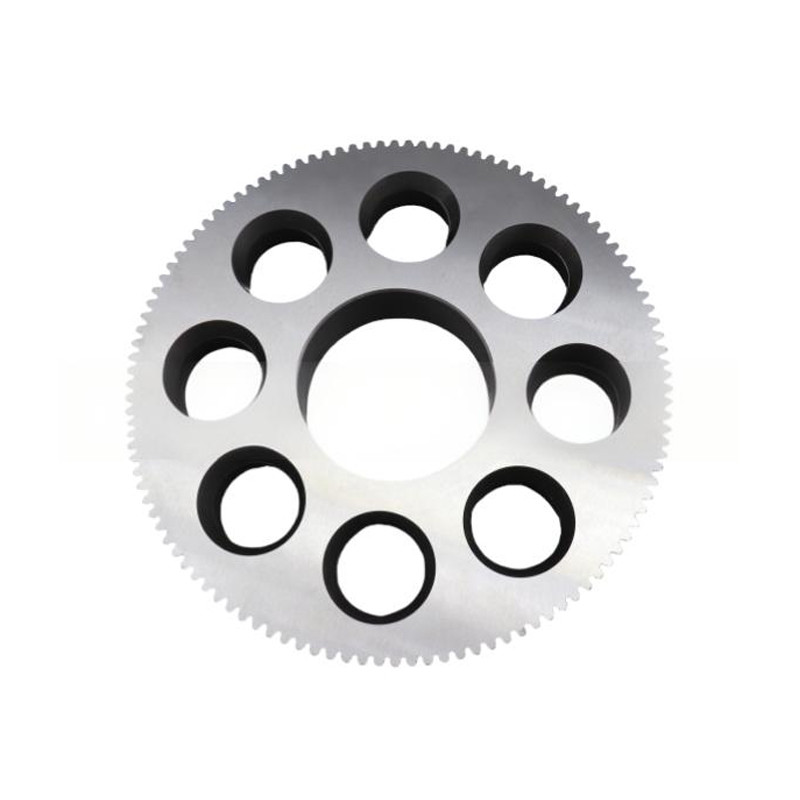
Helical gears trade simpler support for gradual engagement
Helical teeth are inclined to the shaft. Contact develops progressively across the face, and more than one tooth pair may share load. A properly designed and manufactured helical stage can therefore run more smoothly and quietly and may carry more load within a similar envelope.
The helix produces axial force whose direction depends on gear hand and rotation. Bearings, shaft shoulders and housing stiffness must support it. Sliding, heat and lubricant requirements also need attention, and manufacturing and inspection are usually more involved. For an external parallel-axis helical pair, confirm compatible normal geometry, equal helix angle and opposite hands.

Choose from the system priorities, not one headline benefit
A moderate-speed auxiliary stage may favor spur gears when simplicity, cost, efficiency and limited axial load are the main priorities. A higher-speed or noise-sensitive stage may favor helical gears when smoother engagement justifies thrust-capable bearings and tighter control of alignment, lubrication and heat.
Compare shaft layout, ratio, torque, speed, duty cycle, shock, noise limit, allowable size, bearing arrangement, housing stiffness, lubrication, process route, inspection and service access. The PairGears gear-cutting guide provides a practical starting comparison, but the final choice belongs to the complete drive.

Are you looking for a reliable manufacturer of down home textile products?
We can quickly provide customers with market analysis, technical support and customized services.- *Name
- Phone
- *Title
- *Content