How to Choose Belt Pulley Materials for Your Application?
A positioning-drive timing pulley and a large V-belt sheave may share a bore size but need different materials. One starts and stops repeatedly; the other runs steadily. Hub loading, belt contact and the working environment all influence the choice.
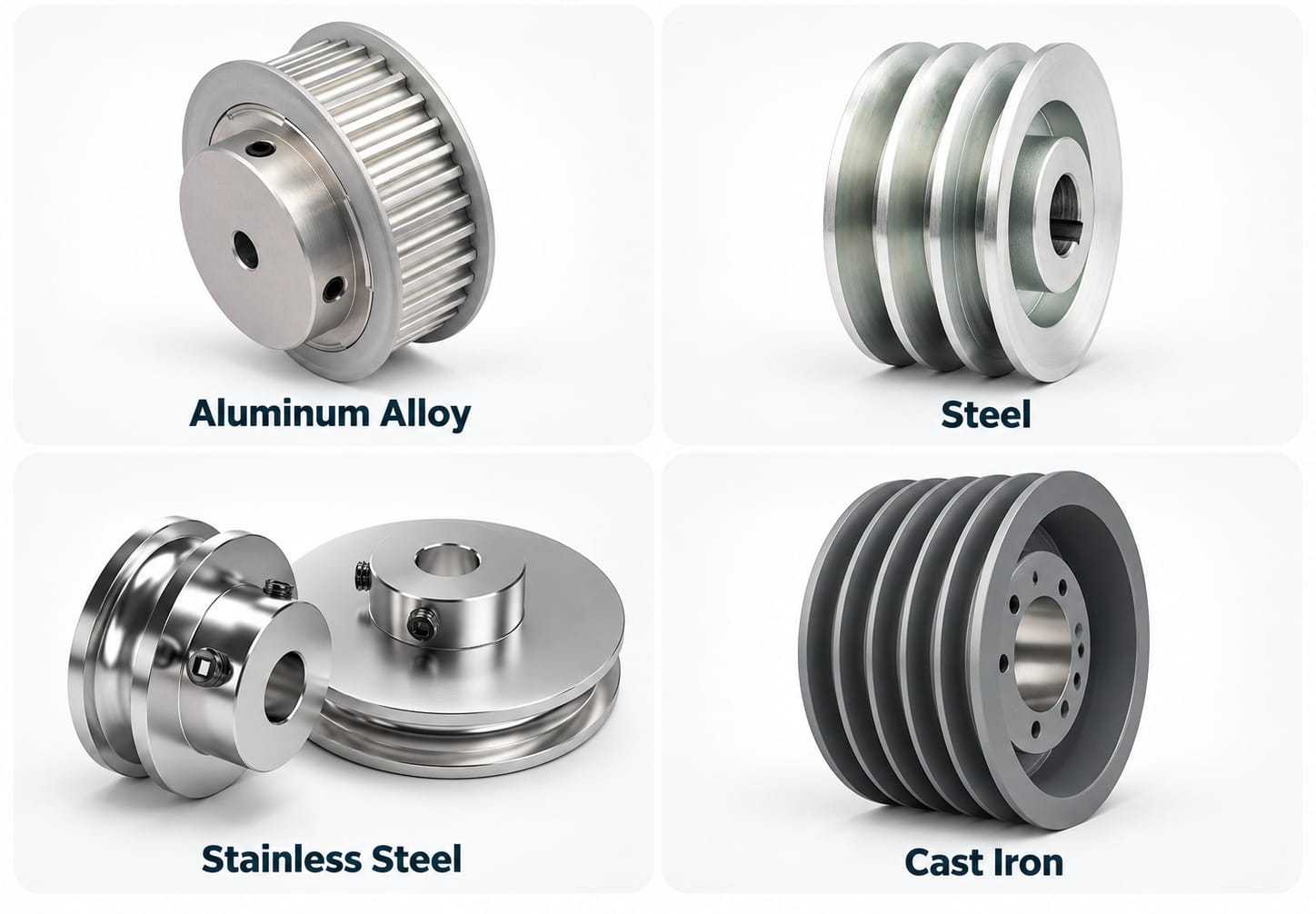
Aluminum alloy, steel, stainless steel and cast iron are common options for belt pulleys. At PairGears, we work with custom transmission components to meet different application requirements. The right material depends on how the drive operates and what the finished pulley needs to withstand.
Identify the Pulley and Its Load Path
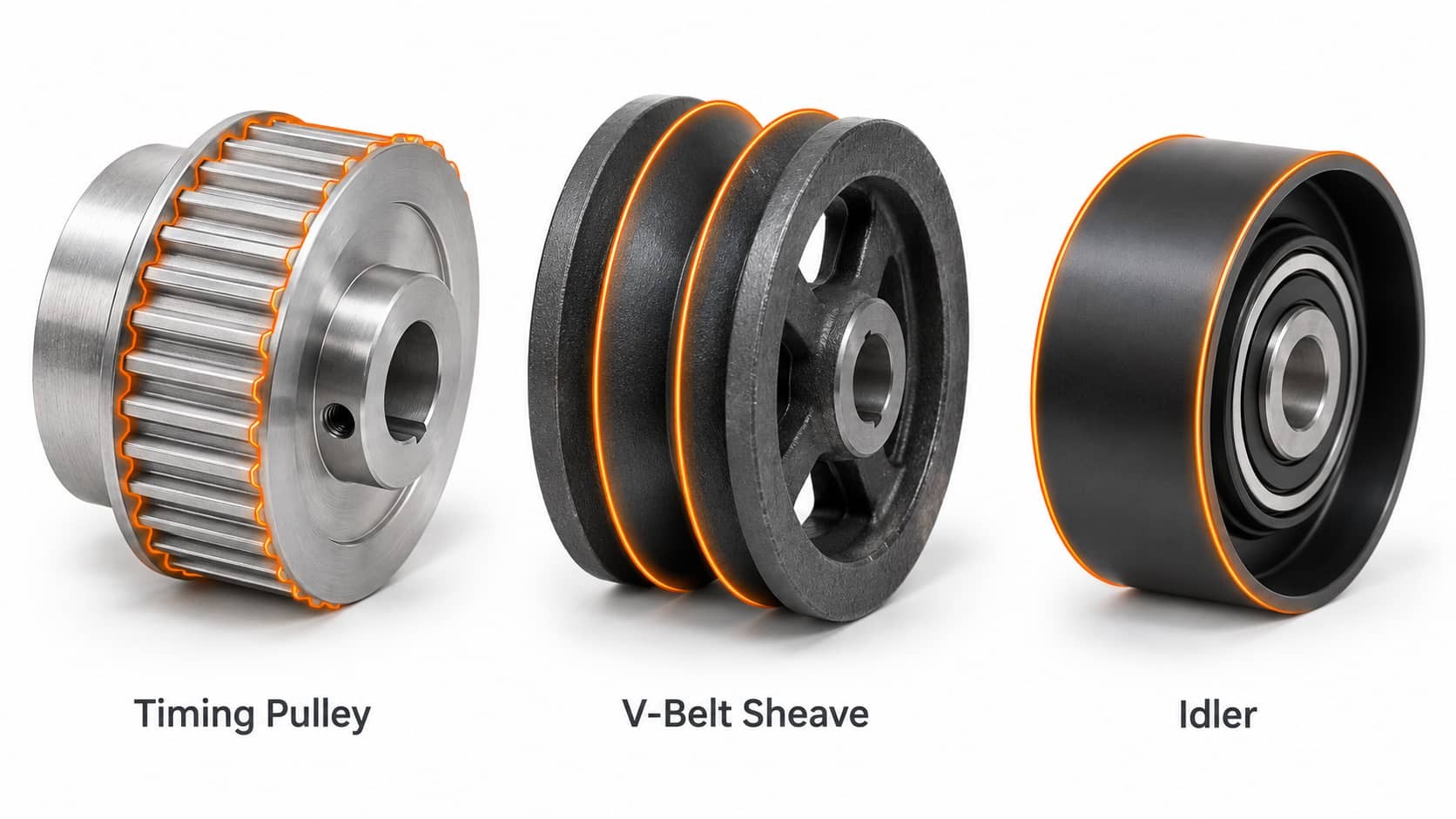
A timing pulley transmits motion through shaped teeth that engage a matching belt. A V-belt pulley depends on friction at the groove faces. An idler generally guides or tensions the belt and may rotate on its own bearings.
Belt Type and Contact Geometry
Timing pulleys must match the specified belt profile and pitch. HTD and GT are different timing-belt tooth-profile families. A matching nominal pitch alone does not establish compatibility, so the belt and pulley specifications should be confirmed before manufacturing.
Shaft Connection and Hub Loading
Torque also passes through the shaft mounting. A sound rim does not prevent trouble at a thin hub or loaded keyway.
Choosing a Material for the Application
Aluminum Alloy for Frequent Starts and Stops
Aluminum is often selected for timing pulleys on equipment with repeated acceleration, deceleration or position changes. Reducing rotating mass is useful in this kind of drive. It may matter much less on a pulley that spends most of its working life at a constant speed.
Choosing Between 6061 and 7075
Grades 6061 and 7075 are common options. The first machines readily; the second can offer higher strength but needs closer consideration of cost, corrosion and temper.
A narrow hub, deep keyway or loaded flange can change the decision. Aluminum is less stiff than steel, so a steel design may need revised proportions when reproduced in aluminum.
For the wider material-selection context, see Choosing the Right Material for Gears: An Overview. The gear examples are not pulley specifications.
When Steel Is the More Practical Choice
Material Grade and Condition
Steel is useful where the pulley carries substantial mechanical loading or needs a compact, strong shaft connection. Typical drawing options include AISI 1045 carbon steel and AISI 4140 alloy steel. Neither designation tells the whole story until the material condition and any heat treatment have been agreed.
Hub and Keyway Loads
A keyway removes material from the hub. Bore fit, keyway dimensions, hub length and load reversals therefore belong in the selection review. Stronger steel does not correct a poor shaft fit.
Mounting options are also discussed in Gear Shaft Types and How to Choose One, which covers keyed, splined and interference-fit connections. Pulley belt loads still need their own assessment.
Steel adds rotating mass and may require corrosion protection. Neither drawback necessarily rules it out of a heavily loaded, steady-speed drive.
Why Cast Iron Remains Common in V-Belt Drives
Large V-belt pulleys, particularly those with several grooves, are often made from cast iron. Casting forms the rim and hub economically; the grooves and bore are machined afterward. Gray cast iron also has useful vibration-damping characteristics.
Cast Iron Grade and Operating Speed
“Cast iron” is not one material specification. Gray iron and ductile iron differ in toughness and strength, and the correct grade depends on the component. Operating speed deserves special attention. Large diameter, repeated impact, thin sections and high rotational speed can make integrity and balance critical.
A cast-iron sheave designed for steady service should not be assumed suitable at a much higher speed.
Stainless Steel: Check the Environment Before the Grade
Moisture, washdowns and some chemical exposures may justify stainless steel. Grade 304 is suitable for many general environments. Grade 316 may be preferable in certain conditions involving chlorides, although neither grade is immune to corrosion.
Exposure and Maintenance Conditions
“Wet environment” is not enough detail. Cleaning chemicals, washdown frequency and trapped liquid around the hub can change the grade decision.
Stainless steel also raises machining costs. A protected steel part may be suitable in a dry enclosure.
A Material Change Does Not Correct Pulley Geometry
The contact geometry and the mounting datum require separate checks.
Belt Profile and Runout
Timing pulleys need the correct tooth form; V-belt pulleys need the correct groove profile. For idlers, check the bearing and which side of the belt contacts the pulley.
Radial and axial runout may also be important, depending on the speed and application. Inspection needs to refer to the correct datum, normally one defined by the bore or mounting arrangement. An accurate outside diameter is not sufficient if the pulley does not rotate correctly after installation. See Gear Accuracy Control: From Blank to Final Inspection for the underlying datum-control principle; gear-tooth tolerances are not pulley tolerances.
Surface Treatment and Finish
Anodizing may be specified for aluminum pulleys, while black oxide or plating may be considered for steel. Stainless steel parts may call for passivation. Each treatment should be chosen for a particular purpose, and the drawing must show which surfaces are treated or masked.
Coating thickness is particularly relevant at bores, tooth spaces and other close-fitting features. Critical dimensions may need to be checked after finishing. Surface roughness is another, separate issue: it describes the texture left by machining, not whether the bore or rim is geometrically correct. That difference is explained in Gear Surface Roughness: How It Affects Gear Performance. The same distinction applies to machined pulley surfaces.
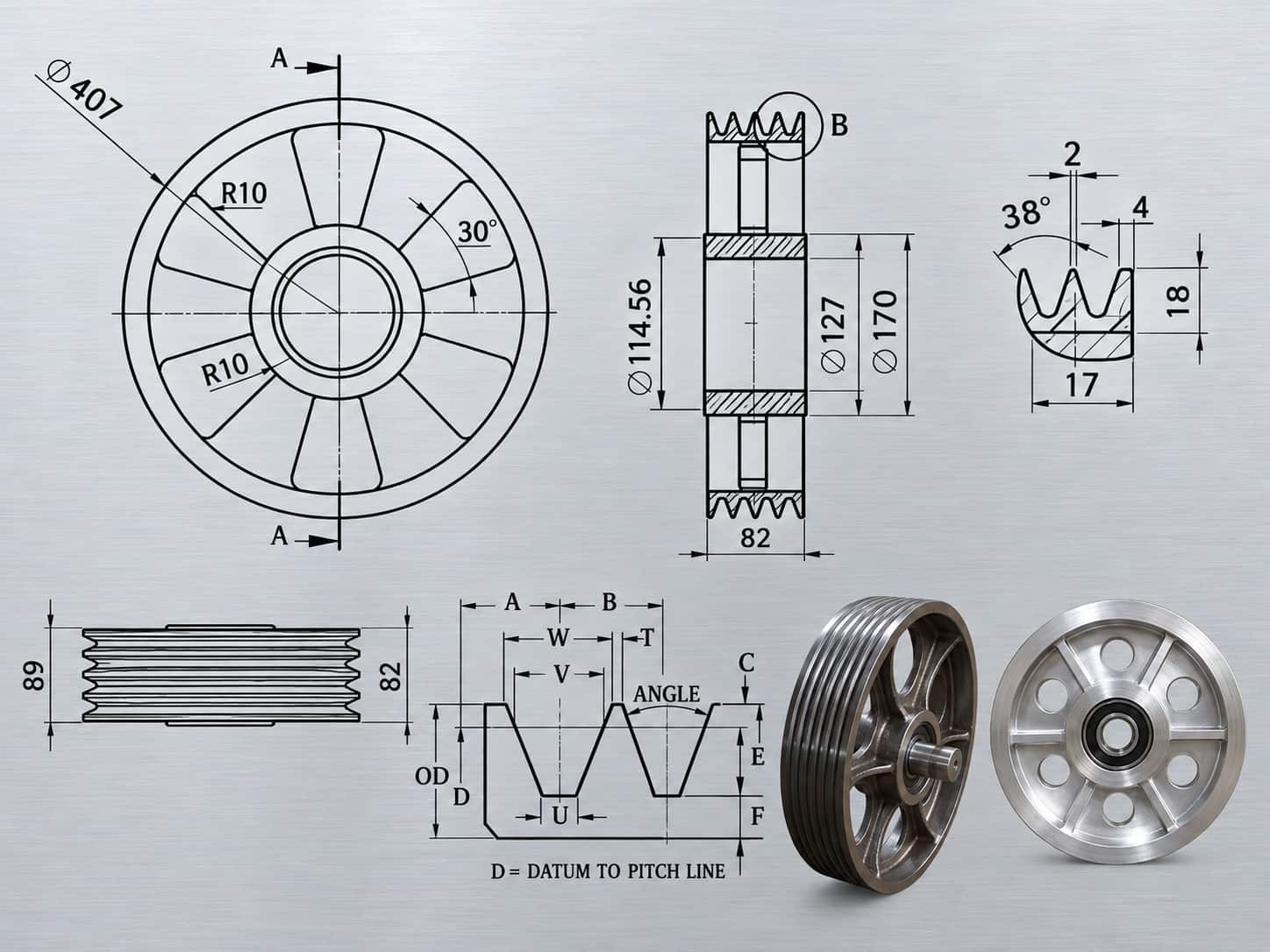
What Should Be Defined Before Ordering?
A worn sample may no longer show its original groove or tooth form. Include mating-belt information with any drawing or sample.
Information to Include in the Drawing or RFQ
| Drawing or Inquiry Item | Detail to Confirm |
|---|---|
| Pulley type | Timing, V-belt or idler; mating belt designation |
| Belt-contact geometry | Tooth profile and pitch, or belt section and groove dimensions |
| Main dimensions | Diameter, face width, hub and flange dimensions |
| Shaft mounting | Bore tolerance, keyway, set screws or bushing interface |
| Operating conditions | Speed, transmitted load, starts/stops, temperature and environment |
| Production requirements | Material grade and condition, finish, runout or balance if specified |
An approved grade and condition should appear on the drawing. Generic notes such as “steel” are insufficient for controlled production.
Two quotations may cover different finishing and inspection work. The same purchasing issue is discussed for gear orders in How to Compare Custom Gear Quotations From Suppliers.
Frequently Asked Questions
Is aluminum always the best material for a timing pulley?
No. Its low weight is useful where frequent acceleration makes inertia important. Steel may be more suitable when the hub, keyway or other mounting features face higher loads. Belt geometry and the actual duty cycle still need checking.
Can I change a steel pulley to aluminum without changing the drawing?
The same dimensions do not confirm that a substitute will work. Review belt forces, hub strength, keyway loading, shaft fit, wear and operating speed. Check the drawing before approving the substitution.
Why are many industrial V-belt pulleys made from cast iron?
Cast iron suits the shape and production of many larger or multi-groove pulleys. Gray iron also provides vibration damping. The selected grade, speed, mechanical loading and balance requirements must still be appropriate.
Is 316 stainless steel necessary for all washdown equipment?
No. Grade 304 may be adequate in many settings. Grade 316 is considered when the exposure makes its additional corrosion resistance useful. Cleaning chemicals, temperature and moisture trapped around the assembly affect that decision.
Can a custom pulley be manufactured from a worn sample?
A sample can be used for an initial review, but wear may have changed the groove or tooth geometry. Send the belt designation, photos, available dimensions, bore and mounting details, along with the intended operating conditions. Missing specifications should be agreed before production.
Material Selection for a Custom Pulley Project
PairGears offers custom timing pulleys, V-belt pulleys and idlers in aluminum alloy, steel, stainless steel and cast iron, subject to design requirements.
Review Your Custom Pulley Requirements
Have a drawing or sample? Send it with the belt specifications, mounting details and operating conditions. We’ll review the requirements for your project.