
How can I distinguish gear backlash from shaft or bearing play?
How can I distinguish gear backlash from shaft or bearing play?
Separate the direction and location of the movement. Gear backlash is relative rotation between mating tooth flanks when one member is restrained. Shaft or bearing play involves radial or axial movement, while a loose hub can add rotation between the gear and shaft. A single rocking test can combine these effects, so measure them separately before adjusting the mesh.
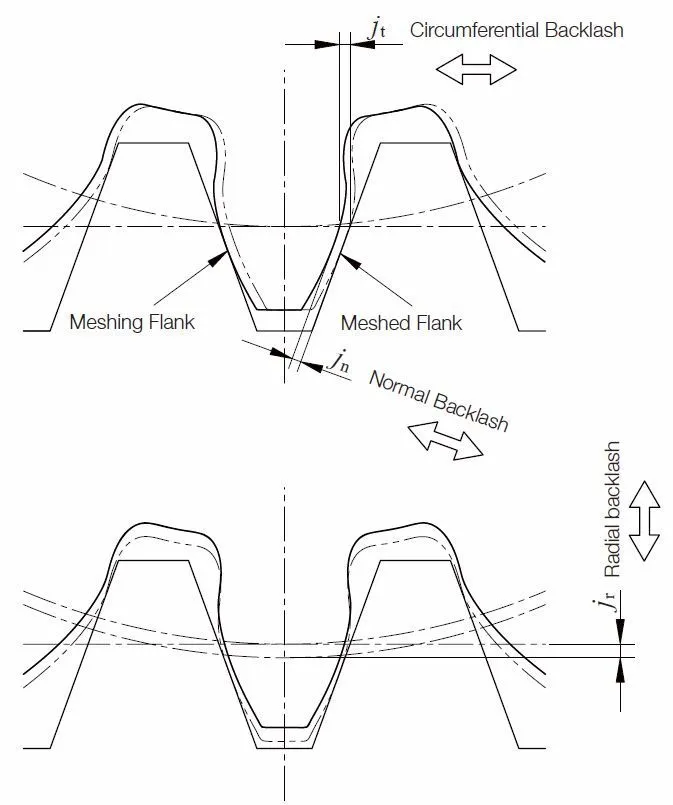
Measure rotational clearance across the tooth mesh
With the machine safely stopped and isolated, restrain one member and gently reverse the other using the agreed measuring load. Record where the indicator contacts the gear, its orientation, the assembly position and temperature. Check several rotational positions instead of judging the mesh from one tight or loose spot.
A tangential indicator reading depends on its measuring radius; it is not automatically the circular backlash at the reference circle. Also watch for shaft movement during the test. In the diagram, radial backlash is a gear-geometry term related to center-distance change; it is not bearing radial clearance.
Measure shaft movement independently
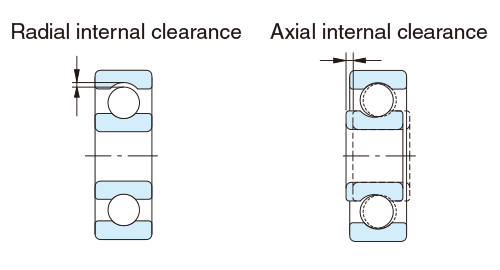
Use a stable reference on the housing to measure radial shaft movement and axial endplay separately, following the equipment or bearing maker's procedure. Observe whether the shaft moves relative to the bearing, a bearing ring moves in its seat, or the housing itself deflects. A reading at a remote shaft end can include bending as well as clearances.
Some bearing arrangements intentionally use operating clearance, preload or axial freedom. Compare results with the specified arrangement and condition; there is no universal acceptable amount of hand-felt play. Increasing bearing preload solely to hide gear rocking can create a different problem.
Check the hub connection before changing the gears
If the gear rocks relative to its own shaft, inspect the key, spline, clamp or other specified connection. For example, a restrained mating gear and a visibly moving hub-to-shaft joint indicate that the observed lost motion includes that joint; reducing tooth clearance will not repair it.
Record the separate measurements and inspect the locating faces, retention and mounting condition before deciding on repair. Restore the specified connection and bearing arrangement, then recheck mesh backlash, contact and runout. The PairGears inspection-report guide can help organize the gear evidence; a loose-part gear report alone cannot establish the condition of the assembled bearings and housing.

Are you looking for a reliable manufacturer of down home textile products?
We can quickly provide customers with market analysis, technical support and customized services.- *Name
- Phone
- *Title
- *Content