Plastic Gears: What Are They and Where Are They Used
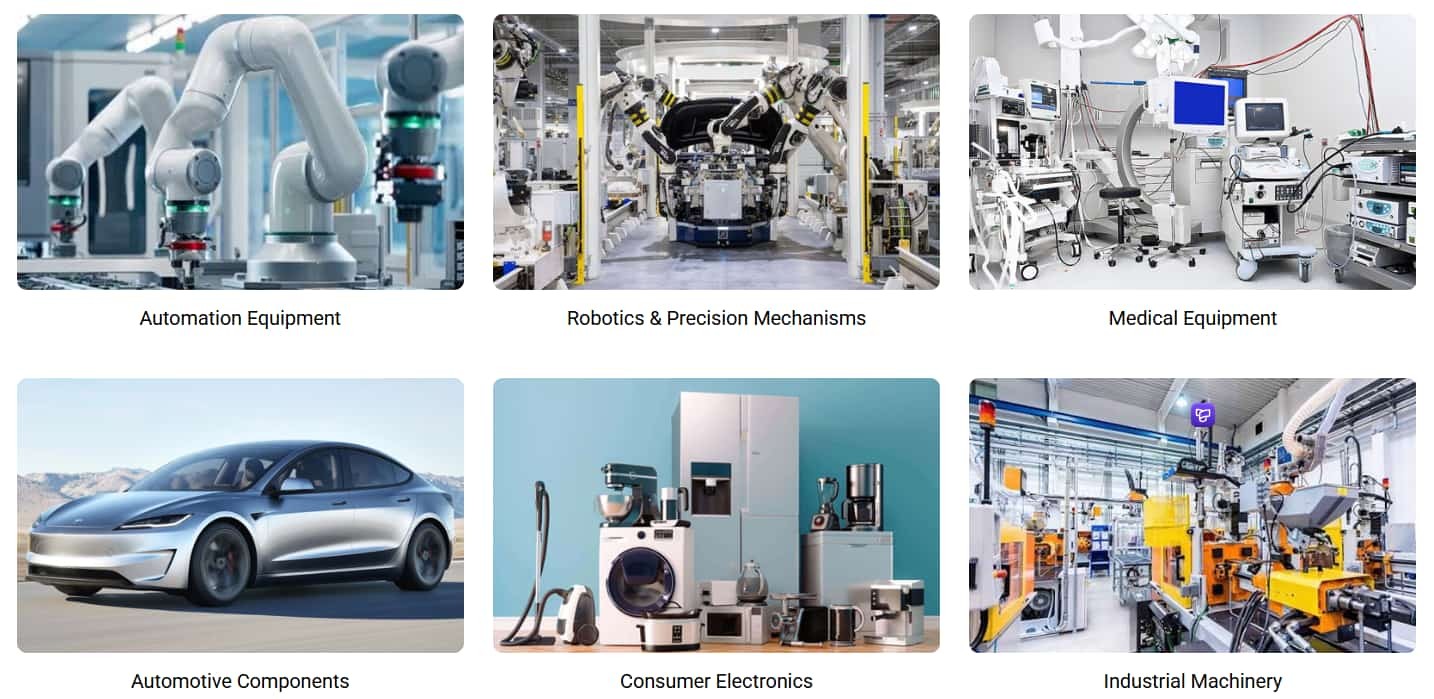
Plastic gears are transmission components made from engineering plastics. They are designed to transfer motion and torque in mechanical systems and are now widely used in automation equipment, medical devices, automotive components, consumer products, and industrial machinery.
Compared with metal gears, plastic gears offer advantages such as lightweight design, lower noise, corrosion resistance, and design flexibility. However, they are not a universal replacement for metal gears. The right choice depends on factors such as load, speed, temperature, operating environment, and mating components. This article will explain what plastic gears are, their common types, and where they are used. At PairGears, these factors are reviewed together when evaluating custom gear designs for different mechanical applications.
What Are Plastic Gears?
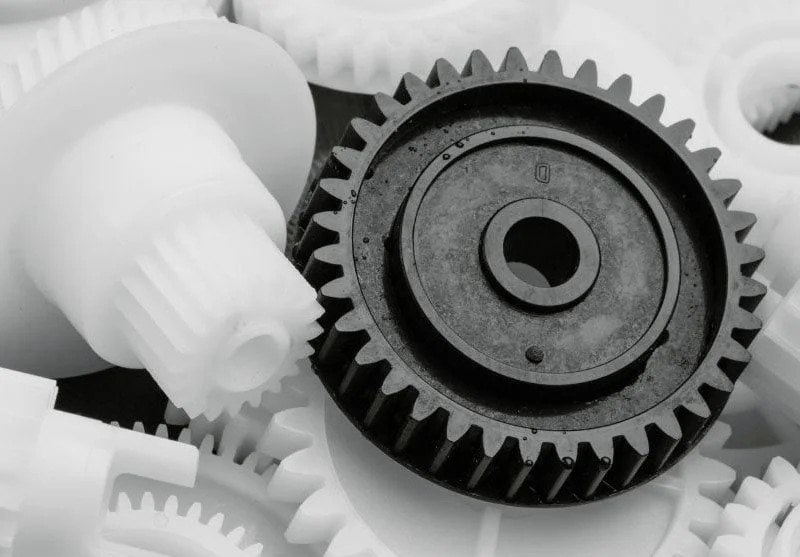
Plastic gears are gears manufactured from engineering plastic materials. They transmit rotational motion and power through the engagement between gear teeth.
Compared with metal gears, plastic gears have different performance characteristics. They are commonly used in mechanical systems where weight, noise, corrosion resistance, or manufacturing flexibility are important considerations.
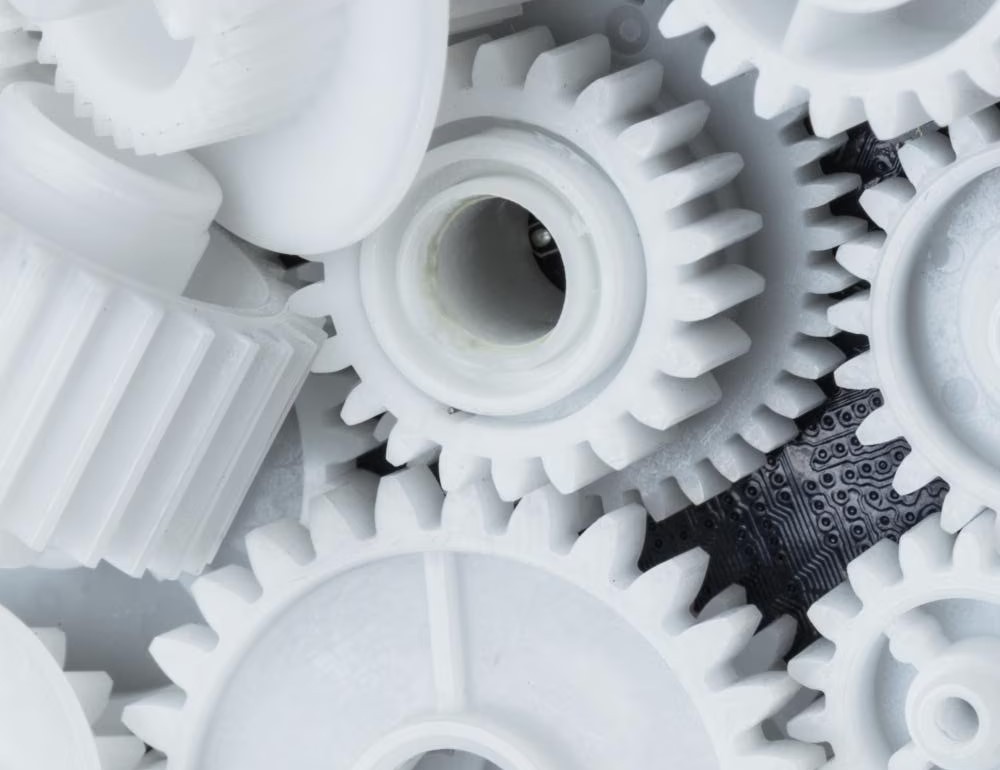
Common plastic gear materials include:
Different plastic materials have different performance characteristics. For example, some materials focus more on dimensional stability and low friction, while others are suitable for higher temperatures or more demanding environments.
Therefore, material selection for plastic gears should not be considered separately. It should be evaluated together with:
- Working load
- Operating speed
- Temperature
- Moisture and environmental conditions
- Mating gear material
What Are the Main Types of Plastic Gears?
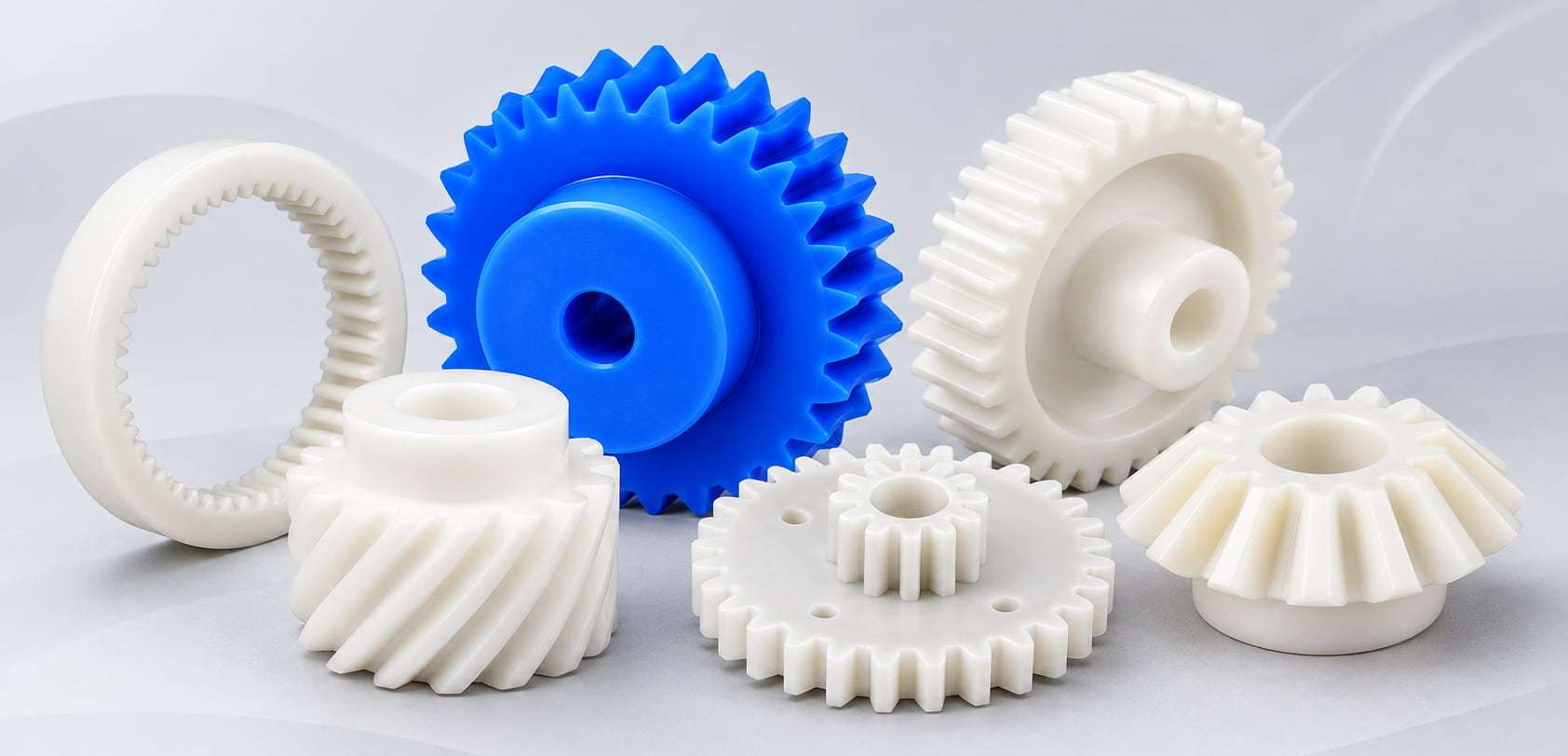
Plastic gears can be classified into different types based on tooth profile and transmission method. Different structures are suitable for different mechanical systems.
Plastic Spur Gears
Spur gears are one of the most common gear types. Their teeth are parallel to the gear axis.
They feature a simple structure, easy manufacturing, and efficient power transmission, making them commonly used in:
- Small mechanical devices
- Automation equipment
- Household appliances
- Precision mechanisms
Due to their simple structure, plastic spur gears are also a common choice for many light-load and medium-load applications.
Plastic Helical Gears
Helical gears have angled teeth. Compared with spur gears, they provide smoother engagement during operation.
Their advantages include:
- Smoother operation
- Lower noise
- Better transmission stability
Therefore, plastic helical gears are often used in equipment that requires low noise and stable movement, such as precision machinery and small gearboxes.
Plastic Worm Gears / Worm Wheels
Plastic worm gears are commonly used together with metal worms to achieve high reduction ratios and compact transmission structures.
Common applications include:
- Actuators
- Adjustment mechanisms
- Small reduction systems
Plastic worm wheels can utilize the low-friction characteristics of certain materials to help reduce operating noise and reduce lubrication requirements in some applications.
Plastic Bevel Gears
Plastic bevel gears are used to transmit motion between intersecting shafts.
They can change the direction of power transmission and are suitable for mechanical structures with limited installation space.
Common applications include:
- Small transmission mechanisms
- Compact equipment
- Special-angle transmission systems
Plastic Internal Gears
Internal gears have teeth located on the inside of the gear. They are commonly used in systems requiring compact structures or special transmission arrangements.
Examples include:
- Planetary gear mechanisms
- Precision reduction systems
- Compact transmission components
Why Are Plastic Gears Used?
Plastic gears are not simply replacements for metal gears. Instead, they provide an alternative solution under specific application conditions.
Lower Noise Operation
Compared with some metal materials, plastic materials generally have better vibration damping characteristics, allowing plastic gears to reduce transmission noise during operation.
This makes them suitable for:
- Medical equipment
- Office equipment
- Consumer electronics
- Precision small mechanisms
For equipment requiring a quiet operating environment, plastic gears can provide clear advantages.
Lightweight Design
The density of plastic gears is usually lower than that of metal gears, which helps reduce the overall weight of equipment.
Lightweight design is especially important for:
- Small equipment
- Portable devices
- Compact mechanical systems
Reducing the weight of rotating components can also help lower system inertia.
Corrosion Resistance
Many engineering plastics have good corrosion resistance.
Compared with some metal materials, plastic gears may provide better performance in humid environments or applications involving chemical media.
Examples include:
- Food processing equipment
- Laboratory equipment
- Chemical-related machinery
However, actual performance still depends on the specific plastic material and operating environment.
Reduced Lubrication Requirements
Some engineering plastics have low-friction characteristics, which can reduce lubrication requirements in certain applications.
However, whether lubrication is required still depends on:
- Material type
- Load
- Speed
- Operating temperature
- Mating gear material
Plastic gears do not mean that lubrication is unnecessary in all situations.
Flexible Design Options
Plastic manufacturing processes can support complex structural designs.
Depending on project requirements, plastic gears can be produced through different manufacturing methods, such as:
- CNC machining
- Injection molding
- Other precision manufacturing processes
This allows plastic gears to meet different structural, dimensional, and production requirements.
Where Are Plastic Gears Used?
Due to their lightweight design, low noise, and corrosion resistance, plastic gears are now used in many industries.
Automotive Components
In automotive applications, plastic gears are commonly used in:
- Seat adjustment systems
- Actuators
- Small transmission mechanisms
These applications usually focus on weight reduction, noise control, and compact structures.
Medical Equipment
Medical equipment often requires low operating noise, cleanliness, and stable performance.
Plastic gears are commonly used in:
- Medical instruments
- Laboratory equipment
- Small precision mechanisms
Robotics and Automation
Robotics and automation equipment require many precision motion-control components.
Plastic gears can be used in:
- Small gearboxes
- Motion control systems
- Compact automation mechanisms
Consumer Products
Plastic gears are also widely used in consumer products, such as:
- Household appliances
- Cameras
- Office equipment
These products usually focus on low noise, compact design, and cost control.
Industrial Equipment
In some industrial equipment, plastic gears can also be used in:
- Packaging machinery
- Textile machinery
- Light-duty automation equipment
The actual application still needs to be evaluated based on load, speed, and operating environment.
Plastic Gears vs Metal Gears: Basic Differences
Plastic gears and metal gears do not have absolute advantages or disadvantages. They are suitable for different operating conditions.
| Factor | Plastic Gears | Metal Gears |
|---|---|---|
| Weight | Usually lighter | Usually heavier |
| Noise | Often quieter | Depends on design and finishing |
| Corrosion Resistance | Often better in certain environments | Depends on material and coating |
| Load Capacity | Application dependent | Usually suitable for higher loads |
| Temperature Resistance | Depends on plastic type | Generally higher |
For applications requiring lightweight design, low noise, corrosion resistance, or limited installation space, plastic gears may be a suitable choice.
For high-load, high-impact, or high-temperature environments, metal gears usually provide better performance.
The final choice should be based on actual operating conditions rather than material names alone.
What Should Buyers Consider Before Ordering Plastic Gears?
When customizing plastic gears, complete technical information helps determine the appropriate design and manufacturing solution.
Recommended information includes:
- Gear type
- Module or DP
- Number of teeth
- Bore size
- Gear dimensions
- Material requirements
- Operating temperature
- Load and speed conditions
- Mating gear information
For special applications, environmental conditions should also be considered, such as humidity, chemical exposure, and lubrication requirements.
FAQ
What materials are commonly used for plastic gears?
Common materials include POM, Nylon, PEEK, and PPS. The suitable material depends on the application requirements.
Are plastic gears suitable for high-load applications?
It depends on the material, design, speed, temperature, and operating conditions. Not all plastic gears are suitable for heavy-duty applications.
Where are plastic gears commonly used?
Plastic gears are widely used in automation equipment, medical devices, automotive components, consumer products, and industrial machinery.
Can plastic gears replace metal gears?
In some applications, yes. The choice depends on load, environment, noise requirements, and operating conditions.
How are custom plastic gears manufactured?
Custom plastic gears can be produced through machining, molding, and other precision manufacturing methods depending on design and production requirements.
Conclusion
Plastic gears provide an alternative solution for applications where lightweight design, low noise, corrosion resistance, and manufacturing flexibility are important.
From spur gears and helical gears to worm wheels and internal gears, different plastic gear designs serve different mechanical requirements. However, selecting the right plastic gear requires careful consideration of load, speed, temperature, environment, and the complete transmission system.
A successful plastic gear application depends on balancing material choice, gear geometry, manufacturing method, and operating conditions as a complete system rather than evaluating any single factor in isolation.
Need a Custom Plastic Gear Manufacturing Review?
Send your gear drawing, sample photos, material preferences and operating requirements. PairGears can review your design, manufacturing route and inspection needs before quotation.